Environmental testing refers to the measurement of device performance under specific environmental conditions, such as large and rapid changes in temperature, solar radiation, extremely high or low humidity, corrosive conditions, etc., which I will describe in detail later.
Therefore, this becomes a very important process during the R&D phase as it ensures that all products are of very good quality and fully prepared for any situation encountered in the real world.
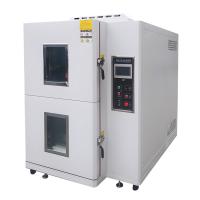
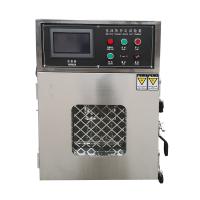
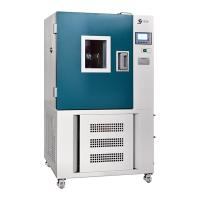
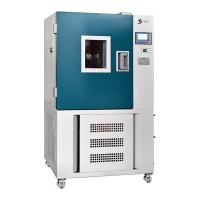
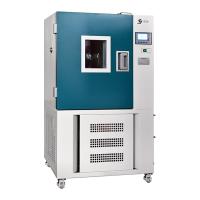
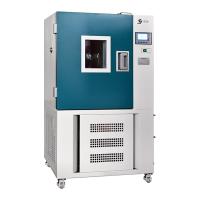
Environmental testing is usually performed in environmental testing chambers purpose-built for the purpose, either by independent testing laboratories or by the manufacturer itself.
During testing, engineers can actually choose to expose the product to established test standards for prescribed testing and climatic conditions, or they can choose to come up with a tailor-made test method suitable for the specific use and purpose of the product.
It has been regularly demonstrated that products that have been tested for the environment perform significantly better than products that have not been tested.

The following are the types of environmental test procedures available
1. Temperature and humidity test.
This test is performed to determine the performance of the product in harsh environments of high humidity and high temperature
This testing is performed in an environmental chamber designed to simulate extreme conditions.
This test is performed to determine how the product will perform in harsh environments with high humidity and high temperatures.
The tests can be performed at constant temperature and humidity, and they can include cyclic tests of two parameters or only one parameter.
This test allows engineers to evaluate product reliability and survival temperature by accelerating thermal changes in the chamber.
We have discussed about how to choose the right temperature and humidit y before.
2. Sudden and extreme temperature change test (thermal shock)
These tests, also known as thermal shock tests, are tests performed on products to determine their resistance to sudden changes in temperature.
The parts being tested are subjected to a specified number of cycles in which they are suddenly and alternately exposed to very high and very low temperatures.
After the last cycle, an external visual inspection of the part to be tested is performed to determine if any damage occurred during the test.
Electrical testing of samples was also performed to detect electrical failures accelerated by thermal shock cycling tests.
Because the thermal expansion rates of different materials often vary, thermal shock testing can lead to failures that cannot be achieved by mechanical means.
Therefore, this test helps to identify weak elements, thereby greatly improving overall product reliability.
A detailed article explaining the thermal shock test was published in a previous blog.
3. Moisture or Humidity Test
Humidity testing is performed to accelerate the aging of products that are susceptible to environmental humidity.
Increasing humidity above normal levels can lead to product defects and failures within a relatively short period of time, which are often observable in the field.
Performing this type of testing can help alleviate problems such as mechanical failure, corrosion, electrical shortages, and many others.
4. Corrosive atmosphere test (salt spray test)
A good example of an accelerated corrosion test is the salt spray test, which produces a corrosive attack on a coated sample to assess the suitability of the coating for use as a protective coating.
Salt spray tests are usually performed on metallic materials to check their rate of degradation under corrosive conditions.
In this test, samples are exposed to corrosive conditions in a Test Chamber, and then multiple measurements are taken to determine the effect on the surface coating of the sample.
The question is always asked: "How does salt spray test time relate to real world duration?"
There is no conclusion or definitive answer to this question, you can read a previous article on the topic here.
The X hour test cannot show that the coating will resist corrosion for any number of years. This is because in real life it takes years for rust to develop. So it's good practice to use this test only as a predictor of the true outcome
5. Dust test
This type of testing is especially important for electronics used in military ground vehicles and other precision applications.
This test is mainly carried out during the equipment development and evaluation phase to check its reliability with respect to the influence of dust and sand particles on the atmosphere.
Tests are performed by placing samples in a dust and sand chamber, which circulates sand and dust in a wind tunnel.
During the test, fine particles get into any cracks or small crevices of the device, thus causing various malfunctions of the device.
6. Solar test
This type of testing is also known as UV exposure, accelerated aging testing, or even solar radiation testing.
Perform solar radiation testing on products that are to be exposed to direct sunlight for extended periods of time. This test replicates the damage caused by ultraviolet light, sunlight in a xenon arc chamber, rain and dew.
We have a blog post explaining that QUV chambers and xenon arc chambers are different, and samples can be lost by just days or weeks of running this test through months or even years of exposure to direct sunlight.