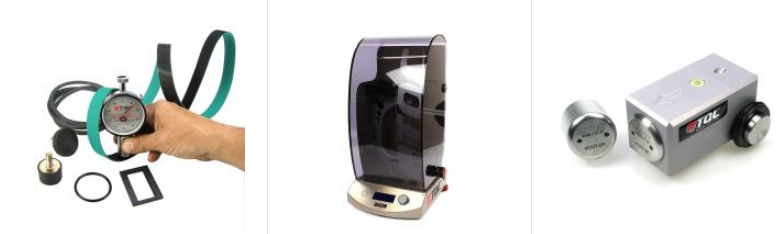
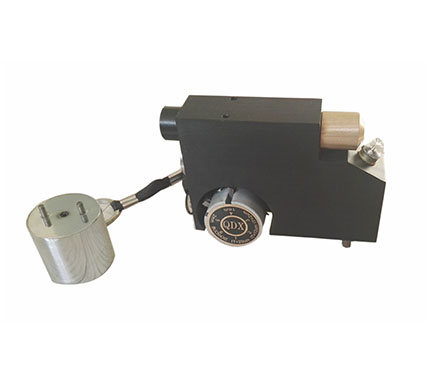
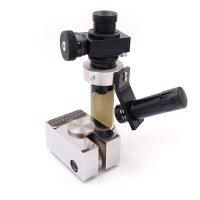
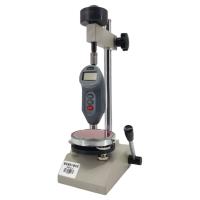
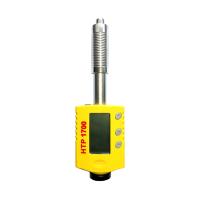
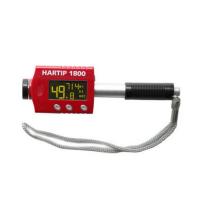
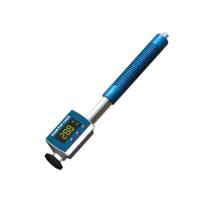
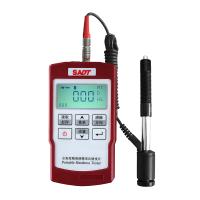
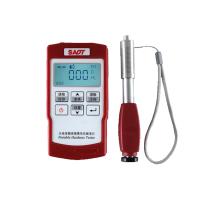
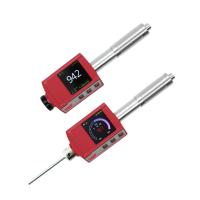
Hardness is the ability of a material to resist permanent deformation. Quality assurance and quality control personnel, as well as engineers, use hardness testing machines to qualify parts for fabrication and assembly. Hardness Testers indicate the hardness of a surface, or the resistance of a surface to external pressure or puncture force. The size of the indentation is then documented and documented by quality assurance and quality control personnel during the manufacturing and engineering process. Indentation is measured using the Rockwell hardness scale system. Modern hardness testing equipment automates hardness testing. Read the indicator screen (usually displayed in DIN ISO units) on the Hardness Tester to determine the hardness of the material being tested. Hardness can be read and recorded in many different measurements which can be converted using conversion tables. Commonly used scale systems in the engineering industry include Rockwell, Mohs, Brinell and Vickers. Durometers are used for a variety of purposes, including measuring the strength of materials such as metals and plastics. Knowing how well a material resists deformation can help engineers create products that resist the Bauschinger effect (deformation of plastic in one direction leads to deformation in the other direction), which destroys the structure of a material product.
Mode of operation
Set the indicator on the Hardness Tester to the reading position. Start loading the Hardness Tester. The position of the indenter (piercing cone of metal) should be in contact with the test material at an angle of 120 degrees. Preset the level of pressure to be applied to the test material (called preload). Release the indenter to allow it to impact the test material. Record the depth of the indentation for comparison with the next test. For the next test, apply pressure to a different area of the surface of the test material. Maintain this pressure for a preset period of time. This is called the dwell time and is usually a few seconds. The result is to dent or mark the test material in some way. Compare the difference between two indentations. The difference is the measured hardness of the test material.
total force
The total force is the additional force applied to the preload on the test material. This extra force will be maintained for a period of time before returning the force level to the preload setting. Preload settings will be applied for a fixed amount of time. To get a reading of the total force (which some credible agencies call "prime load"), remove the indenter and compare the difference between the depth of indentation produced by the additional force and the depth produced by the preload setting.