Chemical contaminants on surfaces can include chlorides, ferrous ions, sulfates and nitrates, and other types of soluble salts. Chlorides can come from corrosion of de-icing materials or by-products of ferrous ions in marine/coastal environments, sulfates can be airborne, especially in industrial settings (e.g., coal-fired power plants) and nitrates can come from Soil (eg, fertilizer). These chemicals are deposited on surfaces as the structure is used, or during transport of new steel to the fabrication shop or from the shop to the site. It can usually be removed from surfaces by pressure washing or spraying with purified water or water with the addition of a proprietary desalting enhanced solution. The effectiveness of the pressure washing step depends on the condition of the surface. That is, contaminants are relatively easy to remove from smooth surfaces, but if the surface is pitted or configured with hard-to-access areas, it can be more challenging because the contaminants will tend to concentrate and become trapped in these areas. If the salts are not detected or are not adequately dissolved and flushed from the surface, they may become trapped under the newly installed coating system. If there is a sufficient amount of water in the environment of use, and the concentration of water-soluble pollutants trapped under the paint system is high enough, water can be drawn out of the paint film by a process called "osmosis". The force can be very strong and continues until the salt concentration in the water on both sides of the film is the same (concentration reaches equilibrium).

For these reasons, many codes require that surfaces be inspected for chemical contamination after surface preparation operations have been completed but before primer is applied. Since this type of contamination cannot be detected with the naked eye, the surface needs to be sampled and tested for the contaminant of interest in a "surface extraction". SSPC Guide 15, "Field Methods for Retrieval and Analysis of Soluble Salts on Steel and Other Non-Porous Surfaces" describes a commonly used method for sampling and analysis of soluble salt contamination, intended to assist users in selecting extraction and analysis procedures .
Common methods for extracting soluble salts from surfaces for analysis include: surface swabbing; latex patches/compartments (ISO 8502, part 6) and latex sleeves. Common analytical methods for extracted soluble salts include ion-specific test strips/tubes for chloride, ferrous, and nitrate; titration for chloride; and turbidimeter for sulfate ion detection. These analytical methods are all considered "ion-specific".
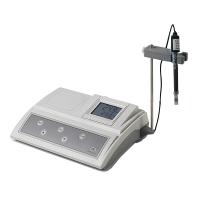
Methods of reducing surface concentrations (ie, high-pressure cleaning [low or high pressure], steam cleaning, or other methods) are not ion-specific, other than the use of chemical additives. Therefore, instead of performing multiple ion-specific tests on extracted samples, an analysis of the extraction solution using a non-ion-specific analytical method called conductivity (ISO 8502, part 9) may be considered, since removal methods typically deal with All soluble salts. In this case, distilled or deionized water can be used to extract the sample from the surface using any of the methods described above (cotton swab, latex or latex patch). After the extraction is complete, place the solution directly on the conductivity meter (the first professional conducts accuracy verification;
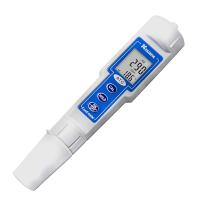
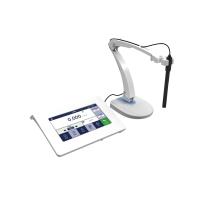
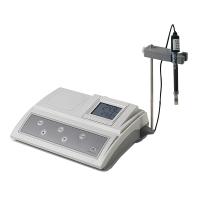
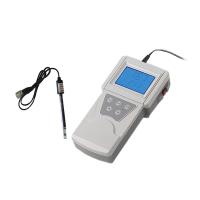
Conductivity meters display the concentration of ionic contamination in millisiemens/centimeter (mS/cm) or microsiemens/centimeter (µS/cm). To convert mS/cm to µS/cm, multiply mS/cm by 1000 (e.g. 0.35 mS/cm is 350 µS/cm). Note that for the values of the conductivity meter to have any meaning one also needs to know the area of the surface being sampled and the amount of water used in the extraction, which is the case when using the sampling methods listed above (especially ISO 8502, p. 6 section and section 9. Conductivity meters will not indicate the type of ionic contamination; that is, it is still unknown whether the conductivity reading is due to chloride, ferrous, nitrate, sulfate, or other soluble salts. Ionic contamination is known to be present in extracted test samples. Naturally, the conductivity of the extraction solution (distilled or deionized) should be tested (referred to as a "blank") and any conductivity readings of the water subtracted from the readings of the surface extracted samples. For example, if the surface extraction solution has a conductivity of 354 µS/cm and the distilled/deionized water has a conductivity of 3 µS/cm, the reported conductivity is 351 µS/cm.
Many codes establish maximum surface salt contamination thresholds based on the type of salt (e.g. 7 µg/cm2 for chloride; 10 µg/cm2 for nitrate and 17 µg/cm2 for sulfate). If a conductivity test is used instead of an ion-specific test, the specifier will need to establish a threshold based on the conductivity value (in µS/cm). For example, the US Navy has set thresholds at 70 µS/cm for atmospheric (non-critical) service and 30 µS/cm for immersion (critical) service.
Changing from ion-specific testing to conductivity measurements can result in significant cost savings because each ionic contaminant of interest needs to be analyzed using a different method. And none of these kits contain reusable supplies, so contractors need to buy many kits for each project. These costs are naturally passed on to the owner as part of the contractor's bid. By performing conductivity instead of ion-specific analysis, costs are reduced because a conductivity meter can be used for thousands of readings as long as it remains accurate and within the manufacturer's tolerances. Most portable conductivity meters come with standard solutions (called buffers) of known conductivity that are used to verify the meter's accuracy. It is recommended to verify accuracy before each use.
Finally, it is worth mentioning that there are devices on the market that can perform surface extraction and analysis and display surface salt concentration in PPM, mS/cm, µS/cm or µg/cm2. Similar to conductivity meters, these instruments are not ion-specific, but typically cost more than portable conductivity meters. They don't use any consumable consumables (other than distilled water), and they compensate for temperature too.