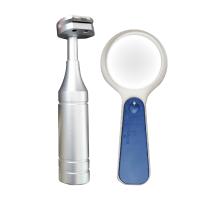
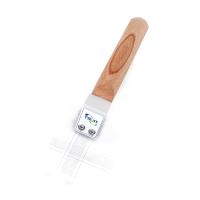
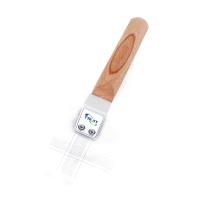
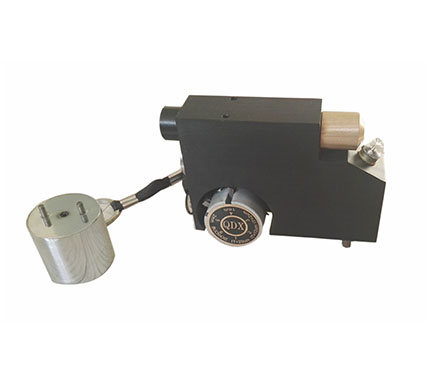
Coating adhesion testing is used to evaluate the strength of several different surfaces, including adhesion to the substrate, adhesion between layers of a coating system, and the internal or cohesive strength of each coating. Some commonly used methods for evaluating coating adhesion include: ASTM D3359 "Standard Test Method for Rating Adhesion by Tape Test", ASTM D6677 " Standard Test Method for Evaluating Adhesion by Knife ", ASTM D4541 " Standard Test Method for Peeling Methods " Coating Strength Using a Portable Adhesion Tester" and ASTM D7234 " Standard Test Method for Peel Adhesion of Concrete Coatings Using a Portable Adhesion Tester . " " The results obtained by the two methods cannot be compared because they evaluate different adhesion properties and use different testing mechanisms. ASTM D6677 and D3359 evaluate the "shear" or "peel" strength of coatings, while D4541 and D7234 Evaluates the tensile strength of a coating, i.e. its resistance to vertical pull. The choice of coating adhesion test method is usually dictated by specification or contract requirements; however, practicality is usually the determining factor. Peel adhesion testing is more objective and quantitative, But testing equipment and time are required to allow the glue to cure. In contrast, the more subjective knife and tape adhesion test can be done quickly with minimal equipment.

One characteristic common to all testing methods (perhaps the most difficult part) is the selection of an appropriate test area. Once regions have been selected, three replicate tests per region should be considered, which will yield representative adhesive data. The test area should be free of grease, oil, dirt, chalked paint, and surface moisture as they can interfere with the testing procedure.
The peel adhesion strength of a coating is controlled by two test protocols based on the type of substrate to which the coating has been applied. Coatings for concrete were evaluated according to ASTM D7234, while coatings for metals were evaluated using ASTM D4541.
There are four general purpose test equipment on the market that comply with both test methods, including the Elcometer® Model 106, HATE®, PATTI® and PosiTest® AT. Because these adhesion Testers work differently, care should be taken when comparing results. HATE®, PATTI® and PosiTest®AT are self-aligning and, based on inter-laboratory data, consistently produce higher pull-out values compared to fixed alignment Testers produced by Elcometer.
The Elcometer® Model 106 uses a mechanically compressed spring or washer to create a vertical force on the loading fixture. This force can be converted to pounds per square inch (psi) or megapascals (MPa). When the compression spring/washer has been calibrated at the factory and cannot be verified, the instrument should be returned annually to the manufacturer or an accredited calibration laboratory in order to generate a calibration curve.
HATE® (Hydraulic Adhesion Test Equipment) utilizes hydraulic oil pressure to simultaneously push on a coated test surface while pulling on an attached loading jig. This pressure is converted to psi directly on the dashboard.
The PATTI® (Pneumatic Adhesion Tensile Tester) uses a pneumatic piston to apply a vertical force to an attached loading fixture at a constant pull rate. The conversion table is used to convert burst pressure to psi or kilopascals (KPa).
The PosiTest® AT adhesion Tester works in much the same way as the PATTI Tester. It applies vertical force to the attached loading fixture at a slow, constant rate; however, it uses hydraulic pressure rather than air pressure to apply the force. It requires no conversion tables, automatically corrects for pound-force to the diameter of the loading fixture, and provides direct reading of tensile strength from the instrument panel or display.
Transverse bond strength during testing. When scoring, extra care is required to ensure that excess glue used to attach the loading jig does not flow into the groove created by the scoring. Another difference has to do with the size of the loading jig (2 inches or 50 mm). A loading fixture size of 50 mm diameter can be used for a more representative surface area test, since concrete may be inhomogeneous. According to the standard, the applied load rate should not exceed 30 psi per second to complete the test in 5 to 30 seconds. This differs from the standard for metallic coatings where the pull rate cannot exceed 150 psi/sec. Finally, although concrete has high compressive strength, its tensile strength is usually low (eg 400-500 psi),
The 2009 edition of ASTM D4541 introduced significant changes that affected how the test was performed and how the data was interpreted. The more important changes (by section) for the 2017 edition are summarized below.
Section 4: Meaning and Use
Section 4.2 warns operators to compare different test variables on the same coating or coating system when using different test variables, including type of equipment (there are 5 types), substrate, glue type, using different test variables. A result set (or a statistical analysis of the test results). Test procedures (e.g., pull rate), whether ratings of coatings were used around loading fixtures, and environmental conditions. Although the 2009 edition provides similar precautions, only device type and substrate type are listed. One of the important takeaways is that even if the type of equipment is included in the standard, results obtained with different types of test equipment should not be compared.
Section 5: Instruments
Section 5.1.1 (Loading fixtures) provides more information on loading fixture sizes, as some adhesion Tester manufacturers now offer loading fixtures in various sizes (10mm, 14mm as pictured above and 20 mm) to test coatings on metal surfaces (although not addressed in this standard, a loading jig with a diameter of 50 mm was used to test the adhesion of paint on concrete. This section now includes the following description: "The loading jig's A good size is determined by the performance of the adhesion Tester. The combination of grips and Tester should be selected so that the maximum expected tensile load that the coating will withstand during the test is within the range of the Tester." Use smaller diameter Loading fixtures (e.g. using 14mm instead of the standard 20mm) enable operators to test more robust coatings without exceeding the working range of the test equipment.
Section 5.3 (Sandpaper). The 2009 edition recommends using 400 grit or finer to "clean" the coating, but not to introduce blemishes or residue. The 2017 edition recommends 100-grit or finer, including 400-grit, to "roughen the surface for the glue to apply and adhere to the coating."
Section 5.4 (Glue). Throughout the standard, the term "adhesive" has been changed to bondable to remove any confusion about "adhesive" coating breaking and "glue" breaking. Added precautions to "Choose a glue that does not affect paint performance, interfere with paint flow, or attack paint."
Section 6: Test Preparation
Section 6.7 discusses scoring the coating around the charging fixture (unless agreed upon by the contracting parties, the coating shall not be scored unless the coating is thick film [>20 mils] or reinforced or elastic). A non-mandatory note (Note 6) was added to provide more guidance to users when considering scoring. It states: "Scoring requirements will vary according to coating system, chemistry and thickness. Direct comparison of unscored results with scored results is one way to determine whether scoring should be performed. Subject to agreement between buyer and seller , other methods of determination may be used. Coatings smaller than 20 mils should not be considered for scoring."
Section 7: Test Procedures
Section 7.2 now requires that adhesion Testers be calibrated at the manufacturer's recommended frequency or every three years, whichever is less.
Section 7.6 describes pull rates in the 2009 version (maximum 150 psi/sec; complete pulls in 100 seconds or less); however, pull rates now used when performing multiple tests also need to be "similar ".
Section 8: Calculation or Interpretation of Results
Arguably the most notable changes have occurred in Section 8, where two testing protocols have now been formalized. The two protocols are described below and illustrated in the standard flowchart. The management of breakouts is particularly notable and is highlighted in bold and italics below.
Option 1 – Fracture Test: Option 1 is generally used when the minimum adhesion/cohesion properties of the coating system are not specified. In this case, the load is applied to the fixture until separation occurs or the maximum capacity of the test apparatus is reached. Applying high levels of force may cause the coating to break before it breaks (typically epoxy glue is used to attach the test fixture to the coated surface). According to the 2017 edition of ASTM D4541, unless otherwise agreed by the contracting parties, the test results will be discarded for all tests where the amount of gel breakage exceeds 1/4 of the loading area (test fixture area).
Protocol 2 – Pass/Fail Test: Protocol 2 is typically used when the minimum adhesion/cohesion properties of the coating system are specified. In this case, the load is applied to the fixture until a specified value is reached or separation occurs, whichever occurs first. Applying high levels of force could again cause the adhesive to crack before the coating cracks. According to the 2017 edition of ASTM D4541, if there is visible glue breakage (defined as 5% or more of the loaded area) and the specified minimum is not reached, additional loading fixtures may need to be installed and pulled. If the specified value is reached and the test fixture remains attached, release the pressure and remove the adhesion Tester. The test fixture can be left in place or removed by hitting the side with a hammer to break the bond.
Two non-mandatory notes have also been added to Section 8. The first (Note 9) warns the user that any amount of glue breakage will result in a reduction in the maximum test load measured by the test equipment. That said, the adhesion/cohesion properties of actual coatings/coating systems are still unknown when gluing fracture occurs, but it can be concluded that the peel strength is at least as good as the values obtained. Part II (Note 10) describes how to use this method when testing elastomeric coatings. It reminds the user that the elastomeric coating may elongate and, if the elongation or strain is large enough, may induce failure from simulated peel-type loading (from the edge of the scored sample) (remember, Section 6 states that the possible Need points) for these types of paint). To reduce this effect, proper scoring and test fixture alignment techniques should be employed, and low loading rates should be avoided to reduce the time the elastomeric coating is under stress.
Section 9: Reporting
Finally, Section 9 now lists a number of additional reporting requirements, including:
Glue used and curing time before testing
The method used to secure the loading fixture after the glue has cured (if any)
pull rate
Detailed test results (according to the flowchart)
Two non-mandatory notes have also been added to Section 9. They address considerations for characterizing test areas based on high or low results (Note 11) and incorporating test data involving glue failure in statistical analysis (Note 12).
Note 11 states: "When testing at a particular location, the highest result obtained may be the most representative. Common errors in the testing process lead to artificially lower results, often not higher results. Based on apparent low or high individual results Caution should be exercised in determining the characteristics of the test area."
Note 12 states: "For test results that include adhesive failure, test termination, or test equipment capacity exceeded, use caution with statistical analyzes of the data (such as averaging of results). The reported loads for these types of test results are not representative of the coatings tested. maximum load capacity."
in conclusion
Coating adhesion testing is used to evaluate strength on several different planes, including adhesion to the substrate, adhesion between layers of a coating system, and the internal or cohesive strength of each coating. Tensile (peel) and shear (peel) adhesion testing methods are completely different and the results are not comparable. ASTM standardized testing procedures are available for most adhesion testing methods, but can be quite complex, especially when performing tensile adhesion testing. This article provides general information on tensile adhesion testing equipment and procedures and highlights significant changes included in the 2017 edition of ASTM D4541. An article by Raymond S. Tombaugh titled "Coating Adhesion Testing Using the Knife/Band Method" focuses on the shear adhesion testing method and was published at KTA University earlier this year.