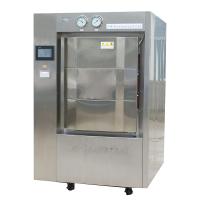
introduce
Industrial and marine protective coatings can provide decades of corrosion protection if the correct coating system is selected for the current environment of use and remains adhered to the substrate it was designed to protect. Industrial coatings used in the water, wastewater, oil and gas, and nuclear power industries may be exposed to conditions of extreme heat and pressure. Without prior knowledge of the performance of the coating system under these conditions, there is a greater risk of accelerated aging and catastrophic failure. If coating system failure is not detected, section loss may occur and structural integrity may become an issue. Laboratory testing and subsequent evaluation of coating system performance can provide insight into how the coating/coating system will perform prior to large-scale installation. easy to say, hard to do. Simulating extreme temperatures and pressures requires specialized equipment with integral protection. This can be done in the laboratory using an autoclave.
According to Wikipedia, an autoclave is a pressure chamber used to perform industrial processes that require elevated temperatures and pressures different from ambient air pressure. Autoclaves are used in medical applications to perform sterilization operations and in the chemical industry to cure coatings, vulcanize rubber and perform hydrothermal synthesis. They are also used in industrial applications, especially in composites.
Depending on the size and contents of the load, many autoclaves sterilize equipment and materials by soaking in high-pressure saturated steam at 121°C (249°F) for 15 to 20 minutes. The autoclave was invented by Chamberlain in 1884, although the precursor known as the steam cooker was created by Denis Papin in 1679. The name comes from the Greek auto which ultimately means since, and the Latin Clavis meaning key, thereby self-locking the device.

Coating System Performance Testing Using an Autoclave
Autoclave testing is a common procedure used to evaluate the performance of a coating or coating system under consideration for use. It is designed to simulate many different service environments with a wide temperature and pressure range and a variety of test media. Typical test conditions for oil and gas applications include three phases: hydrocarbons, water and natural gas. A typical test scenario is to prepare the test panel and apply the candidate coating/lining system to all surfaces (sides and edges), measure thickness and check for pinholes/leaks. After the coating system has fully cured, the test panels are placed in a pressure vessel (autoclave). The simulated environment is then prepared using the appropriate test medium, temperature and pressure.
The depressurization phase itself can also be a variable when testing in autoclaves (see the KTA University article, Under Pressure: Effect of Rapid Depressurization on Coating System Performance, June 2017). The decompression phase can be customized to simulate a gradual uniform release rate or rapid decompression. Depressurization is a critical step in evaluating coating performance. High pressure environments can cause gases to permeate into the coating, while reduced pressure can cause gases to migrate to equilibrium. Coating blistering can occur when the venting of gas is slower than the depressurization of the autoclave. This process can lead to coating delamination and corrosive gases attacking unprotected substrates.
In some cases, high voltage testing is not required. For example, autoclaves can be used to assess the resistance of coating systems to the effects of high temperature steam. In oil and gas, steam is used to remove residue from the sides of crude oil tanks prior to inspection. When testing steam resistance in an autoclave, place the prepared coated test panels in a container with a small amount of water. Then, high temperature is used to generate steam and the coated panel is exposed for a predetermined time. Usually 24 hours. After exposure, the paint system can be visually inspected for defects such as blistering, peeling or cracking. Adhesion or other physical properties (pre- and post-exposure) can also be assessed if desired.
Industry Test Method
Although autoclave testing is very customizable, there are standardized test methods that provide requirements and guidance for testing and evaluation. NACE TM0185 (discussed below) provides the flexibility to select specific conditions and provides evaluation guidelines so that interested parties can customize the test to simulate real-world conditions. In contrast, the annex to ISO 15741
C (also described below) does not allow customization to simulate a service environment, but rather has specific requirements. Both approaches can be beneficial when comparing the performance of a range of candidate coating systems. Using methods such as ISO 15741 with specific test parameters and test conditions, it is possible to compare the performance of coatings tested at different times.
NACE TM0185, "Internal Plastic Coatings for Evaluation of Corrosion of Tubular Items by Autoclave Test" states that hydrocarbon, water and gas phases should be used at least 25% of each phase, but taking into account phase, temperature, selection Pressure and exposure time to simulate the actual use environment. The decompression phase in NACE TM0185 consists of reducing the temperature of the pressurized vessel to 200°F and releasing the pressure at a uniform rate such that it returns to atmospheric pressure within 15 to 30 minutes. After decompression, several properties (e.g., foaming, softening, adhesion, and porosity) in each liquid and gas phase can be evaluated. It should be noted, however, that the NACE test method does not provide a standard method for every assessment. but
Compared with NACE TM0185, ISO 15741, "Paints and varnishes - Antifriction coatings for the interior of onshore and offshore steel pipelines for non-corrosive gases", Annex C, "Resistance to gas pressure changes" is more reasonable. The tests carried out according to ISO 15741 Annex C are designed to evaluate the resistance of the coating to cyclic pressurization. In this method, prepared and coated test panels are placed in a pressure vessel maintained at ambient temperature, pressurized to 1,450 psi with nitrogen, and subjected to a rigorous 14-day operation at which During the process, the vessel is cyclically pressurized and rapidly depressurized within five minutes. After the last cycle, the coated panels are removed and evaluated for changes in appearance, including corrosion, spots and blisters, and for adhesion performed according to ISO 2409,
Summary
Coating systems are used for corrosion protection in various service environments. Some environments are very harsh, subjecting installed coating systems to high temperatures, high pressures, corrosive gases and liquids, and even rapid depressurization. Testing candidate coating systems in autoclaves configured to simulate conditions as close as possible to real-world conditions can help eliminate coating systems that are incompatible with service environments and ensure that installed coating systems will perform as designed.