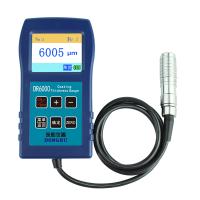
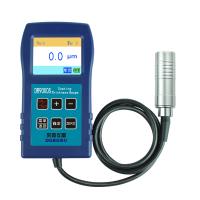
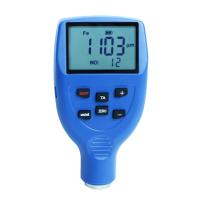
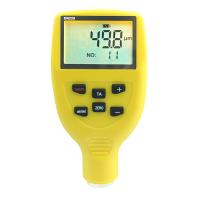
introduce
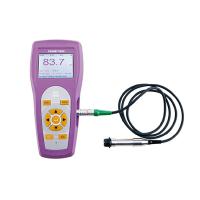
The measurement of coating thickness is one of the common quality assessments in the application process of industrial coatings. SSPC-PA 2, Procedure for Determining Compliance with Dry Coating Thickness Requirements is often referenced in coating specifications. As SSPC-PA 2 has evolved over the past 40 years, numerous procedures and measurement frequencies are referenced in both the mandatory sections of the standard and non-mandatory appendices. Although measuring frequency was never intended to be a statistical process, it is helpful to understand the statistical implications of the measurement process. And it is reasonable to know what coating thickness variation is. This short article explores how scanning probe technology can assist in taking (in a relatively short period of time) a large number of measurements to better assess the consistency of applied coating thickness, especially on larger, more complex structurally.
background
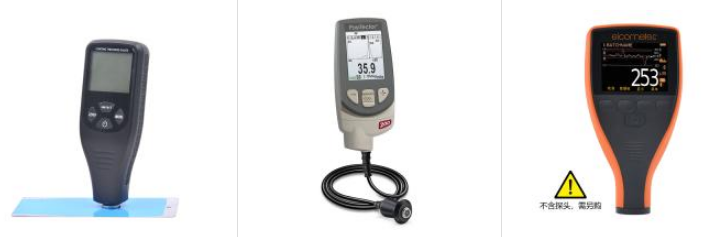
For the measurement of coating thickness, there are two industry standards that are widely specified. These include ASTM D7091, Standard Practice for Nondestructive Measurement of Dry Film Thickness of Nonmagnetic Coatings on Nonferrous Metals and Nonmagnetic, Nonconductive Coatings on Nonferrous Metals, and SSPC-PA 2, Determining Compliance with Dry Coating Thickness Requirements program of. ASTM standards focus on the use of gauges, while SSPC standards focus on the frequency and acceptability of coating thickness measurements. These standards are intended to be used in conjunction with each other. In 2012, all references to frequency of measurement were removed from the ASTM standard so as not to conflict with SSPC-PA 2.
The frequency of coating thickness measurements is determined by gage readings, spot measurements and area measurements. Take at least three (3) gage readings in a 1.5 inch diameter circle and average them for spot measurements. Five point measurements were obtained in an area of 100 square feet. The number of areas to measure depends on the size of the coating area. If the area coated is less than 300 square feet (i.e. during a shift), each 100 square foot area will be measured (maximum of three areas each consisting of five point measurements with a minimum of three readings per point indivual). If the size of the coated area is between 300 and 1000 square feet, select and measure three to 100 square feet. If the size of the coated area exceeds 1000 square feet, measure three areas in the first 1000 square feet and one additional area in each additional 1000 square feet or portions thereof. For example, other measurement frequencies are included in the non-mandatory appendices of SSPC-PA 2, including Appendices 2 and 3 for Steel Beams, Appendices 4 and 5 for Test Panels, Appendices 6 for Coating Thickness Measurements Along Edges and Appendices for Pipe Exteriors 7.
The quantities of gage readings, field measurements, and area measurements prescribed by SSPC-PA 2 were never intended to be based on statistical processes. Rather, the frequency of measurement is based on what is reasonable in the shop or field to properly characterize the thickness of the coating without unduly hampering production. If you need to measure every 100 square feet, consider checking the effect of the thickness applied the day before on 4,000 square feet of steel. That's 40 zones, 200 point measurements, and at least 600 gage readings. And that frequency might not be considered a statistically significant sample either. Additionally, obtaining other measurements in excess of the amounts specified by SSPC-PA 2 (when invoked by contract) may be considered "overchecking".
Acquire large amounts of data using scanning techniques
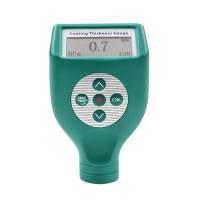
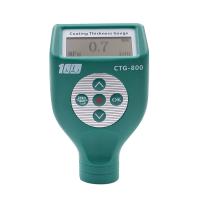
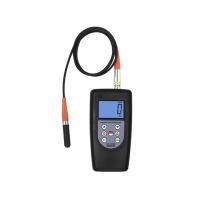
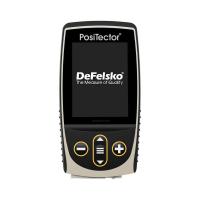
Several manufacturers of electronic coating Thickness Gauges have incorporated "scanning probe" technology and associated supporting software into the data acquisition process. This newer technology enables gage operators to obtain a large amount of coating thickness data in a relatively short amount of time. For example, coating thickness data was obtained during an actual bridge repainting project by a qualified paint inspector, including coating thickness on a bridge girder across four panel points in less than 8 minutes (measurement time only). 12 batches of readings (nearly 600 readings). Thus, it is possible to obtain a more representative sampling of the coated area without affecting production. However, for acquiring such large datasets (e.g. data curation, dealing with outliers,
The SSPC Dry Film Thickness Measurement Committee may consider adding a 10th non-mandatory appendix to SSPC-PA 2 to give specifiers the option to obtain a larger data set of coating thickness measurements without impacting production. In this way, the owner can gain greater confidence in the uniformity and consistency of the applied film.