Wood is one of the building materials used for the exterior structure. Like most exterior substrates, wood structures also need protection from the environment. Although some types of wood are resistant to the elements (such as cedar), and some woods are chemically treated to preserve their integrity (lycanthus wood), paints and coatings can be used to protect the wood and enhance its appearance. Without protection, wood will gradually corrode. A properly coated wood structure should last about 8 to 10 years before needing to be repainted. However, this depends on the degree of surface preparation, quality of paint, consistency of application, orientation of the surface (horizontal vs. vertical), location (prevalent temperature, humidity and solar radiation intensity), and other factors. An important step in avoiding premature failure of protective coatings is to test candidate coatings using a variety of laboratory performance tests. The choice of performance test depends on the type of environmental factors the coating will be subjected to. Also, it's important to know the existing condition of the wood substrate (for example, new bare, pre-primed, or weathered). These details will help predict the types of problems that may arise with wood exterior paint. pre-primed or weathered). These details will help predict the types of problems that may arise with wood exterior paint. pre-primed or weathered). These details will help predict the types of problems that may arise with wood exterior paint.
While all substrates expand and contract to some extent, one challenge associated with wood conservation is that wood expands and contracts significantly. The fibrous nature of wood makes it prone to absorbing moisture and swelling. This phenomenon can occur with most exterior wooden structures, even if the expansion is small, because wood naturally expands and contracts with changes in temperature and humidity. Coatings applied to exterior wood need to have good flexibility to avoid cracking during this physical change of the substrate. A valid method for testing the flexibility of coatings is ASTM D522, "Standard Test Method for Mandrel Bend Test of Adhered Organic Coatings". The method consists of two procedures to determine the cracking resistance of the coating. The first method requires bending the coated panel on a conical (horizontal conical) mandrel. If a crack is observed, measure the length of the crack and determine the percent elongation using a plotted curve showing the relationship between percent elongation and the diameter of the conical mandrel. The second method entails bending the coated panels on cylindrical mandrels of different diameters. This method can be used as a "pass/fail" criterion (whether or not cracks are observed at a particular mandrel size). The choice of mandrel size is usually related to the type of coating or structure shape and size being tested. Additionally, crack resistance can be determined by bending the panels onto mandrels, starting with a larger diameter mandrel and repeating the process with a smaller diameter mandrel,
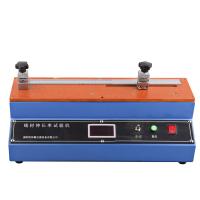
Another laboratory test method to evaluate coating flexibility or elongation is to perform ASTM D2370, "Standard Test Method for Tensile Properties of Organic Coatings." This method uses a tensile Tester to determine the elongation, tensile strength, and stiffness of a coating. Tested as a free movie. The free coating film is clamped at the top and bottom to clamp by the agreed gauge length. The film is then pulled at an agreed elongation until the film ruptures. The elongation of the sample can be determined using the increase in jaw separation data. The tensile strength of a material can be determined using the force required to rupture the membrane. Alternatively, the stiffness or modulus of elasticity of a material can be calculated from the initial slope of the elongation versus load curve.
Horizontal surfaces of coated wood structures, such as decks, can be affected by foot traffic, pressure and movement of furniture, and weather. Foot traffic and furniture dragging can cause the coating material to wear away or weaken the coating's adhesion to the substrate. One method of testing the abrasion resistance of coatings is to perform ASTM D4060, "Standard Test Method for Abrasion Resistance of Organic Coatings by Taber Abraser." Briefly, the method involves mounting a 4" x 4" coated panel onto a turntable. The panel rotates on a turntable beneath two counterweighted grinding wheels. The wear resistance of the coating is calculated for a specific load and type of grinding wheel (for example, 1000 cycles with a CS-17 wheel under a load of 1000 grams). Alternatively, the method can reveal the number of cycles required to remove a certain amount of coating by taking pre-coating and post-coating thickness measurements.
A limitation of these three methods for evaluating wood coatings is that they cannot be performed on wood substrates, so the flexibility and abrasion resistance of the coating is independent of the substrate effect. Nonetheless, the test can be used to assess relative performance.
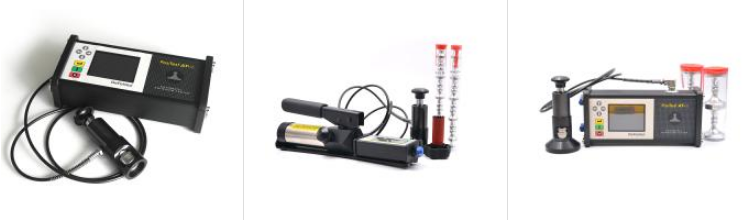
Many factors on coated wood structures can lead to loss of coating adhesion. Therefore, adhesion is an important property for evaluating wood coatings. The type of wood substrate (eg primed, weathered or pre-treated) will likely have a significant impact on the adhesion of the paint to the structure. In general, paints applied to properly pre-treated or primed new wood will bond better than paints applied to weathered wood or older wood substrates that may have had paint applied to them first. Aged weathered wood is often protected with coatings, therefore, the adhesion of the applied coating under such conditions is important for testing. Arguably, a good way to test the adhesion of a coating to a specific type and condition is to perform ASTM D3359, "Standard Test Method for Evaluation of Adhesion by Tape Test." Whether you are testing coated wood structures in the field , or testing prepared planks in the lab, both methods require X-cutting (Method A for coatings greater than 5 mils thick) or cross-cutting (Method B for coatings less than 5 mils thick) Penetrates through the film to the wood substrate. Pressure sensitive tape was applied over the incision, it was removed, and the degree of coating peeling was rated on a 5 to 0 scale. The test is destructive, so the number of tests should be limited and areas may need to be repaired if tested on an actual structure. 5 mils thick) or cross-cut (for coatings < 5 mils thick, Method B) through the film to the wood substrate. Pressure sensitive tape was applied over the incision, it was removed, and the degree of coating peeling was rated on a 5 to 0 scale. The test is destructive, so the number of tests should be limited and areas may need to be repaired if tested on an actual structure. 5 mils thick) or cross-cut (for coatings < 5 mils thick, Method B) through the film to the wood substrate. Pressure sensitive tape was applied over the incision, it was removed, and the degree of coating peeling was rated on a 5 to 0 scale. The test is destructive, so the number of tests should be limited and areas may need to be repaired if tested on an actual structure.
Scratch adhesion is another way to test the adhesion of a coating to a wooden substrate, such as a deck, which is subject to furniture being tugged across the surface. ASTM D2197, "Standard Test Method for Adhesion of Drawdown to Organic Coatings" can be performed using coated flat panels. Resistance to loss of scratch adhesion was evaluated by pushing the panel under a circular stylus, which gained weight until the coating was removed from the substrate. Report the load weight at the end of the bond failure. Note that this test can only be performed on a panel in the lab.
Coated wood structures may experience premature failure of the coating before it is put into service. The pre-coated planks are sometimes stacked face to face or face to face during warehouse, packing and shipping. These panels can be stacked for long periods of time and exposed to high pressure, heat and moisture depending on the shipping location and storage conditions of the panels. For wood coatings to be subjected to these conditions, it is important to have good block resistance, which is the ability of a coating to resist sticking to another surface. Additionally, a coating with good blocking resistance will resist changes in appearance when pressed against a surface for an extended period of time. One of the best ways to test the blocking resistance of coatings on wood substrates is to perform ASTM D2793, "Standard Test Method for Blocking Resistance of Organic Coatings on Wooden Panels." Stack the coated planks in a way so that the coated sides are both touching and the coated side is in contact with the back of the other panel. Typically, this stack contains six coating samples. The battery pack is subjected to an agreed pressure and temperature for a certain period of time. Then release the pressure and observe the coated surface of the panel. Surfaces were rated according to their degree of blocking from no surface damage to greater than 50% surface damage. The material was considered satisfactory if no adhesion or film damage was observed. Similar to scratch adhesion, block resistance can only be tested in the laboratory.
Exterior-coated wood structures that are subject to frequent moisture and warm temperatures can be prone to fungal growth. Fungi on the surface of coated wood structures can cause staining, degradation of the coating, and possible health problems. Coatings intended for use on exterior wooden structures in this environment should be tested for anti-fungal properties before use. ASTM D3273, "Standard Test Method for Resistance to Mold Growth on Surfaces of Environmental Interior Finish Coatings," can be used for interior and exterior coatings to test resistance to accelerated mold growth. This test method employs an environmental chamber capable of maintaining high temperature and high humidity conditions (approximately 90°F and 95% relative humidity). Indoors, coated wooden boards are suspended above the inoculated soil with ample space for air circulation. The coatings on the panels were rated weekly for mold growth by estimating the amount of surface fouling on a scale of 0 to 10, with 10 being no fouling and 0 being complete fouling. The methodology states that performance at a certain rating does not imply a specific time period of fungal-free coating, however, coatings with higher ratings generally perform better in real-world environments.
Finally, one of the best ways to assess the durability of wood exterior coatings is to subject them to accelerated weathering in the laboratory. There are several accelerated weathering test methods, but a good one for testing wood coatings is ASTM D4587, "Standard Practice for Fluorescent UV Condensation Exposure of Paint and Related Coatings." This accelerated exposure can be used to account for cumulative effects. Sun, humidity and heat on paint applied to wood. Briefly, the coated wood panels were conditioned for at least 7 days and then placed in a fluorescent UV/heating and condensation chamber. The method recommends using cycle 3 for exterior wood coatings consisting of 4 hours heat/UV at 60°C followed by 20 hours condensation at 50°C. After an agreed exposure time (eg, 500 cumulative hours), the coated panel is observed for blistering, cracking, loss of adhesion, color change (if pigmented) and/or loss of gloss. Since actual exposure conditions cannot be replicated in the laboratory, there is no correlation between exposure time and age. However, this regime works well for comparative testing.
Ultimately, outdoor exposure testing of candidate coatings on representative wood substrates in various natural environments is an excellent way to evaluate coating performance. However, it may take several years to see noticeable performance. By then, raw materials and recipes may have changed, making any data obsolete.
In summary, there are many man-made and natural environments that can affect the performance of coatings applied to wood structures. This article describes some laboratory testing methods that can be performed on candidate coatings to assess comparative performance. When selecting a test method, it is important to anticipate, to the extent practicable, the type of environment the coating will be subjected to and the type and conditions of the wood substrate to which it will be applied. Every coating project is unique and these test methods may be helpful in selecting the correct coating system for exterior wood structures.