Why we measure roughness
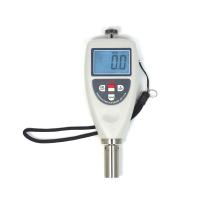
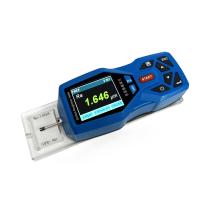
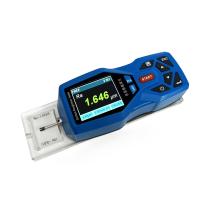
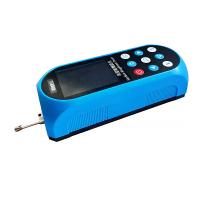
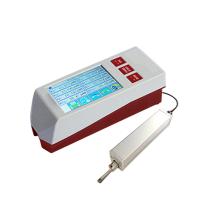
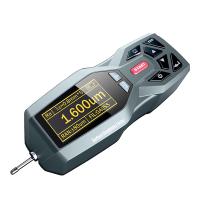
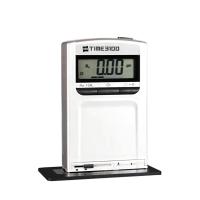
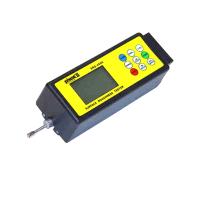
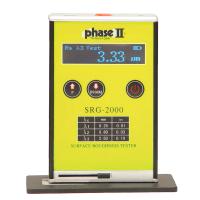
Surface roughness is an important parameter used to determine whether a surface is suitable for a particular purpose. Irregularities in a machined surface can affect the quality and performance of that surface and the performance of the final product. Rougher surfaces generally wear faster than smoother surfaces and are more susceptible to corrosion and cracks, but they also promote adhesion. A roughness Tester, also known as a roughness meter or roughness meter, is a portable device used to quickly and easily measure the surface roughness (surface finish) of an object.

How we measure roughness
A typical roughness Tester provides linear roughness measurements, tracking a mechanical tip along the surface to measure roughness along an arbitrary line. More sophisticated versions provide area roughness measurements which use non-contact methods (e.g. lasers, optics, interferometers, etc.) to measure surface area to provide higher resolution and wider area measurements. In this discussion, we focus on portable roughness Testers and linear roughness measurements.
Roughness values are usually expressed in Ra, which is the mean absolute deviation from the centerline of the surface. Rq is the root mean square of the deviation, and there are many other values used to measure peak height and valley depth. For most applications, Ra and Rq provide sufficient indications. For specially designed surfaces, other parameters may be more appropriate.
Measure different wire lengths, shapes, offsets and curves
The roughness Tester can measure several predetermined lengths. Shorter distances are used for measuring thinner surfaces, while longer lines are used for thicker surfaces. When considering a roughness Tester, it is best to ask about the different options available.
Some roughness Testers have interchangeable styli or styli for measuring different shapes, offsets and curves. To measure inside or outside diameter, make sure the roughness gauge under consideration can meet your requirements.
If you prefer empirical or metric, some roughness Testers are capable of displaying surface finish results in microinches or microns, eliminating the need for a manual conversion step.
data storage options
Other options include the ability to store data on the device itself, as well as a computer interface via a USB port for data storage or further analysis using a computer.