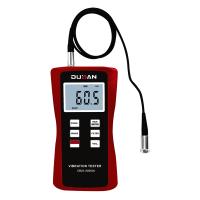
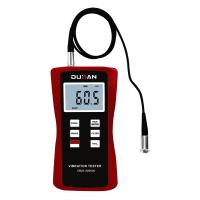
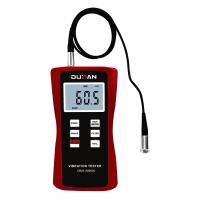
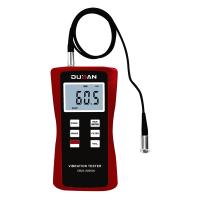
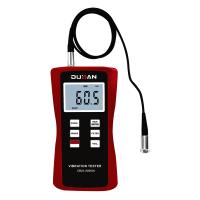
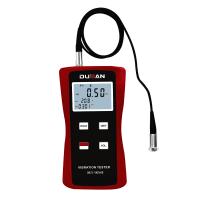
Vibration is a mechanical vibration phenomenon that occurs near the equilibrium point.
Oscillations can be periodic or random.
Vibration may be part of the function of a device, such as violin strings. Alternatively, it could indicate an alignment or operation imperfection, such as a motor bearing.
A shaking table may provide periodic (usually sine wave) vibrations.
A sine wave sweep reveals the resonant frequency, which means the greatest displacement due to vibration. It is good design practice to ensure that the resonant frequency is well above any vibration loads the product may be subjected to.
The random vibrations normally induced in a HALT box excite all frequencies simultaneously. Both sinusoidal and random vibrations can occur in the product's environment.
A shock is a pulse applied to a system. This is a sudden acceleration.
Drops, kicks, slams, or explosions are all examples of electric shocks. The pulses are short, so changes in velocity, acceleration can be large.
To describe a shock pulse, use the peak acceleration, duration, and pulse shape (half-sine, triangular, etc.). The unit g represents the multiple of the acceleration due to gravity and is a vector.
Shock loading is one method of inducing vibrations within a system.