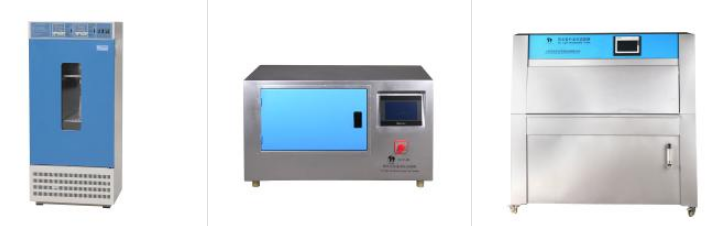
When considering a new Test Chamber, you may be concerned about airflow velocity? How fast should it be? Most test specifications don't say much on this matter, which makes the decision even more difficult. In some cases, low speeds are acceptable and/or desirable, while in other cases, high speeds are better.
The Test Chamber needs to have air circulation so that the air can pass through the heaters and coolers to ensure a uniform air temperature. This is called "forced convection". You might think that "natural convection" better simulates real-world conditions, but in most cases it's not that different.
Low Speed: If your test application does not specify a rate of temperature change, or is relatively slow (less than 5 degrees per minute), you can reduce the air speed. Instead, focus on distributing the air to ensure it is even.
High Speed: If rapidly changing the temperature of the test sample is your primary concern, then you should be more interested in airflow. The faster the airflow, the faster heat can be transferred from the air to the sample. Faster flow rates have diminishing returns. Generally, it is accepted that the highest reasonable rate for test room applications is 1,000 feet per minute (FPM). But in high performance applications, even 500 FPM is very efficient.
How Much Does High Airflow Cost? Due to the increased heat transfer, the rate of temperature change is reduced. Plus, when it moves the air, it puts more energy (i.e. heat) into the air, making cooling more difficult. ESPEC's line of Environmental Stress Screening Chambers feature high airflow and reasonable change rates. But the speed is 10°C/min. Air change, your sample change rate will be about 8°C/min. A standard chamber with the same air change rate but lower air flow can only achieve a sample change rate of 3-5°C/min. Of course, the smaller the sample, the faster the temperature will change.
Sometimes we get confused between the terms FPM (linear feet per minute) and CFM (cubic feet per minute). Calculate FPM by dividing CFM by the cross-sectional area that will be blown through. CFM numbers can be high, but when lowered to FPM, the actual air flowing through the product may not be as extreme as you think. Therefore, limiting the chamber size and cross-sectional area is an important criterion for true ESS applications.