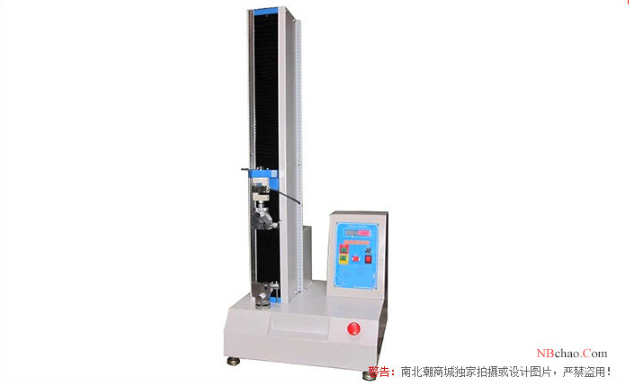
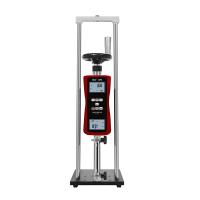
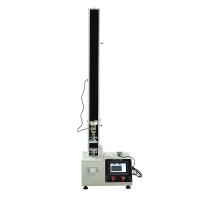
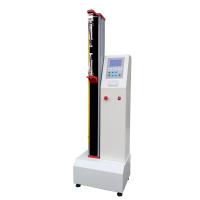
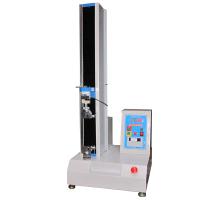
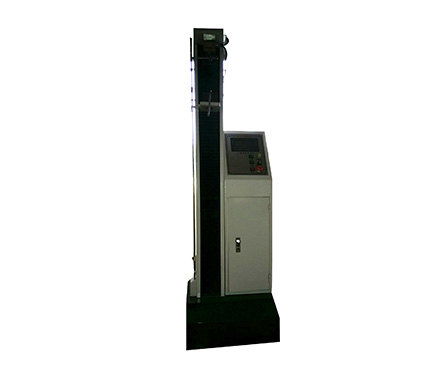
1. The force sensor of the electronic tension testing machine, because the quality of the sensor determines the accuracy and stability of the testing machine. At present, the sensors used in electronic Tensile Testing Machines on the market generally use S-type sensors with small force values and spoke-type sensors with large values. The interior of the sensor is usually a resistive strain gauge type. If the accuracy of the strain gauge is not high or the rubber used to fix the strain gauge is anti-aging. Poor sensor performance or poor materials can affect the accuracy and lifetime of the sensor.
2. If the ball screw driving the sensor has a gap, it will directly respond to the maximum deformation and elongation of the test.
3. Electronic Tensile Testing Machine transmission system. At present, the transmission systems of some electronic Tensile Testing Machines on the market use reducers, and some use ordinary belts. The main disadvantage of these two transmission methods is that the former requires regular lubrication, while the latter cannot guarantee the synchronization of the transmission and affect the test results. The German SAUTER electronic Tensile Testing Machine ensures the synchronous precision of the transmission, high transmission precision, high efficiency, stable transmission, low noise, long service life and no maintenance.
4. The power supply (motor) of the electronic Tensile Testing Machine is also called a motor. At present, some electronic Tensile Testing Machines on the market use ordinary three-phase motors or variable frequency motors. This kind of motor is controlled by analog signal, the control response is slow, and the positioning is not accurate. Usually, the speed range is narrow. If there is high speed, there will be no high speed without low speed or low speed, and the speed control will not be accurate. German Suter control adopts full digital pulse control, with wide speed range, accurate control positioning and fast response. It ensures accurate full-range speed control, long life, and requires no maintenance.
5. The measurement and control system (software and hardware) of the electronic Tension Tester. At present, the measurement and control systems of most electronic Tension Testers on the market are controlled by 8-unit single-chip microcomputers. The sampling rate is low and the anti-interference ability is poor. Also, if the digital resolution of the AD converter is low, the sampling rate of the AD converter is low. This measurement will be inaccurate.