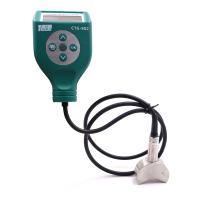
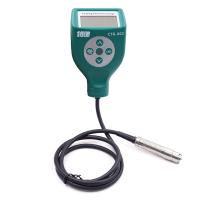
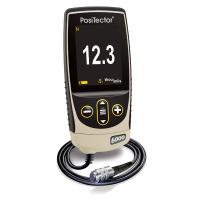
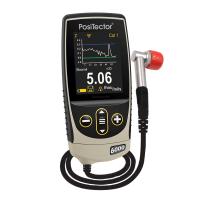
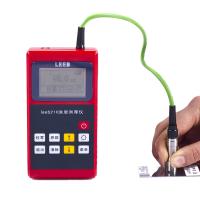
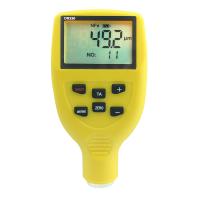
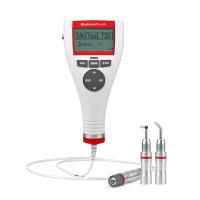
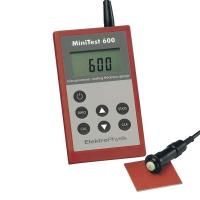
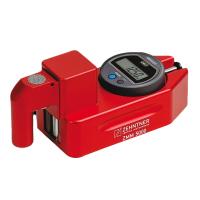
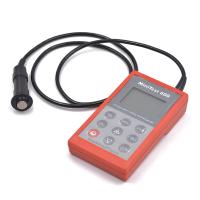
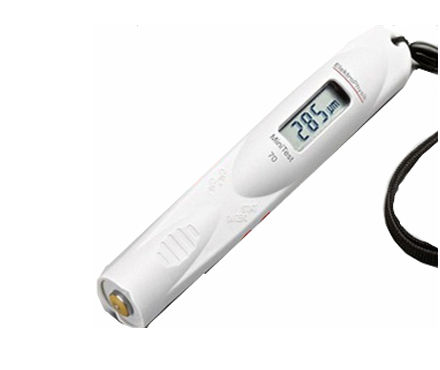
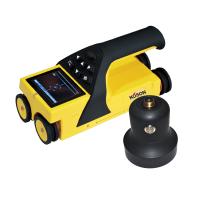
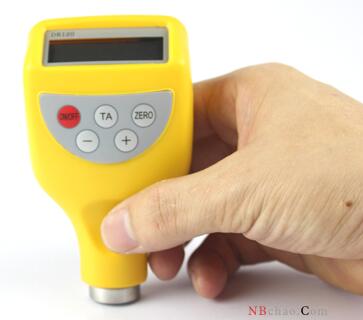
 With the continuous development of coating Thickness Gauge technology, coating Thickness Gauges are more and more widely used in various fields. This article mainly introduces the portable coating Thickness Gauge for railway paint film thickness measurement applications.
So far, in the construction and maintenance of railways, vehicles, bridges, buildings and equipment, a large number of paint coatings are used as anti-corrosion or decorative materials for steel, and sometimes zinc, aluminum or other metal coatings are also applied. The actual thickness of this type of material plays an important role in the anti-corrosion effect.
According to statistics in 1990, the Ministry of Railways has a total of more than 400,000 railway vehicles of various types, and more than 20,000 new vehicles are built every year. The paint thickness of new trucks is now required to be 120 μl. In the overhaul and maintenance rules for vehicles, bridges and tunnels, there are also clear regulations on the total paint thickness of the coating. The Ministry of Railways has implemented or passed the bridge paint standards and the technical conditions for the supply of anti-rust primers and top coats for vehicles. When inspecting paints according to the above regulations, the thickness of the paint film is an extremely important factor.
When performing thickness testing, there are currently many Thickness Gauges used on site, which have poor accuracy, poor reproducibility, large volume, and need to be frequently charged and calibrated, which is very inconvenient to use.
McCourt Thickness Gauge is a portable micro-thickness measuring device that complies with 150, DIN, AsTM, BS and relevant domestic standards, and is suitable for non-destructive and accurate measurement of the thickness of all non-magnetic coatings on steel. Its main features are: (1) It can be used without calibration and setting, and the measurement accuracy is high (<5%); (2) It does not require batteries or power sources, and uses springs as power devices; (3) Automatic operation, The reading on the dial shows that human factors are reduced, and the repeatability is excellent; (4) single-point measurement, (5) small size, easy to carry, metal casing, very suitable for on-site use.
The working principle of the instrument is as follows: the suction force between the permanent magnet measuring head and the magnetically permeable iron substrate is approximately inversely proportional to the square of the distance between them, and the thickness of the covering layer (that is, the distance) is automatically measured. The basic composition of the measuring instrument includes a permanent magnet, a torsion spring (spring), a scale and a self-stop mechanism. During the measurement, the magnet is attracted to the measured object, and then the disk-shaped tension spring is gradually sucked tight, and the tension increases. When the pulling force is just greater than the suction force, the magnet is separated from the measured object, and the coverage is displayed in a dial of about 350". Layer thickness. Depending on the object to be measured, instruments with different measurement ranges such as 0-100 bu m, 0-1000 bu m, and 0.2-3mm can be selected.
The instrument has undergone various measurements in the laboratory and on site for more than two years. The measured objects include primers, topcoats, putty, plastics, zinc spraying, aluminum spraying, zinc dipping, rust and oxidation of various thicknesses of railways. skin thickness etc. After comparing with other measuring instruments and measuring methods, it is considered that this is the most suitable thickness measuring instrument for on-site and laboratory use in the domestic market. This instrument has been approved by the State Bureau of Technical Supervision and has obtained PAc certification. The National Coatings Standardization Technical Committee uses this instrument as a measurement basis in the process of formulating the new national standard, and it is recommended as a non-destructive measuring instrument for the new national standard of coating thickness measurement methods. Using this instrument will greatly improve the measurement quality of railway paint film thickness.
The above are some brief introductions of the portable coating Thickness Gauge used by the author for the measurement of railway paint film thickness, hoping to provide some reference help for the staff in related industries.
Yang Songbai's "Portable Coating Thickness Gauge for Railway Paint Film Thickness Measurement"