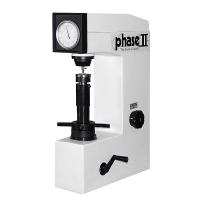
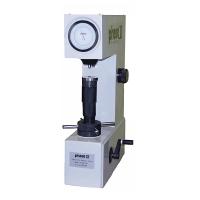
The hardness of a material is the property that allows it to resist deformation, bending, scratching, abrasion or cutting. If you work in the manufacture of materials, you probably already know that hardness testing is a critical step in the production process of products and those obtained from third-party suppliers. You need to set baseline measurements and ensure your product meets specific standards for strength. However, if you are not a materials engineer, you may be surprised to learn that the hardness of any material is not an intrinsic property determined by precisely defined and fundamental units of mass, length or time. Instead, the value of material hardness is the result of a specific measurement procedure.
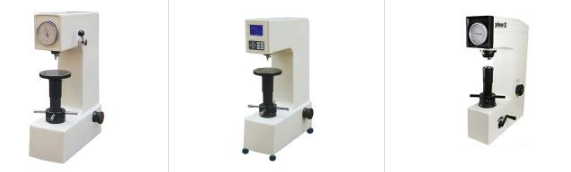
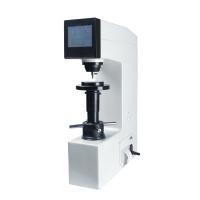
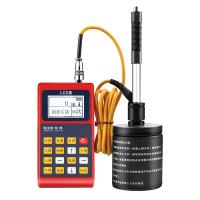
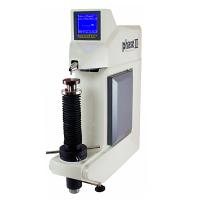
For most modern materials, hardness testing is usually performed by a device that measures the depth of an indentation left by a point of a specific shape under a specific force at a specific time. Wilson VH3100 Knoop/Vickers Automatic Hardness Tester Common hardness tests that measure the relationship between hardness and the size of the indentation left by the test are the Rockwell, Brinell, and Vickers hardness tests.
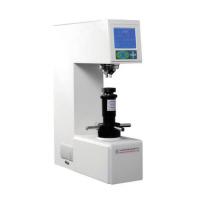
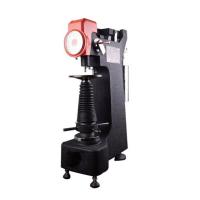
The Rockwell hardness test is the common type of hardness test available, and for good reason: it is a very fast and reliable method of determining the hardness of metals, alloys, and plastics compared to other methods. During the test, a diamond cone or hardened steel ball indenter is pressed into the material to be tested, typically with a preload of 10 kgf. After equilibrium was reached, an additional load was applied, which resulted in greater penetration of the material. Once equilibrium is reached again, the additional load is removed and the material rebounds slightly. The permanent depth of the remaining indentation is then used to calculate the Rockwell hardness value.