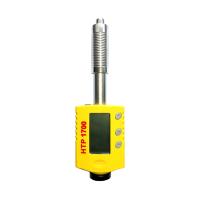
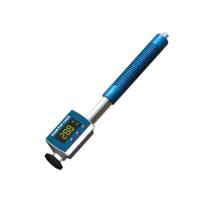
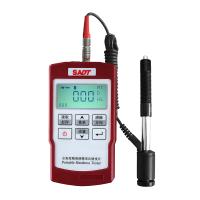
Hardness testing is a process or method used to measure the hardness of different materials. Simply put, the hardness of any material refers to its level of resistance to permanent indentation.
There are many different techniques for measuring the hardness of many materials, and each test can give different results for the same material.
Because each test is designed to measure the hardness of a specific material. Each material has physical properties that differ from the others. If you use the same test for each material then you will get false findings.
In that era, everything was made of plastic, and the use of plastic was growing every day.
It is very important to measure the hardness of plastics without knowing the hardness level of the material, if you want to meet the expectations of your customers you cannot guarantee its quality, the quality of the material should be high.

Plastic Type:
The quality of any material used in the manufacture of your product is very important and if you use low quality materials it will affect performance.
Raw plastic comes in many different shapes and types, and testing depends on which form of plastic you are testing. Fundamentally, plastics, curing and mixing use two variables. Both variables can easily be hard tested to verify them.
Plastics commonly used in hardness testing are molded parts and plastic sheets.
There are also some other forms of plastics, for example, thermoplastics - polystyrene, cellulose acetate, formica, thermoplastics and plexiglass, which are commonly used in hardness testing of plastics.
Plastic hardness test:
The hardness test of plastic is very simple, in the hardness test of plastic, an external force is applied to the plastic to check its electrical resistance.
In this test, a force is applied to the center of the sample material with the help of an indenter. The indenter is pushed into the plastic with a specific force and movement until the presser foot touches the plastic.
Now is the time to measure the depth of the indenter on the sample material, the depth to which the indenter penetrates the plastic.
Through this process, you will calculate the electrical resistance level of this plastic sample. The resistance of this penetrating head can be plastic mixer or solidified.
If the indenter penetrates deeply into the plastic, it is called soft plastic, and if the indenter fails to penetrate the plastic, it is extremely hard plastic. You can easily calculate the hardness level by measuring the depth of the indenter. This is a common and very simple way to test the hardness of plastics.
Reasons for hardness test failure:
There are many reasons why hardness testing of plastics may not provide correct results. Hardness testing is very easy and simple, but proper training is required to perform the test.
Sometimes professional Testers fail to get correct results due to small mistakes.
A hardness test for plastics can fail for several reasons, such as applying more load to the Tester than required, or incorrect test setup. If you use the wrong type of creasing equipment, then you will get the wrong find.
Each test is designed for a specific material, so it is important to use the correct test for the nature of the material.
As mentioned above, plastic comes in many forms and types, and even the thickness of the plastic can affect the results. If you choose a thin hard plastic sample in the indentation method, you will definitely get wrong results.
Types of Plastic Hardness Tests:
There are three different types of hardness tests used to test the hardness of plastics. In scientific terms, the three hardness tests are D2240, ASTM D785, and E384/E92. To sum up, these three tests are called Shore hardness, Rockwell hardness and Knoop and Vickers test.
The above three tests are used according to different testing standards in each country. Even companies can choose their own hardness testing methods according to quality standards.
A common method of testing the hardness of plastics used throughout the world is the Rockwell hardness method. The US uses the ASTM hardness method and they tend to do this test on every product whether it is imported or exported. Rockwell hardness testing is known for higher standards of materials.
Rockwell hardness test:
In a Rockwell hardness test, a spherical indenter is used to penetrate the plastic to learn its electrical resistance. In common tests, the range of indenters used is 15 to 150 kg.
Use balls with 1/8, 1/4 and ½ inch diameter indenters. The Rockwell test for plastics is the same as the normal test for hardness testing of plastics. Due to the properties of plastics, there is a separate difference between dwell time and recovery time.
Uniqueness of plastic testing:
Many different materials are used in the production process. Most of them have similar physical properties and the same testing standards. Testing of plastics is unique compared to other materials because plastics have different viscoelastic and time-dependent effects. These factors need to be considered before measuring the hardness of plastics.
analysis test:
For testing the hardness of plastics, there are many different options that you can choose according to your own criteria. In this technological age, everything is controlled by computer systems.
New generation technology contributes a lot to the testing process and makes it easy to obtain accurate results. When testing the hardness of plastics, most Testers use computer-controlled sample material loadings.
The time and load are controlled by computer, you can set the duration and load manually, or use other software to automatically set the duration and weight according to the type of sample material.