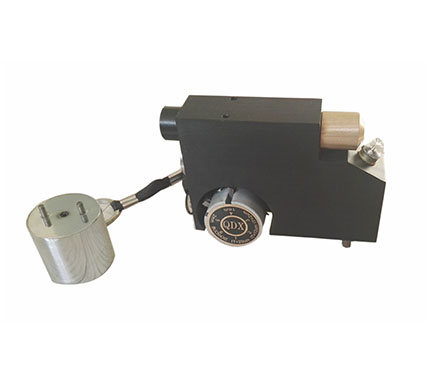
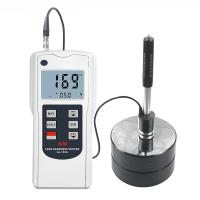
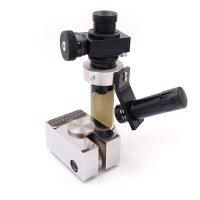
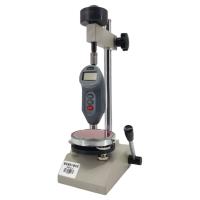
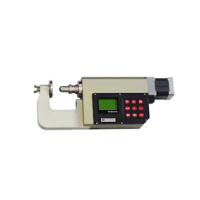
Manufacturers and scientists routinely perform hardness tests on any solid material to understand its qualities or to identify elements.
Hardness gives an idea about the material behavior.
Material properties such as electrical resistance, durability, strength, dent, etc. can be determined by performing hardness testing.
Otherwise, it's really hard to know if the material will serve its purpose. Determining the test method for testing is an important task. Type, size and microstructure all need to be taken into account.

Select Hardness Test
In order to test the hardness of metal objects, there are several methods such as Rockwell hardness test, Vickers hardness test, Knoop hardness test, and Brinell hardness test.
The Rockwell test is a commonly used, simple method in the industry. There is an indentation, which is inserted into the surface of the material by a large load, and the depth is measured. It is the fastest and most convenient method for larger samples.
The Vickers test is also another test used to measure the hardness of all types of solid materials. Measure the length of the diagonal to calculate the hardness of the sample. It is used in macro hardness testing and micro hardness testing.
The Knoop test can replace the Vickers test. It works on materials that are brittle and hard like ceramics. Hardness testing is performed on a microscopic level. The indenters used are pyramidal and asymmetrical. Suitable for small areas. It is useful for testing the hardness of thin layers such as coatings. This can solve the problem of cracking.
The Brinell hardness test is suitable for materials that have a grain structure and are larger in size. Here, the hardness is measured optically using a cemented carbide ball.
For minerals or rocks, a common test is the Mohs hardness test. Here, ten reference minerals and their hardness values are used to determine the hardness of the unknown element by scratching the outer surface. It's easier and simpler.
For woods, a common one is the Janka test. Here, a small steel ball is inserted into the surface and the force is measured for hardness.
In order to obtain accurate results, there are some other factors that need to be considered and controlled, such as vibration, temperature, light, humidity, temperature, etc. Also, follow proper testing procedures. Choose a clean surface for testing.