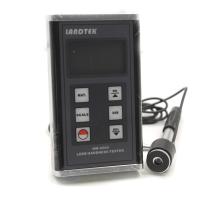
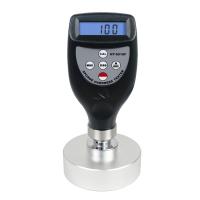
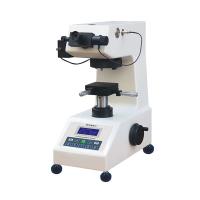
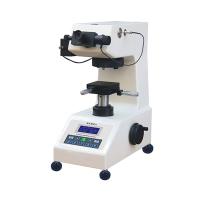
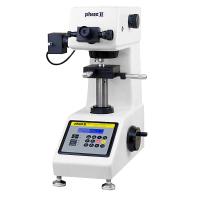
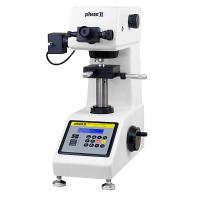
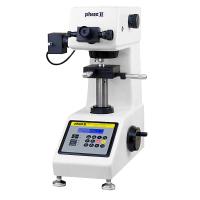
Robert Smith and his colleague George Sandland developed a hardness test known as the Vickers method or hardness test in 1921.
The hardness test was developed by Vickers Limited as an alternative to another hardness test called the Brinell hardness test to determine the ability of a material to resist indentation. Vickers hardness is also known as microhardness test.
Compared to any other hardness testing strategy, the Vickers hardness strategy is basically user-friendly. This is because the required calculations do not depend on the strength of the indented material.
Also, the indenter is universal in that it can be applied to any type of material regardless of its hardness.
Like all other hardness measurement methods, the rationale for its application is to consider the material's resistance to indentation.
Vickers hardness is very suitable for metals. In fact, it has a broad scale compared to some hardness testing methods. However, it is basically suitable for thin sections, small parts or deep work.
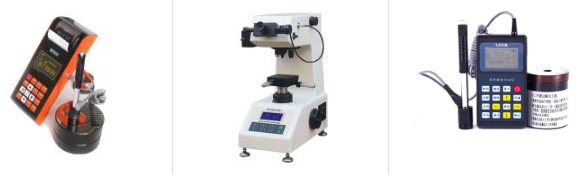
hardness unit
The unit of Vickers hardness is known as the Vickers pyramid number (HV). HV can be changed to Pascal's unit. However, it is necessary not to confuse it with pressure since they both use the same unit. The load or material on the indentation determines the hardness value, not the area perpendicular to the vertical force. That proves it's stress-free.
In Vickers testing, the indentation is usually very small, so it is suitable for a variety of applications. It can be used to measure small areas or outward segments of small parts by using different microstructures, and it can even measure the depth of hardening by taking the part and making a set of various indents to basically characterize the part. hardness changes.
How to implement it?
The Vickers test procedure requires the creation of indentations with specific loads by using diamond indenters to ASTM E – 384, ASTM E-92 and EN ISO-6507. Measure the diamond indentation and convert it to a Vickers hardness value.
So far, it can be considered that the Vickers method can be used to test various types of elements or materials, and the test samples performed are properly and carefully prepared.
What materials can it be used to test?
It can be used to test various materials, including ceramics, composite materials, metals, and even applications including testing various microstructures individually, measuring the depth of shells, etc.