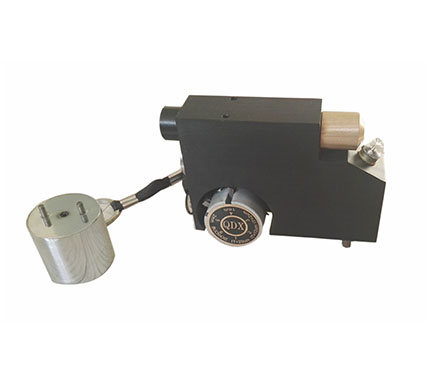
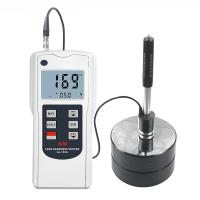
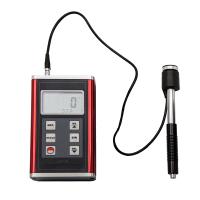
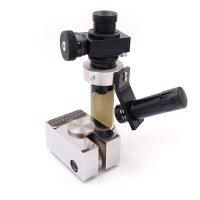
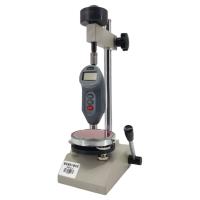
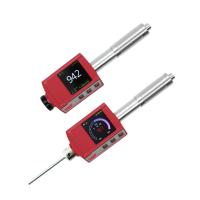
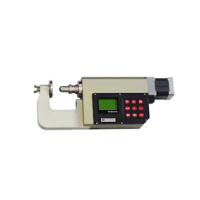
硬度测试仪是用于确定材料硬度的设备。
硬度是通过用标准压头测量试样表面渗透的影响来确定的。
市场上有不同的硬度计,例如洛氏硬度计,布氏硬度计,维氏硬度计等。

为什么硬度测试对产品很重要
硬度测试在材料测试,质量控制以及确保最终产品符合法规要求方面起着非常重要的作用。
它可以确定材料对特定用途的适用性以及可以接受的处理量。它提供有关结构完整性和组件质量的数据。
硬度测试在研发实验室和工业应用中非常受欢迎。它有助于确保用于制造产品的材料适合这样做,并满足特定用途的质量和安全标准。
硬度测试可确保最终产品具有很高的质量。
使用硬度测试的行业
硬度测试已在许多行业中广泛使用。利用硬度测试的一些主要行业如下:
机械工程公司
硬度测试在机械工程行业中扮演着非常重要的角色。
它广泛用于不同的机械工程公司,从农业设备,建筑机械或机床的生产,起重机和洗车设备等开始。
进行硬度测试的标本可以从小型应用(如齿轮电动机中齿轮的硬度测试)到大型应用(如直径可能为几米的风力涡轮机的洗车机或齿轮上的焊接接头测试)变化很大。
在机械工程行业中,通常需要测试相同零件的硬度,因此,该过程通常是自动化的,并且在过程完全自动化的情况下也可以无人值守。
汽车行业
硬度测试在汽车工业中得到了广泛的应用。实际上,汽车工业可能在硬度测试中应用广泛。
汽车中有许多运动部件,需要进行硬度和可靠性测试,以确保乘客完全安全。
汽车工业中的试样范围包括小螺钉,门板,发动机部件,变速箱零件,焊接接头等。
如果每天需要测试大量相同的零件,或者需要执行诸如CHD测量之类的过程中测试,那么硬度测试过程应该自动化以节省时间和资源。
初级金属行业
初级金属行业在硬度测试中也有许多应用。硬度测试在主要金属行业中很重要,因为它有助于确定金属对特定应用的适用性以及可以进行的处理类型。
它还有助于了解检查金属的材料结构以及其是否符合特定法规。
通常,从原始金属的中心抽出或切割出一个试样,并进行硬度测试。According to所需的质量保证,主要金属行业的硬度测试是在低负载,微观和宏观范围内进行的。
铸造厂
Foundries use hardness testing to control the quality of the manufacturing process during production. It is also commonly used to determine and measure the properties of cast metals and understand their suitability for different applications.
Hardness testing is non-destructive in nature, which means it can be performed directly on the cast metal rather than on a test piece. The tensile strength of metals is determined by using a hardness test.
Typically, the castings to be tested are large and heavy, and the test forces involved are mainly in the macroscopic range, which is mostly in the Brinell range.
Rockwell hardness
benefit
The Rockwell hardness testing method allows you to read the hardness value directly from the sample.
Unlike Brinell or Vickers hardness testing methods, no optical reading is required to determine the hardness reading.
Instruments conforming to the Rockwell method are preferred because they are independent of the operator.
This method is minimally affected by the roughness of the sample surface. Under this approach, the test cycle is short and fast, and it is also cost-effective.
The cost-effectiveness is mainly due to the absence of the need to connect the Rockwell Hardness Tester to a complex optical system for hardness testing as with other methods.
This method of hardness testing is non-destructive and the sample can be used for other purposes after testing.
shortcoming
The downside of the Rockwell hardness test is that it is not an accurate test method. Slight differences in measuring depth differences can lead to large deviations in the calculation of hardness values.
The test location and sample need to be completely free of any contamination in order to obtain accurate and meaningful results from this method of hardness testing.
This method is also known to be inaccurate because the effect of the indenter on the result is unknown. If the indenter is worn and not sharp enough, it may affect the test results.
The flip side of using the Rockwell method is that it can be difficult to differentiate metals as they increase in hardness.
Brinell Hardness Tester
benefit
The Brinell hardness test method can be used to test heterogeneous materials when large balls are in contact with many crystals and form a mechanical average.
Good precision, repeatability and good representation can be obtained using this method.
The indentation or indentation produced by the Brinell Hardness Tester is large enough to give an unbiased and good estimate of the hardness of the specimen.
It is unaffected by soft spots and small hard spots. It provides you with reliable hardness measurements even with rough sample surfaces.
shortcoming
The Brinell method differs from the Rockwell method in that it requires surface preparation and is slightly more complicated. The surface quality of the test piece needs to be good because the indentation is measured optically.
When a sample is tested with a high test load, there is a large chance of deformation of the sample surface when tested on a macroscopic scale.
This can lead to errors in the measurement of hardness values due to wall formation. The method has limitations when applied to thin samples of very hard materials.
The Brinell hardness method is slow compared to the Rockwell method and takes approximately 30-60 seconds to measure the hardness, not including the time required to prepare the sample.
Vickers Hardness Tester
benefit
The great advantage of using the Vickers method is that it can be used to measure the hardness of a wide variety of materials since the procedure covers the entire hardness range.
Therefore, this method is more commonly used in laboratory settings.
Under the Vickers method, only one type of indenter can be used to measure the hardness of different material types and samples.
The hardness value derived from the Vickers method has appropriate meaning because it corresponds to a specific load on an indentation with the same shape.
The Vickers method is non-destructive. Therefore, the samples can be used for other purposes after testing.
shortcoming
The surface quality of the sample to be tested should be good, since hardness can be measured optically. This means that the test surface should be prepared, otherwise the readings will be inaccurate. The test area should be ground and prepared, and the perpendicularity of the indenter axis plays an important role in measuring hardness, as any inclination will produce irregular indentations. The Vickers method is also slow compared to the Rockwell method. The Vickers method is not recommended for production lines.
Knoop Hardness Tester
benefit
Knoop Hardness Testers can be used to measure the hardness of all materials from soft to hard because the process covers the entire range.
Because the Knoop measurement diagonal is longer for any indentation depth, it is more accurate than the Vickers method. The damage to the sample surface during the test is less than that of the Vickers method, which makes it a non-destructive test method.
The Knoop method is ideal for testing small and long samples, very thin layers, and brittle materials such as glass and ceramics.
shortcoming
The Knoop method requires good surface quality, since measurements are made optically. The use of optical systems makes the Knoop method slower and more expensive than the Rockwell hardness testing method.
Things to consider when choosing a Hardness Tester
Even for experienced Testers, selecting the perfect Hardness Tester can be a daunting task.
Because of the different types of samples to be tested and the different testing procedures, it can be difficult to narrow down a good Hardness Tester.