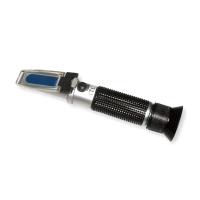
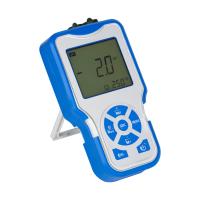
A salinometer is a machine that measures the amount of table salt (NaCl) in a solution, called salinity. Another name for a salinity meter is a conductivity meter, since dissolved salts in the water increase its ability to conduct electricity at measurable levels. Devices for measuring the salt content of water were widely used on ships, so several oceanographers first invented devices for measuring the salt content of water. The Wenner-Smith-Soule salinity gauge was built in 1930 and was incorporated into the International Patrol Fleet in 1934. The International Patrol (ICP) was formed after the sinking of the Titanic in 1914 to monitor the movement of icebergs in the North Atlantic, thereby avoiding further ship collisions.
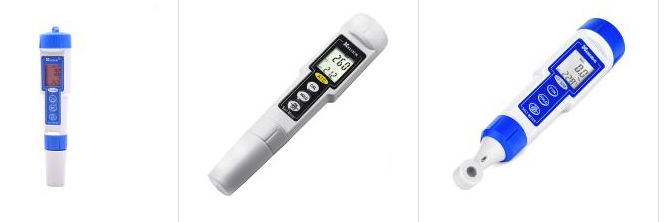
The buoyancy of freshwater icebergs at the ocean's surface is directly affected by their salinity, but this is not the sole purpose of a salinity meter. They are also commonly used to measure salt levels in the blood, since too much salt in the diet can lead to high blood pressure. The equipment is also used on ships that have desalination equipment to purify the salt in the water, such as submarines and cruise ships. Measurements from a salinometer ensure that the desalinated end product is safe to drink.
The salt content of food can also be measured with a salinity meter device by one of the following four methods. It might have an instrument that measures chloride ions in food and conceals it to a salt meter, or an instrument that measures sodium ions and does the same. Another method is to measure the electrical conductivity of the food and convert it to salt content. Finally, a salinity meter used to measure the amount of salt in transparent food can measure the refraction quality by passing a low-power laser beam through the food and convert the reading to the amount of salt present.