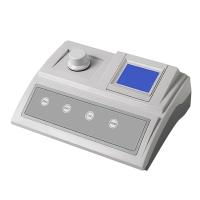
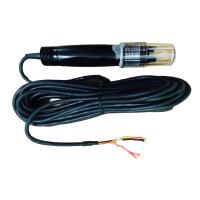
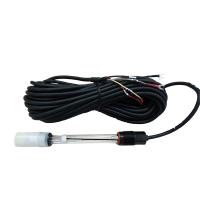
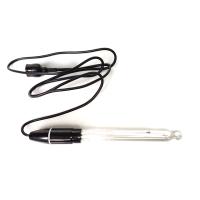
Quite simply, dissolved oxygen (DO) is the free (non-compound) oxygen present in water. Oxygen dissolves by diffusing from the surrounding air by aeration from cloudy water or waste products of photosynthesis. The importance of DO to the maintenance of aquatic life from fish to plants to bacteria cannot be overstated and thus is an important parameter that can be measured.

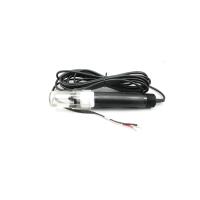
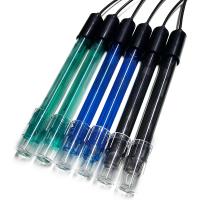
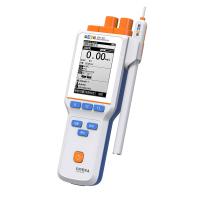
There are many factors to consider when selecting a dissolved oxygen electrode based on your water sample, sample color, and required electrode maintenance. There are two main types of Dissolved Oxygen Meter sensors: electrochemical film-covered sensors (amperometric and polarographic) and optical-based sensing using luminescence.
Electrochemistry – Electrical Sensors
The operation of the battery is very simple and basically works as a battery that produces voltage. This voltage is proportional to the concentration of oxygen permeating through the membrane into the galvanic cell. An electrolytic cell consists of a coiled cathode wound around a lead anode. The salt-filled solution brings the two into contact and fills the voids in the electrode body made of the rigid polymer. The sensing end of the unit has an inert permeable membrane stretched over the inner half unit.
When the electrode is placed in the sample solution, oxygen will diffuse through the pre-installed membrane and the thin layer of filling solution to the cathode. Oxygen is reduced at the cathode, which is held at a strongly negative potential. The lead anode is simultaneously oxidized (consumed) by the passage of electric current. This creates a sensitive electrode that can detect the smallest changes in millivolts when connected to a Dissolved Oxygen Meter.
This galvanic dissolved oxygen electrode offers fast response and rugged construction, ensuring both calibration and measurements are fast and consistent. It's complete and ready to operate; connect it to the TRUEscience SMART Cap to transmit measurements via Bluetooth to the TRUEscience app on your Android phone or tablet. The intuitive app allows users to create rich readings such as measurement logs, set alerts at specific DO levels and connect to the cloud.
Electrochemical – polarographic sensors
Polarographic sensors are very similar in structure to current sensors. The amperometric sensor contains silver and zinc different enough to reduce oxygen across the membrane without applying a voltage. Polarographic sensors, on the other hand, require a polarizing potential to be applied the first time the DO is turned on, and the user needs to wait 15 minutes for the sensor to stabilize.
Polarographic sensors are small, rugged DO meters suitable for field or educational applications. It has simple basic controls with just a single button on the top of the shaker meter.
Electrochemical sensors require more maintenance by the user, with the membrane and internal solution needing to be replaced periodically. The cleaner the water, the less often you need to change the filter. They also require flow across the membrane to be measured and therefore cannot be measured in stationary samples.
optical sensor
Optical dissolved oxygen electrodes measure DO by emitting light of a specific wavelength onto a dye in the sensing layer of the sensor, causing it to emit light. Dissolved oxygen from the water sample diffuses into the electrodes, which interferes with the lifetime and luminescence intensity of the chemical dyes. The dye will luminesce better if the dissolved oxygen is zero, and both the luminescence lifetime and intensity will decrease as DO increases in the sample. If you are regularly testing water samples with high dissolved oxygen, this will shorten the life of the probes and you will need to replace those probes more often.
The optical sensor is low maintenance; there are no membranes or electrolytes to replace, it is flow independent, and it is not disturbed by hydrogen sulfide.
Conclusion
Neither amperometric nor optical probes require a "warm-up" polarization time, they can be used immediately, whereas polarographic methods take 5 to 15 minutes to stabilize
Amperometric and polarographic sensors have faster response times
Optical instruments require almost zero flow, while electrochemical probes require transmembrane flow
Optical sensors are the most expensive option and have high power consumption
Current and polarography can be affected by certain gases, including hydrogen sulfide, which can pass through the membrane and affect the reading
Optical sensors require less maintenance