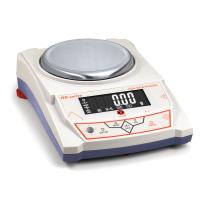
With the continuous development of electronic balance technology, it is widely used in all walks of life. Because the design is particularly complex, and there are many manufacturers, there are various models and specifications. Once there are some problems in the process of use, it is really at a loss what to do. This article takes the commonly used electromagnetic induction electronic balance as an example, and analyzes and introduces its working principle and maintenance methods for common problems.
1. The basic principle of electronic balance
The electromagnetic induction electronic balance is different from the electronic scale. The electronic balance uses a resistance strain sensor as the induction output, and the electromagnetic induction electronic balance is designed using the principle of electromagnetic force balance. According to the electromagnetic force formula:
F = BLIsinθ
Among them, F is the electromagnetic force; B is the magnetic induction intensity; L is the length of the stressed wire; I is the current intensity flowing through the wire; θ is the angle between the current-carrying conductor and the magnetic field.
It can be seen from the above formula that the size of F is proportional to B, L, I and sinθ. Since the size of the induction coil has been fixed after the sensor is designed, its B and L will not change, and θ is 90° , so sin θ=1, therefore, the magnitude of F is corresponding to I.
The main components of the electronic balance are: power supply, electromagnetic sensor, photoelectric sensor, keyboard and display, and control circuit.
The power supply is mainly composed of a built-in multi-output AC transformer. The 220V AC voltage is converted into several sets of different AC voltages by the transformer, rectified and filtered into a DC voltage, and then transformed into a stable DC voltage through three-terminal voltage stabilization integration. for different circuits. In addition, because the microprocessor circuit will be out of control when it is disturbed by the power supply, the system cannot work, so a power monitoring circuit is generally set on the microprocessor power supply circuit, and the 7705 chip is commonly used.
The electromagnetic sensor consists of a magnetic cylinder, an induction coil, and a support lever. The magnetic cylinder is generally a cylindrical cylinder (the shape of the magnetic cylinder of the imported balance will be different), and there is a cylindrical magnet in the middle. The induction coil is inside the magnetic cylinder. It is a part of electromagnetic conversion. The induction coil is connected with the supporting lever. There are many supporting spring pieces on the supporting lever. The middle part of the spring piece is very thin and easily damaged. Therefore, great care must be taken during use and maintenance.
The photoelectric sensor is composed of an infrared light-emitting diode (the old electronic balance also uses a visible light diode) and a phototransistor. When the position of the weighing pan changes, the light intensity received by the phototransistor changes, and its output current changes accordingly.
Displays and keyboards belong to terminal facilities. Common displays include fluorescent display screens, liquid crystal display screens, and LED light-emitting tubes. The working principle of the fluorescent display screen is similar to that of a picture tube, and its advantage is that the displayed numbers are clear and not affected by external light. But the cost is high, and the power supply voltage is high, the power consumption is large, and it is fragile. The advantage of the liquid crystal display is that it displays many images, which is especially suitable for multi-functional electronic balances, but the driving circuit is more complicated. The advantages of LED light-emitting tubes are that they are cheap, and the numbers displayed can be very large, but they will not be seen clearly in places with strong light. Keyboards are generally soft-touch keys made of plastic film.
The control circuit is composed of microprocessor, amplifier circuit, integral circuit, A/D conversion circuit and so on. Microprocessors generally use single-chip microcomputers, and the commonly used models are 8031, 8051, 8749, 8751, 89C51, etc. Among them, 8749, 8751, 8951 have their own memory, so no external memory is needed. In addition, there are other series of microprocessors such as MC68HC05.
The basic working principle of the balance is: when the balance is unloaded, the electromagnetic sensor is in a balanced state. After loading, the position of the induction coil changes, the light intensity received by the phototransistor in the photoelectric sensor changes, and its output current also changes. After being processed by the microprocessor, the current of the electromagnetic coil is controlled to make the electromagnetic sensor in a balanced state. At the same time, the microprocessor converts the current change of the electromagnetic coil into a digital signal and displays it on the display.
Second, the maintenance of common faults
Among the common faults of electronic balances, there are many parts such as electromagnetic sensors, control circuits, and power supplies.
1. Fault performance of electromagnetic sensor
(1) "CH2" appears in the power-on self-test, or "-E" or "L" appears;
(2) The zero position keeps jumping;
(3) No display after POST, or a horizontal bar appears;
(4) The error of the four corners is large.
In the case of (1), it may be that the weighing pan is not placed properly, causing the induction coil to be out of balance. If the above problem still occurs after the weighing pan has been placed, you can gently press the weighing pan with your hands, and the induction coil should have a restoring force at this time to make the weighing pan return to the original balance position, otherwise it may be that the induction coil has no power supply, or the control circuit If it is not normal, it is also possible that the spring leaf on the support lever is broken. After excluding the possibility of spring leaf breakage, the control circuit of the induction coil should be traced.
In the case of (2) and (3), first check whether the weighing pan is placed properly or encounters foreign objects; whether there is airflow around the balance, whether there is a source of vibration, or whether the power supply voltage is unstable. After the above external influences are eliminated, then The upper cover of the balance should be opened to check whether the support lever has touched foreign objects, or the spring leaf has been severely deformed and is about to break. The last and most important reason is that there are foreign objects in the magnetic cylinder, which causes the induction coil to be inflexible. This is usually because the user does not pay attention, causing dust or other particles to fall into the cylinder. At this point, the sensor can only be disassembled for cleaning. Due to the precision and fragility of the sensor, the disassembly requires great care. Uneven force will break the spring leaf and cannot be repaired. First remove the main spring piece connecting the upper and lower levers to separate the upper and lower levers, then remove all the screws connecting the upper lever and the sensor as a whole, take out the entire upper lever, then remove the upper cover of the cylinder body, and use a soldering iron to connect the induction coil with the sensor The wires connected to the circuit are welded off, and the induction coil can be slowly taken out. After cleaning the cylinder body, reinstall the sensing coil into the cylinder body. After installation, lightly press the support lever to observe whether the induction coil touches the cylinder body, otherwise the position of the coil should be adjusted. After the sensor is disassembled, it will affect the four-corner error of the balance, so the four-corner error must be readjusted.
In the case of (4), first check whether all the springs on the sensor are seriously deformed. The cause of the deformation of the spring leaf is that the balance is seriously overloaded or subjected to collision, at this time only the spring leaf should be replaced. After excluding the above factors, the two adjustment nuts (or screws) on the sensor can be adjusted. The sensor is left-right symmetrical, and the adjustment nuts are also symmetrical to each other. The adjustment method of the four-corner error is: first adjust the left-right error: the two nuts rotate clockwise and counterclockwise respectively. The error on both sides, until the error meets the requirements. Then adjust the front and rear errors: the two nuts rotate clockwise or counterclockwise at the same time until the error meets the requirements. After the front and rear errors are adjusted, the left and right errors should be checked again, and usually need to be fine-tuned.
2. Control circuit failure
The fault of the control circuit is more complicated, and the maintenance is difficult, and the control circuit of the domestic and imported electronic balances is quite different. Now take the domestically used Shanghai balance as an example for analysis. The common models are MP120, MP200, MP500B, and MA110 , MP2000, etc. The metering technology 2002 No 8 series balance has a power-on self-test program, which is displayed as "CH0" ~ "CH9", and the usual faults are displayed as "CH2", "CH4", "CH 5" and "CH7". Display "CH2" is the sensor failure. The appearance of "CH 5" is caused by turning on the balance in the calibration state. Since the key panel of the balance is made of plastic film, long-term use in a humid environment will cause a short circuit of the calibration key, and "CH5" appears. Lift it up and clean it with alcohol. If “CH4” appears, it is usually a failure of the microprocessor. There is a balance control program in the microprocessor. Its model is generally 8951, and a small amount is 8751. Take out the microprocessor from the model balance and copy it with a programmer. "CH7" appears, usually the memory integration of the balance is damaged, generally use serial E2PROM, the model is 9346, the integration can also be copied with a programmer.
3. Power failure
Power failure generally shows no display when starting up. This failure is relatively easy to repair. The common causes are (1) blown fuse; (2) burnt out transformer; (3) burnt out rectifier integration or rectifier diode; (4) three-terminal regulator Integration is broken. In the maintenance, just eliminate it step by step.
3. Maintenance examples
Maintenance example 1. A MP200-1 electronic balance shows that the zero position is constantly jumping. It is observed that the surface of the sensor is dirty, and it is estimated to be electromagnetic
There is dust inside the sensor. After disassembling the sensor according to the steps and cleaning it, the irregular jumping of the displayed numbers disappeared, but the zero position kept drifting upwards. It was estimated that it might be the leakage of the integrating circuit capacitor, but there was no change after replacing the capacitor. After inspection, it was found that the photoelectric sensor of the balance The light-emitting diode is a visible light diode, but its brightness has been significantly weakened. It is replaced by an ordinary light-emitting diode, and the fault is eliminated.
Maintenance example 2. An MP120 electronic balance, CH7 appears in the power-on self-check. After replacing the 9346, "CH7" still appears. It is suspected that the microprocessor 8951 is damaged. After replacing the 8951, "CH7" still appears, and finally replace it A piece of 9346, troubleshooting. It is estimated that the internal short circuit of 8951 damaged the replaced 9346, so after replacing 8951 and then replacing 9346, the balance returned to normal.
Maintenance example 3. A Japanese electronic balance, "Lb" appears when it is turned on, indicating that the power supply is faulty. The balance is powered by an external DC transformer, and the voltage is normal after inspection. The input and output voltages measured by the multimeter are basically normal, but the voltage of the control circuit is abnormal, so the external transformer is replaced, and "Lb" still appears, and finally the three-terminal voltage regulator integrated 7809 is replaced, and the fault is eliminated. The reason is concluded that the internal soft breakdown of 7809, Cause its load capacity to drop, causing the voltage to be abnormal.
4. Summary
The above is the author's original introduction to the basic work of the electronic balance, combined with the actual case maintenance, to analyze the solutions to the common problems of the electronic balance. In view of the diversity of electronic balance models and specifications, maintenance is more complicated. In daily use, it is necessary to pay attention to regular operation to avoid damage to the electronic balance.
This article is mainly excerpted from Tan Weixin's "Basic Principles and Maintenance of Electronic Balances"