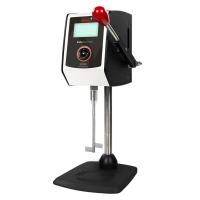
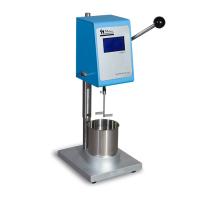
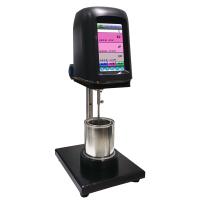
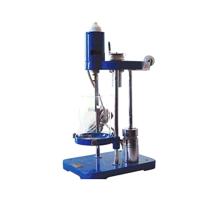
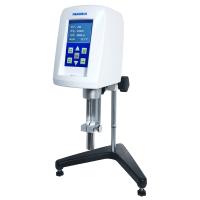
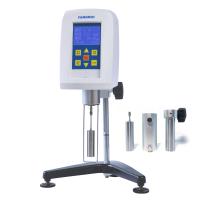
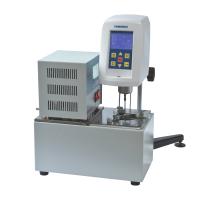
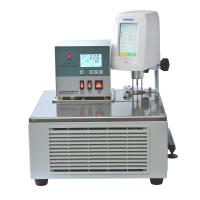
After starting up, the instrument first displays the initial interface, and then automatically enters the main menu page (Figure 32) after waiting for 3 seconds. There are :
Viscosity test: measure the viscosity value of the sample;
View viscosity data: read and print the saved test results;
Manage viscosity data: export or batch delete the saved test results;
Setting: Setting of basic parameters of the instrument, such as: time, date, storage path, factory reset , language selection, screen backlight adjustment, etc.

1. Viscosity test
Click "Viscosity Test" to enter the viscosity test interface (Figure 33), first enter the sample name (Chinese/English, numbers are acceptable), then set the measurement time (hour-minute-second), click "Run" after the setting is complete Start testing viscosity.

Start the test: After starting the test, you will enter the viscosity measurement interface (Figure 34), where you can directly read various values of the sample . During the test, click "Coordinate" to enter the coordinate curve interface (Figure 35), and the data on this page will be displayed in a coordinate system in the form of a curve. After the test is completed, click "Stop" to complete the test or run to the end of the set measurement time to automatically stop the test.
If the viscosity value of the sample is too high, the instrument will give an overflow warning. At this time means that the viscosity value of the test sample has exceeded the maximum range of the instrument.


After the test, the measured data and coordinate curves can be saved and printed for circulation or recording.
For viscosity measurement of unknown samples, the viscosity value of the sample should be estimated first. Then select the corresponding groups of rotors and rotational speed combinations for measurement. When the approximate viscosity value of the tested fluid cannot be estimated, it should be assumed that the viscosity value of the sample is relatively high, and the test should be carried out with the rotor from small to large (volume) and the speed from slow to fast.
The principle of viscosity measurement is: for high viscosity fluid, choose small (volume) rotor and slow speed;
Low-viscosity fluids use large (volume) rotors and fast speeds.