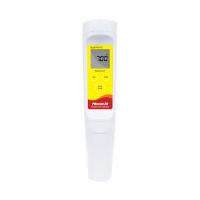
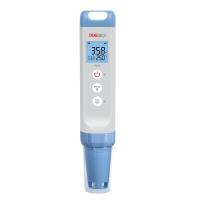
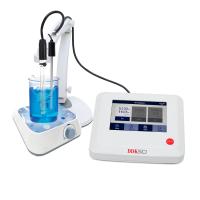
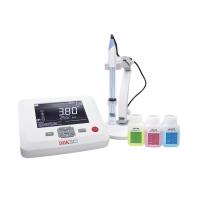
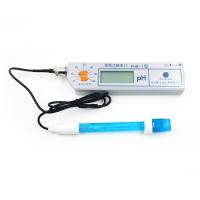
pH is defined as the negative logarithm of the hydrogen ion concentration in an aqueous solution. While this sounds complicated, in very simple terms, pH is a numerical value that quantifies how acidic or basic a solution is. This number indicates the number of hydrogen ions that a particular substance can release in solution. On the pH scale, a pH of 7 is considered neutral. A solution with a pH of 0-7 is considered acidic, and a solution above 7 to 14 is called an alkaline solution. In biological systems, the importance of pH cannot be overemphasized. Most biomolecules in our bodies function very well thanks to carefully adjusted pH levels. Even in experimental systems, the desired pH needs to be maintained for accurate results. Therefore, in biological experiments, the pH is carefully monitored using a device called a pH meter.

The pH meter is a pH responsive electrode that measures the activity of hydrogen ions in solution, and a voltmeter that transmits this information. The device consists of two glass tubes, each containing an electrode, a reference electrode and a sensor electrode. The reference electrode was made of a saturated KCl solution, while the sensor electrode contained a buffer solution with a pH value of 7, and the silver wire coated with silver chloride was immersed in both solutions. The sensor electrodes end with a bulb made of porous glass coated with silica and metal salts.
To measure the pH of a solution, the pH meter is immersed in the solution. When the bulb of the sensor electrode comes into contact with the solution, the hydrogen ions in the solution replace the metal ions on the bulb. This displacement of metal ions causes a current to flow in the metal wire, which is read by a voltmeter.

Let's take a closer look at the scientific side of a pH meter. How does a pH meter convert a voltage difference into a pH reading? There is a simple equation that explains this, the Nernst equation. Using this equation, the pH meter converts the voltage difference to hydrogen ion concentration. pH can be calculated using the formula we discussed earlier.
A pH meter is one of the most widely used devices in biological laboratories. Routinely analyze the pH of buffers, solutions and reagents to ensure correct experimental conditions. To ensure accurate readings, the device needs to be calibrated periodically.