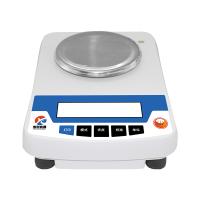
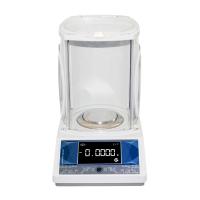
With the rapid development of electronic balance technology, electronic balances play a very important role in various production environments in the pharmaceutical industry. Compared with the traditional mechanical balance in the past, the electronic balance has the advantages of quick and convenient weighing and high accuracy. But in daily practical application, there will be many problems and failures. The following is the fault handling experience accumulated by the author in daily application, and I share it with you, hoping to provide relevant references. (l) Structure: as shown in Figure 1. Electronic Balances usually consist of a flexible rectangular frame (ie Roberwell mechanism) and a magnetic steel with a feedback coil. The horizontal direction of the rectangular frame has two vertically symmetrical beams composed of elastic reeds and spring frames, and the vertical direction has elastic weighing bars and fixed sides corresponding to the weighing bars.
Introduction to the Application of Electronic Balance in Pharmaceutical Industry

Guess you like it


Relevant knowledge
- 1Proper Use of Electronic Balance
- 2What is the difference between 10,000-level and 100,000-level Electronic Balance?
- 3Temperature and humidity testing in the pharmaceutical industry
- 4Process principle of preparing polymer thin films by phase conversion method
- 5Selection scheme of solar cell slurry performance testing instrument
- 6Offset printing ink laboratory performance testing instrument scheme
- 7Method of using electronic balance and its structure
- 8How should the calibration weights of precision balances be handled and maintained?
- 9How to choose and use precision electronic balance test weights?
Author:
王青
Source:
电子天平在制药行业中的应用
Products