In many research laboratories around the world, pH meters are considered basic equipment. In fact, a single organization will often have multiple types of pH meters on hand for different situations. Below, we outline how benchtop and portable instruments are used in the research field and the features that are important to researchers.

desktop
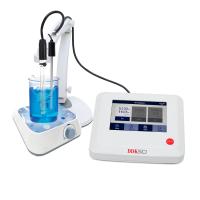
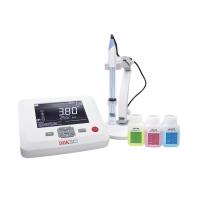
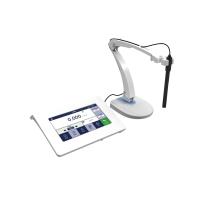
Benchtop meters are the first choice for pH testing in a laboratory setting. They are usually rectangular or square and designed to rest on a flat surface. A desk calculator is much like a calculator, with buttons used as controls and an LCD screen that displays calibration and test results. To perform pH testing, the bench meter needs to be paired with a pH electrode via a cable.
Bench meters vary in test range, accuracy and functional capabilities. For example, some bench meters are multi-purpose (designed to test various elements such as conductivity, oxidation-reduction potential (ORP), pH, brine, TDS, and resistivity), while others may specialize in one type of tests (such as conductivity) or be limited to a few. Typically, users looking to test pH will choose a meter that can measure pH and provide automatic temperature compensation (ATC), since temperature fluctuations can directly affect pH.
Different benchtop models may also vary in measurement range and level of accuracy. For laboratory measurements, an accuracy class of plus or minus 0.01 pH is considered standard. The test range required by the user depends on the substance to be tested. For example, if a researcher typically measures highly acidic or alkaline substances, he or she may need a wider pH test range, from minus 6.0 to plus 20.0. If he or she is primarily testing water (such as groundwater or surface water), a shorter test range of minus 2.0 to plus 14.0 will suffice.
Other key features important to benchtop pH users include:
Waterproof or splash-proof exterior
Memory storage and backup volume
LCD size
Automatic and manual calibration options (some researchers require both)
Battery Life
RS output
Number of calibration points available (average range between 1 and 5)
Data connection (can data be uploaded wirelessly or does it require a cable connection?)
Automatic and manual temperature compensation options for pH readings
Electrode Efficiency Function
Automatic offset and slope recognition (helps ensure consistency between readings as electrodes age)
pH display unit
portable meter
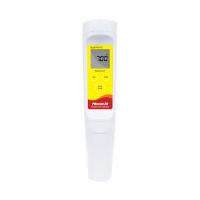
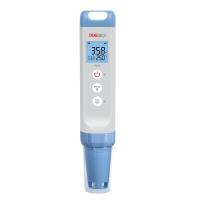
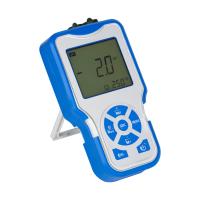
Portable meters are ideal for field testing and making field measurements in laboratories, process plants or manufacturing plants. Since portable meters can be shipped to various test locations, it is important that they are lightweight, easy to calibrate and can be operated with one hand. A good portable meter with a longer handle body and a backlit high-resolution screen for reading in low light.
Features such as long battery life, data time stamping and memory storage are extremely important for users who need to venture outdoors to make measurements, such as environmental researchers. Alternatively, many researchers opt for a portable instrument that is shockproof and able to withstand natural elements such as moisture and dirt. In the European Union, portable electricity meters used outdoors need to comply with the Restriction of Hazardous Substances (RoHS) regulations, which prohibit the use of hazardous substances such as lead, mercury or cadmium in electronic equipment. In addition, European electronic products that meet national safety, health and environmental standards need to be marked with the letters "CE" (European Conformity Certification).
Like benchtop meters, portable meters vary in test range and accuracy. When choosing a portable meter, users usually pay attention to:
Durability (Is the meter splash-proof? Water-resistant? Dirt or dust-proof? Shock-proof? Does it have a portable case that holds the meter and electrode probes?)
memory storage
Automatic backup function (will the data be automatically saved to the device when the device is powered off? Can the data be wirelessly uploaded to the cloud?)
Battery Life
Manual and automatic temperature compensation options for pH readings
Audio Feedback Button
Number of calibration points available (typically between 1 and 3 for portable meters)
Screen size and readability (high resolution, backlight)
Compliant with RoHS and CE
electrode
In order to use a benchtop or portable meter, you need a pH electrode probe. When choosing between electrodes, there are some important factors to consider:
pH and temperature range
To get the most out of your pH meter, it's important to pair it with the correct electrode for the job. Look for a pH electrode that offers the measurement range and level of sophistication you want.
Most pH electrodes also measure temperature as it has an effect on the pH reading. For users who plan to test boiling or freezing substances, it is important that the electrodes they choose need to be able to withstand extreme temperatures and have higher pressure resistance.
Sensor and Body Materials
For laboratory use, glass electrodes are usually preferred because they are easy to sterilize and have a wide operating temperature range. For field testing, plastic or epoxy electrodes are more durable but less able to withstand extreme temperatures.
tip
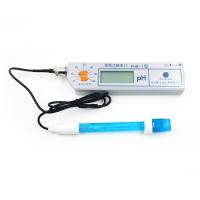
pH meters can have round or spear tips. Spear points are required for penetrating semi-solid and solid materials, while flat or round points are excellent for testing liquids.
cable length
The cables are the wires that connect the electrode probes to the pH meter. Longer cables are important when taking readings in hard-to-reach locations or when fully submerging the Tester in substances.