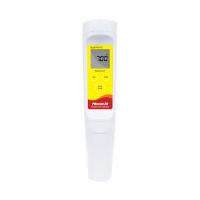
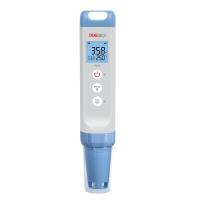
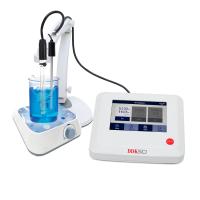
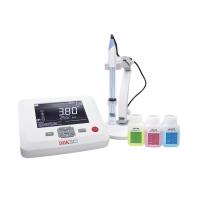
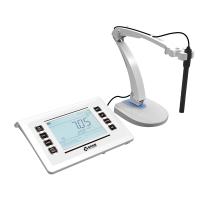
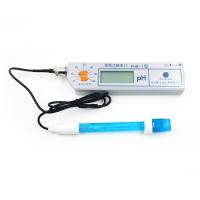
pH meters have become critical equipment for all grain brewers as well as cider, wine and mead brewers. This week, I'll cover how to select, calibrate, and use a pH meter for brewing beer.
for pH meter
Over the past decade or so, our understanding of the important role of mash pH in brewing beer has led to an increasing focus by commercial and home brewers on monitoring and adjusting mash pH. Previously, I've covered the importance of syrup pH and the integration of tools for estimating and adjusting syrup pH into BeerSmith. Unfortunately, pH predictions for mush syrups can only go so far, so on top of that, all grain brewers opt to purchase a pH meter to monitor their pH during mush sugar and spraying, and if needed. Adjust in real time.
Additionally, pH meters can be used in cider, wine and mead brewing. For example, if the pH of a mead or wine drops too low during active fermentation, it can inhibit fermentation and create off-flavors. Therefore, I use a meter meter to monitor the pH of my food and wine during the daily fermentation process.

Choosing a pH Meter for Brewing
Meters are versatile and come in a wide range of prices. Cheap meters start at $13 online, but can be poor in accuracy and quality. A good pH meter will usually run you anywhere from $50-150 (or more). Lab quality meters are usually over $100. Also, you need to be aware that the probes on your pH meter degrade over time (they become non-linear) and generally need to be replaced every 2-3 years. This is why high-end laboratory pH meters come with probes that can be disconnected and replaced. Some features to consider:
Accuracy – A good meter will be accurate to +/- 0.01 pH accuracy. A device with an accuracy of only +/- 0.1 is not ideal for brewing, as even a 0.1 point change is noticeable when measuring syrup pH.
Automatic Temperature Compensation (ATC) – This system measures the temperature of the sample and applies a correction factor to it to adjust the pH for the temperature. While useful, it's not always accurate as the solution itself may change chemically with temperature (mismatched ATC adjustment). If possible, it is better to take a mushy pH sample and let it cool down before measuring the pH.
Calibration – All pH meters need to be calibrated using a known solution. Typically two systems are used. Manual calibration forces you to adjust some knobs to achieve high/low calibration values, while an automatic calibration system simply requires you to place the meter in various pH solutions and adjust an internal table to digitally calibrate the meter. Digital systems are of course easier to use.
Probe Connections – As mentioned above, probes should be replaced every 2-3 years. The pricier pH meters come with a removable probe (usually a BNC connection), so you can buy and install a new probe without having to replace the entire meter.
Calibrating and Storing Your pH Meter
All pH meters need to be calibrated using known pH solutions – usually in three solutions at pH 4, 7 and 10. Also, your probe should be kept in a pH storage solution to preserve its useful life. So even to use your pH meter, you'll need to buy a pH buffer/calibration kit, which should contain three solutions at pH 4, 7, and 10. For example, I've been using the Amazon calibration/storage kit (affiliate link) for my pH meter.
With automatic (digital) pH meters, you usually need to press a button to calibrate the meter, and then you'll be prompted to put it in a pH 4, 7, and 10 solution. Manual meters may require some additional steps – read your pH meter manual to determine how to calibrate it. Typically, the meter needs to be calibrated before each brew, as it only takes a few minutes.
For storage, I dip the probe in a small amount of storage solution. If I'm doing something like measuring the daily fermentation pH of mead, this will help prolong the life of the probe and help keep it calibrated.
Use a pH meter
Using a pH meter is simple. I usually take a small sample of the wort or beverage I'm measuring and dip the probe into it to get the pH.
As I mentioned before, there is one thing to consider when measuring hot wort in wort, and that is temperature. Although ATC systems on many modern probes can measure pH at temperature, this number still may not be 100% accurate because the solution itself changes chemically as it cools.