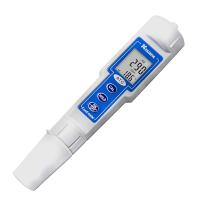
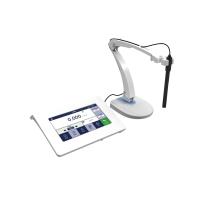
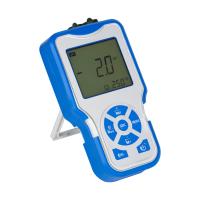
TDS stands for total dissolved solids. As the name suggests, TDS Testers allow users to assess the amount of ionized solids dissolved in a liquid or solution without going through the hassle of evaporating the liquid and weighing the remaining elements. H2O has a TDS value of zero - in other words, there are no charged dissolved elements in pure water. Since ionized solids increase the electrical conductivity (EC) of water, an electrical current that measures EC levels is used to measure the amount of TDS.
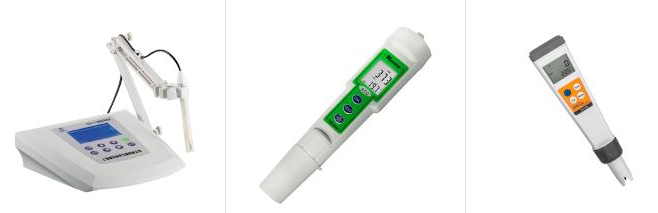
There are many misconceptions about TDS Testers and TDS in general. We outline five little-known facts about TDS in water.
1. TDS can be healthy or unhealthy.
When many people think of TDS, they think of water pollutants such as sewage and runoff. But TDS is not inherently universally secure or insecure. The U.S. Environmental Protection Agency (EPA) stipulates that the maximum level of TDS allowed in safe drinking water is 500 parts per million (ppm). That said, just because a water sample has a TDS value below 500 ppm, it doesn't mean it's safe to eat.
Although TDS Testers can measure the amount of elements dissolved in water, a TDS test alone cannot determine what those elements are. Therefore, TDS testing is often part of a more robust water quality monitoring strategy that also checks for other factors including temperature, conductivity, salinity and pH.
2. Not all TDS Testers are created equal.
Although any element dissolved in water will carry a charge, not all TDS Testers are designed to handle poor conductors. Elements such as oils and certain pharmaceutical chemicals can be poor conductors of electricity. If your TDS Tester can't detect very low ECs, it's possible you're not seeing the full picture. Make sure to look at the EC sensitivity of the Tester before interpreting the TDS reading as "safe".
3. TDS Tester can be used to identify hard water.
If you've ever used hard water (water with a mineral content typically higher in magnesium and calcium), you've come across water with a higher TDS. Large amounts of hard water can leave tough, hard mineral deposits in drains, showers, sinks, toilets, and more. It can have a nasty smell, cause skin irritation and dryness, corrode plumbing and water-dependent appliances, clog drains, and make cleaning laundry more difficult. TDS Testers can measure the "hardness" or "softness" of water and help homeowners plan accordingly.
4. TDS testing has many applications.
Articles about TDS Testers tend to focus on the benefits and pitfalls of being a water safety Tester, but that's just one application. Measuring TDS can be an important part of scientific research, medicine, and environmental research, and has applications in aquaculture, renewable energy research, hydraulic fracturing, food and beverage production, and many other fields.
5. The high content of organic TDS is responsible for the formation of limestone around the hot springs.
If you've been to Yellowstone National Park's Mammoth Hot Springs, you've witnessed the natural effects of specific dissolved solids in the water. The yellow, rusty limestone that gives the national park its name is the result of extremely high levels of organic TDS. When hot water is forced up to the Earth's surface, it forms carbonic acid, which dissolves layers of limestone deep in the Earth's crust. When the hot spring water finally comes into contact with the air, CO2 is released and the dissolved limestone is converted back into a solid deposit.