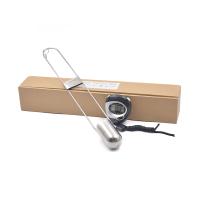
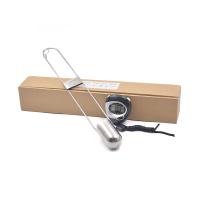
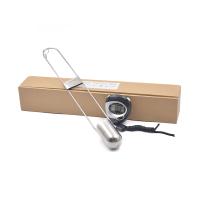
Viscosity cup in British
A Viscosity Cup is a simple gravity device that calculates the time it takes for a fluid of a known solvent to pass through the nozzle of a Viscosity Cup of various shapes. Under satisfactory conditions, outflow registration can be scaled to kinematic viscosity (Stoke or centistoke), depending on the specific gravity of the fluid. In many applications it is not necessary to know the absolute viscosity, and the set-aside time measured in seconds is sufficient for relative registration differentiation.
The role of Viscosity Cups
Over the past many years, at least 50 different types of Viscosity Cups have been invented and used, mainly for production control and field testing. Most simple Viscosity Cups can be divided into 2 categories - injection and outflow on the fixed bracket, and the other type is directly dripped into the inflow container before flowing back to the same container. Regardless of the method used, the following principles need to be followed:
1. Carefully use thixotropic or Miscellaneous non-newtonian fluid to test viscosity, as exact shear force cannot be generated in the Viscosity Cup;
2. Select the appropriate nozzle diameter and keep it in use, so as to obtain an accurate time in the specified minimum and as much as possible;
3. The temperature should be controlled during the fluid outflow event, and only the outflow line passes through the undamaged hole for measurement.