What are pinholes and pores?
Traditionally, the armor was only where it was weakest, underscoring the great danger of any damage thereafter. A gap in armor can have life-threatening consequences in the same way a vulnerability in a protective coating can. Weaknesses result in the underlying substrate being exposed, allowing the destructive forces of corrosion and erosion to be exploited, ultimately rendering the coating redundant. In the industry, these defects are known as porosity, areas of the substrate that were not properly coated and appear as discontinuities in the coating film. This includes defects, insufficient coating thickness, inclusions and pinholes, all of which are recorded as anomalies. Throughout this article, we dispel some myths about porosity and pinholes, while also exploring porosity detection and the solutions used to fix these defects.
Hellpore: An Engineer's Nightmare
Porosity occurs due to applicator error or lack of knowledge surrounding paint application. This includes knowledge of environmental conditions, which can affect applications and hinder their application in general. A common cause of porosity is paint viscosity, which is especially affected by environmental conditions. Poor viscosity can ruin the overall application success. Extreme temperature conditions often cause fluctuations in coating viscosity, making application difficult. This will then create sags and curtains and will undoubtedly lead to skipping or funneling within the coating structure.
Once applied, the properties of the coating can also increase the likelihood of cracking once the coating cures. First, insufficient or incorrect mixing of paint ingredients can create areas that will not cure, which can lead to peeling between other paint defects. Also, over-mixing the paint prior to application can trap too much air in the product, creating a lot of air bubbles.
Pinholes form when air bubbles rise to the surface of the coating, rupture and are not resealed by the coating itself. These tiny pores can simply be confined to the top layer of the coating, or go right through both coats to expose the substrate. When brushing the substrate, the applicator needs to be sure to apply two coats. After the initial layer, a second coat needs to be applied perpendicular to the original layer, thus covering any possible porosity present. If this is not happening, any existing discontinuities, such as pinholes, may not be covered.
In addition, important error areas originate from inaccessible areas and ensure uniform coating over the entire substrate. In good practice, applicators should use mirror approach techniques to remove suspicion of discontinuities in hard-to-reach locations.
Apparatus and method for porosity detection
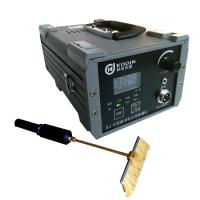
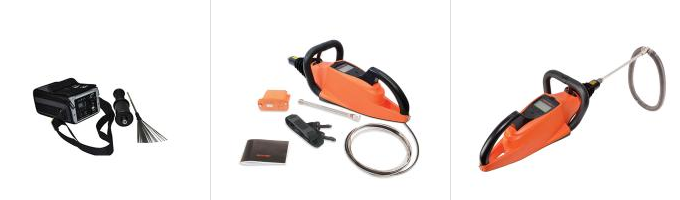
这些缺陷中有很多是看不到的。因此,使用某些类型的设备来定位涂层异常。由于涂层是绝缘产品,可以保护导电金属基材,因此测试此属性是有效的假日检测方法。假日探测器使用电力来定位这些不连续的薄膜,使电流流过涂层,从而试图在基板下方形成闭合电路。
可以同时使用高压和低压仪器来识别异常,但是每种仪器都需要与应用程序专门匹配,具体取决于几个变量。例如,环境条件需要适合于有效地测试表面,尤其是在表面条件方面。干燥和固化的涂层对于阳性测试结果重要性无庸赘述。否则,残留在涂层中的溶剂或未固化区域可能会提供错误的读数。
通常,使用低压湿海绵测试或高压火花测试,每种测试在功能方面都具有截然不同的功能。显然,明显的差异与两台设备的电压有关。但是,这确实会影响每种涂料的类型。制造商指南指出,仅建议将低压湿海绵测试仪用于最大厚度为500µ(微米)的涂层。对于厚度超过500µ的涂层,应使用高压设备(假定涂层兼容)。
另一个重大差异涉及他们如何检测是否有孔隙。低压设备利用水作为电力通路,与裸露的基板区域连接。相反,高压设备仅通过空气就能弥合测试仪和导电材料之间的间隙。还有很大的安全差异,因为湿海绵系统在最高90V的电压下运行不会损害操作员或涂层,而在最高电压为60,000V的高压版本中,如果操作不正确,则可能严重损坏操作员和涂层。经过测试。
有关孔隙检测的问题
孔隙检测的最大问题之一是电压设置和绝缘强度。每个涂层都具有介电强度,该强度决定了涂层开始击穿之前可以承受的特定电压。为了避免在孔隙检测过程中进一步损坏涂层,除了设置正确的电压外,在高电压测试仪和低压测试仪之间进行选择也重要性无庸赘述。
为了给涂层提供不同的特性和附加性能,添加了添加剂和填料。其中一些包含金属填料,需要在进行任何测试之前确认这些金属填料。当面对可能是半导电的金属填充涂层时,低压测试方法技术是优选的,例如使用湿海绵技术。另一方面,可以使用高压测试设备来识别非金属填充涂层是否有空隙。
As highlighted, sometimes the pinhole is so small that the passage of water from the low voltage Tester to the conductive surface below is restricted. In these cases, the applicator will use a surfactant to lower the surface tension of the water. With reduced surface tension, the solution is able to penetrate the pinholes and efficiently identify coating defects.
restore armor
By following specific coating guidelines and procedures, the chances of using poor technique can be eliminated. In order to obtain a good coating and avoid potential defects such as defects and pinholes, NACE standard SP0188 needs to be followed. As always, safety is important when using equipment of this nature, and there are certain measures to keep in mind as part of the NACE guidelines. When performing high voltage testing, it is necessary to conduct a thorough assessment of the test environment, including electrical safety checks, to ensure the absence of potentially explosive elements. Furthermore, the importance of complete electrical grounding of the substrate to avoid any electrical shock cannot be overemphasized.
The solution to repairing porosity is all about renewing the coating. If the lining is at its maximum coat thickness, another coat cannot be applied on top of existing pores. Initially outline the edge towards the defect with the area around the edge irregularity. Once complete, the area can be sandblasted before a replacement coat is applied.
On the other hand, if the coating is less than the maximum thickness, another coating can be applied. By simply roughening the surface prior to continuous application, porosity can be covered and successfully eliminated. After the repair is complete, another porosity test will be required to confirm the repair was successful. It is important to note that repair areas are the ones that should be tested individually to prevent undue stress on coating integrity.