1. Scope and Description
The cupping test is mainly used to evaluate the ductility (deformability) of the paint film when the substrate is deformed in a single-coat or multi-coat system, and it also reflects the adhesion and flexibility of the paint film
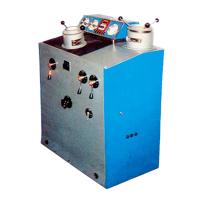
The cupping testing machine, see Figure 4-9, consists of a hard and smooth spherical punch (20mm) and a circular sample holder (composed of a fixed ring and a telescopic die), through the Shuangri stereo with lighting Microscope or magnifying glass to observe the whole process of the test; steel plate, thickness 0. 30-1. 25mm, width and length not less than 70mm; magnifying glass, 10 times.
2. Apparatus and Materials
3. Measurement method
(1) Paint and dry the test panel according to the requirements of the product standard, and then adjust the state for at least 16 hours under the conditions of temperature (23±2)°C and relative humidity (50±5)%.
(2) Fix the test plate firmly between the fixing ring and the die, with the coating picture 4-9 facing the die. When the punch is at zero position, the tip is in contact with the test plate. Adjust the test plate so that the intersection point of the central axis of the punch and the test plate is not less than 35mm from each side of the plate.
(3) Turn on the instrument, push the punch to the test plate at a constant speed of (0.2 ± O. l) mm per second, so that the test plate forms a dome shape with the coating facing outward until it reaches the specified depth or the coating appears until it cracks or separates from the substrate.
4. Results presentation
(1) When the test is carried out according to the specified punching depth, take out the test plate after reaching the specified depth, observe whether the coating is cracked or separated from the substrate, and evaluate whether it is passed or not.
(2) When testing according to the minimum depth that causes damage, gradually increase the punching depth, and express the result as the minimum depth when the coating just begins to crack or separate from the substrate.
(3) The stamping depth is expressed in mm.