Destructive testing is often performed when the quality of a component or structure needs to be ensured. It can also be used to validate material selection decisions and determine allowable material discontinuity limits, acceptable environments and acceptable stresses.
Comparing Destructive and Nondestructive Testing
While non-destructive testing is generally less expensive, it does not yield the type of information that destructive testing can provide. Destructive testing is important because it not only identifies possible failure modes, but also evaluates those failures before, after, or even as they occur. Different types of destructive testing provide different kinds of information to evaluators. Therefore, it is important to become familiar with the various types of destructive testing and what data is obtained from them. (For more information on how to effectively prepare for testing, see 6 Ways to Prevent Failed Analysis Failures.)
Stretching test
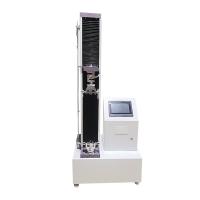
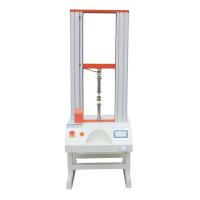
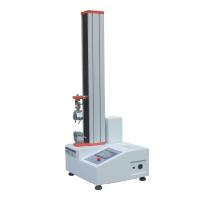
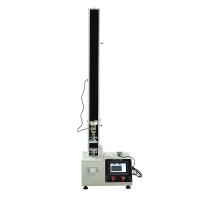
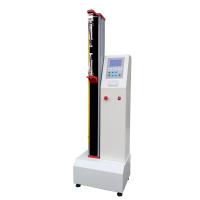
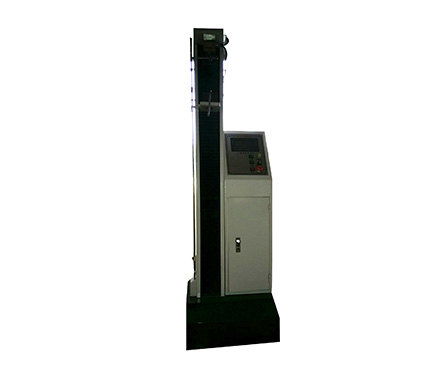
Tensile testing is a very useful and commonly practiced form of destructive testing. During tensile testing, the material is machined to specific dimensions. The material thickens at the ends and thins in the middle. Then place the two thicker ends into separate jigs. The ends are thicker than the center, so the failure occurs in the middle rather than near the clamp. After fixation, the sample is gradually pulled apart at a constant speed until it breaks.
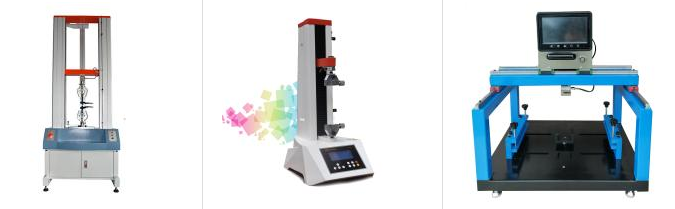
to determine the strength of the material in load/area units. The strain and elongation values are used to determine the elastic modulus as well as the yield strength of the material. The amount of elongation that occurs after reaching the yield limit and before eventual failure gives the Tester a sense of the material's ductility. (An in-depth discussion of the role of corrosion can be found in the article "The Effect of Corrosion on the Tensile Strength and Ductility of Materials")
toughness test
The toughness of a material is a measure of its ability to withstand impact. This is an important data point in collecting environments where objects are in motion or moving around.
The two most prominent types of toughness testing are the Charpy V-notch test and the Izod impact test. Both perform similarly. First, the specimen is prepared by machining the specimen into a rectangular shape and placing a notch in the center. This notch acts as a stress concentrator that promotes material fracture. The notched sample is then loaded into the Tester. The pendulum of the machine can be released at the beginning of the test. Gravity causes the pendulum to impact and destroy the sample.
Record the measurement data before testing, including the size and shape of the sample and the size and radius of the notch. If these measurements are inaccurate, the values derived from toughness testing will be useless. The weight of the pendulum needs to be known before the test. An important measurement to record during the test is the energy absorbed by the sample from the pendulum, which can be determined by measuring the distance the pendulum has traveled after the impact. Using this data, a material toughness value can be calculated. Toughness values for these tests are usually measured in feet-pounds per inch (ft-lb/in) or joules per centimeter (J/cm).
fatigue test
A fatigue failure occurs when a material undergoes an excessive number of cycles such that one or more cracks propagate resulting in fracture. The stress level by itself is not sufficient to cause material failure, but repetitions of stress can cause microstructural or macrostructural changes. Ultimately, crack initiation (formation) and propagation can be promoted. (A possible remedy is found in nitriding to combat corrosion and wear fatigue.)
Since fatigue failure occurs slowly over time, it is necessary to know the time frame within which failure is likely to occur so that the structure or component can be repaired or removed from service before failure is allowed to occur.
Two common types of fatigue are high cycle fatigue and low cycle fatigue. High cycle fatigue testing is used to calculate the number of load cycles a material can withstand when the applied stress is below the elastic limit. Low cycle fatigue counts the number of cycles when the load exceeds the elastic limit of the material and plastic deformation occurs.
Fatigue testing is used to estimate the time until fatigue failure is likely to occur. Because it is impractical to actually test a material for a duration equal to its actual use, fatigue testing often uses accelerated testing methods. Typically, fatigue testing places a material under a constant load. In addition to the constant load, a fluctuating load is placed on the material, which simulates the cycles the material will go through in use. Loads can be applied in several different ways: they can be used to simulate torsional loads, tensile loads and compressive loads, to name a few. For a given type of material, many different loads are applied in several different tests. The number of cycles for each test is recorded and used to calculate the number of cycles a material can withstand before failing.