Many products are continually produced to serve the industry and various other purposes that contribute to the advancement of society.
Most of these products are made of high-tech materials and need to be evaluated and evaluated.
The materials used to produce these products need to be tested before use. One of the important methods of determining material properties is hardness testing.
Material hardness is the property that enables it to resist bending, deformation, abrasion, cutting or scratching. Whether you are receiving your product from a third-party supplier or entering the production process of your product, hardness testing is one of the most critical steps to avoid.
Hardness testing is performed on materials that can measure the depth of an indentation left by a point with a specific force of a specific shape and for a specific time. Hardness testing is done to determine if the material will survive its indenting duties.
There are several tests that can be used to determine the hardness of a material and to determine the size and hardness of the indentation left by the test. One well-known test is called superficial hardness test or superficial Rockwell hardness test.
What is Superficial Rockwell Hardness Test
The Rockwell surface hardness test is usually used on materials that are too small or thin, such as coatings, thin strips or carburized surfaces, etc. Reduced preload (3 kgf) and reduced load (15 kgf, 30 kgf) were used as the main load for superficial Rockwell hardness testing.

How does it work?
The Rockwell surface hardness test method involves indenting the material to be tested with a hardened steel ball indenter or diamond cone.
Under an initial light load of typically 3 kgf, the indenter is pressed into the material to be tested.
When equilibrium is reached, the indicator device, which follows the movement of the ram, responds to changes in the depth penetration of the ram. Then set the pointing device as the reference position.
Penetration depth is reduced, allowing partial recovery after removal of additional primary loads. The permanent increase in penetration depth is used to calculate the Rockwell surface hardness value resulting from the application and removal of additional principal loads.
How is it different from the standard Rockwell hardness test?
The key difference between Standard Rockwell hardness test and Superficial Rockwell hardness test is that in Rockwell the pre-force is always 10 kgf whereas in Superficial Rockwell the pre-force is always 3 kgf. Likewise, the main or total test force in a standard Rockwell hardness test can vary between 60, 100 or 150 kgf. Whereas in the superficial Rockwell hardness test it can vary between 15, 30 and 45 kgf.
Surface hardness testing is primarily used to test thin layers or components or materials whose hardness values exceed the standard Rockwell hardness scale.
The Importance of Surface Hardness Testing
There are several thin, soft and small materials that need to be tested before being used for production purposes.
Hardness testing is considered a universally valuable mechanical test and is available to engineers worldwide.
The importance of surface hardness testing in hardness testing methods cannot be overemphasized as it produces excellent results on the thinnest or smallest materials and gives accurate and highly sensitive readings.
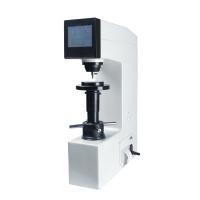
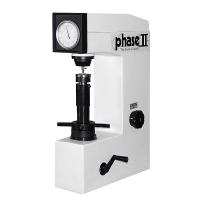
The surface Hardness Tester is ideal for use in workshops, laboratories, inspection laboratories and tool rooms etc. for various purposes.
Most surface Hardness Testers comply with ASTM E18 standards. These criteria were developed to obtain products based on the functions of international cooperation organizations to enhance specific strategic program performance, thereby generating greater confidence in technical goals.
conclusion
The Superficial Rockwell hardness test is widely used to determine the hardness of soft and thin materials that require thinning of the specimen.
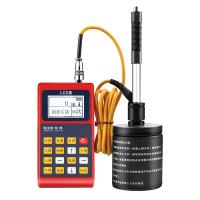
There are various surface hardness testing machines in the market, which are equipped with effective surface hardness scales, such as HRN, HRT, etc., which use different types of indenters.
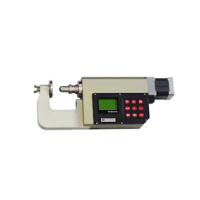
Alternatively, several motorized versions are available for surface hardness testing to confirm the accuracy of the results.