The importance of hardness testing for many quality testing and other procedures cannot be overemphasized.
Hardness testing allows us to evaluate the properties of a material such as ductility, strength and wear resistance, which will help us determine whether the material being inspected is suitable for a particular purpose.
The hardness of a material is not its fundamental property, but merely a means of determining its resistance to long-term deformation.
Hardness tests performed on specific materials are based on the homogeneity, size, type and condition of the material being tested. There are several hardness tests available, one of which is the Vickers hardness test.
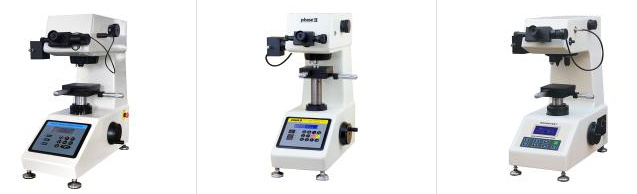
Vickers hardness test
The Vickers hardness test is a multifaceted test method that can be used for micro and macro hardness testing. The Vickers hardness test was developed by George E. Sandland and Robert L. Smith in 1921 as an alternative to the Brinell hardness method.
Vickers hardness testing, including microhardness testing, can be used for a wide variety of applications and materials.
Compared to other hardness tests, it is generally considered easy to perform because the indenter can be used with a variety of materials regardless of their hardness, and because the size of the indenter does not affect the required calculations.
Classification of Vickers test methods
The Vickers test method is considered a static hardness test method and can be further divided into the following areas:
Considered as one of the standardized procedures (ASTM E384, ASTM E92, ISO 6507)
This is an optical method, meaning that the hardness value of the test material/sample is determined from the size of the indentation.
The plane angle of the indenter is 136°, and it is an equilateral rhombus pyramid.
The Vickers test method can be used for all load ranges of hardness testing (from micro to macro range) as its test loads range from 1gf to 120 kgf according to ASTM and 1gf according to ISO.
How to do it?
The Vickers hardness test is incredible with its ability to perform on both micro and macro hardness scales with a maximum test load of around 50 kgs.
The Vickers hardness test is performed by applying a controlled force over a period of time to an indenter, usually a square rhomboid pyramid.
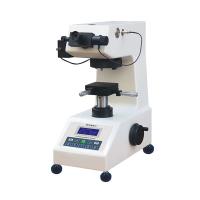
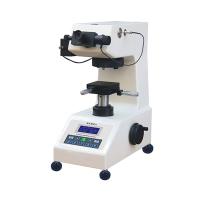
After pressing a specific indenter into the surface to be tested, the indentation made by the indenter is measured with the aid of a powerful magnifying glass such as a microscope and eyepiece. Sometimes the software can also be used for analysis and produce more accurate results.
The Vickers hardness test uses two varying forces such as a micro range of 10 to 100 grams and a macro range of 1 to 100 kg. Both ranges use the same indenter, so the hardness values produced are constant across the full metal hardness range.
Sample preparation is required to obtain accurate results. A sample small enough to fit on the Tester is required.
Also, to achieve accurate measurements and regular indentation shapes, formulations need to have smooth surfaces. This also ensures that the indenter can easily hold the subject vertically.
Required Specimens for Vickers Hardness Testing
When using the Vickers method, it is first necessary to prepare the specimen surface required for the Vickers test method. This is because the requirements for sample surface quality are stricter than other testing procedures.
The sample needs to meet the given requirements of the Vickers hardness test:
In the case of macrohardness testing, the sample/material needs to be precision ground or polished for microhardness testing.
The sample/material should not move during the test and should be firmly clamped.
Also, when performing a Vickers hardness test, attention should be paid to any form of vibration or disturbance to avoid undesirable results.
The Importance of Vickers Hardness Testing
Vickers testing is very beneficial for applications on ultra-thin materials such as test foils.
They are also very useful for measuring individual microstructures, small parts or surfaces and for determining hardness profiles by generating indentation sequences.
If the indentation is smaller, the object will be harder. Likewise, if the indentation is large, the material will lack hardness.
Several industries use the Vickers hardness test to determine the correct type of material for machinery and operations. Materials with good hardness conditions are then selected for industry-specific purposes.
Advantages of Vickers Hardness Testing
The Vickers hardness test has several advantages. Some of them are discussed below:
The Vickers hardness testing procedure covers the entire hardness range and thus can be used for any type of hard or soft sample or material. Whether it is about microhardness testing or macrohardness testing, Vickers hardness testing produces accurate results for both methods.
The Vickers hardness test is generally considered a microhardness test and is used to test any kind of material including composites, ceramics and metals etc.
Each Vickers method uses only one type of indenter.
The samples used in the Vickers hardness test can also be used for other purposes as the test is accompanied by non-destructive testing.
Disadvantages of Vickers Hardness Test
Although there are many advantages that make the Vickers test one of the good hardness testing methods, there are also some disadvantages that should be considered.
Since indentation is measured optically, the surface quality of the sample needs to be smooth and good. This means that if the test site is poorly prepared (i.e. polished and ground), it can be difficult to make an accurate assessment.
Vickers hardness testing is relatively slow compared to Rockwell hardness testing and other methods. The test cycle does not include the time required to prepare the sample, which takes approximately 30-60 seconds.
Since optical indentation evaluation is required, Vickers hardness testing requires an optical system. This makes Vickers hardness testing more expensive to purchase than other Testers, including Rockwell Testers.