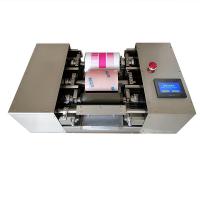
Water-based inks are especially suitable for packaging and printing products that require strict hygiene conditions such as tobacco, wine, food, beverages, and pharmaceuticals, and are important to food safety. White ink is a commonly used ink in packaging and printing. It is mainly used as a primer ink, which needs to cover the color of the underlying ink, and has better reproducibility to the surface ink. Therefore, the performance requirements for self-inking are very strict, especially the hiding power. In actual printing, the covering power of white ink is often not enough, which causes a key problem in printing. Therefore, it is of great significance to study the hiding power of white ink. To study the hiding power of ink, first understand the main factors that affect the hiding power of ink, such as: ink color concentration, ink layer thickness, pigment dispersion, etc. Integrating the influencing factors of all parties, this subject starts from the ink dispersibility, and studies the influence of ink dispersibility on its hiding power.
Analysis of white ink covering power in waterborne flexo printing

Guess you like it
Relevant knowledge
- 1Summary of determination methods for hiding power of coatings
- 2Pigment hiding power
- 3Determination of Coating hiding power
- 4GB/T 23981.2-2023: Paints and varnishes - Determination of hiding power - Part 2: Checkerboard method - Interpretation
- 5Concept, influencing factors and determination method of Coating hiding power
- 6Mayer Rods: The right-hand man for hiding power tests
- 7Coating performance testing: ensuring the efficiency and mass of the painting process
- 8Coating hiding power measurement
- 9Application of paint film Applicator in hiding power test
Author:
龚颖; 黄蓓青; 魏先福
Source:
水性柔印白色墨遮盖力研究
Products