Have you ever seen paint that doesn't stick to the substrate? In fact, it doesn't look much different from the paint attached...until you wipe it with a rag or touch it. Then the paint comes off right away, still wet to the touch. To see how nonstick paint behaves, take a balloon and try writing on it with an ink pen. The ink will settle on the balloon but not stick to the surface, which means you can wipe it off without any hassle. Believe it or not, paint behaves exactly the same. If the paint you choose is not properly formulated to adhere to it, you can end up wasting a lot of time and money.
One of the often overlooked properties of paint is its adhesive properties. Professionals and amateurs alike understand the difference between color and gloss, but few are smart enough to talk about the actual viscosity of the paint itself. What makes paint stick to a surface when applied instead of dripping right away? How will it be preserved after curing?
Since paints are specially formulated to adhere to different surfaces in different environments, using the wrong paint can mean more than poor coverage...if the paint doesn't adhere properly to the substrate it can mean no coverage at all coverage. While professional painters may never be asked to test paint adhesion themselves, it's still useful to know exactly what testing methods are available to industrial and commercial paint professionals.
Adhesion testing can be performed in the laboratory or in the field. The results help paint manufacturers, paint dealers and painters themselves choose the right product for each job. Unfortunately, adhesion testing is destructive in nature. It is impossible to test the adhesion properties of a paint in any meaningful way without pushing the paint from adhering to the surface to completely detaching from the surface. Three common adhesion test types are as follows:
1. Cross-hatch adhesion test
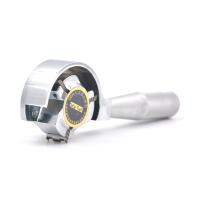
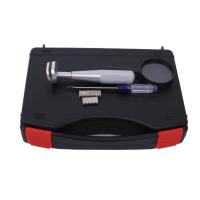
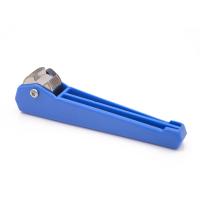
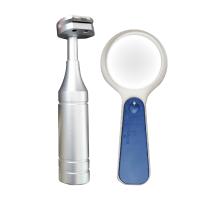
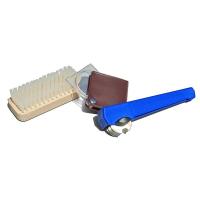
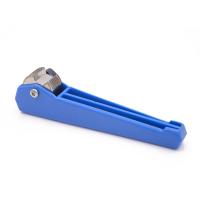
Cross-Catch Adhesion Test Also known as the cross-hatch method, it is probably the most commonly used form of adhesion testing. To perform the cross-hatching method, use a knife or sharp object to cut the paint in a pattern that cuts into the underlying surface in such a way that it forms the bottom corners. After making these cuts, the Tester would use the blade to try to lift the paint from the surface at the intersections of the hash marks. Quantitative results of such tests are difficult to obtain. In reality, any test results depend on the Tester's experience level and very little quantitative data. That said, the cross-cut adhesion test allows the professional painter to quickly confirm whether the paint is adhering well to the substrate.

2. Pull-off adhesion test
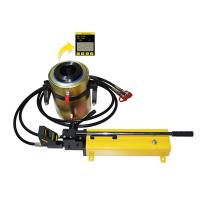
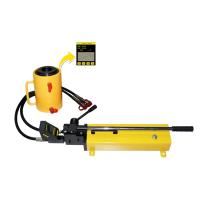
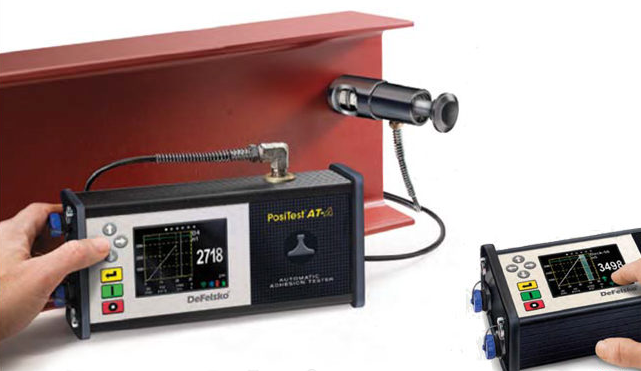
The pull-off adhesion test quantitatively measures the tensile stress required to remove a coating from a substrate. The trolley is attached to the painted surface and applies increasing stress to separate the paint from the surface. Once the point is reached where the paint no longer adheres to the surface, data is recorded (in psi in most cases) which reflects the bond strength of the paint based on the test results.
3. "Loop tack" test
A stylus or “loop tack” adhesion test is performed when an adhesive substance, such as tape, is formed into a loop and pressed onto the surface coating. Apply the tape to the surface, then measure the amount of force required to separate the tape from the surface. This type of adhesion test is ideal for testing adhesives for self-adhesives, stickers, and non-curing paints. Similarly, the tack bond test can be used to measure the tensile strength of the tape itself. Force is applied to remove the tape and the resulting data is recorded once the tape is no longer adhered to the surface.
It is important to test the adhesion of paint so that the products that professional painters can use can be used reliably on a variety of surfaces. Customers may perceive the color or sheen of a paint as important characteristics of a paint, but these qualities are not important if the paint does not adhere properly to the surface it was originally applied to.