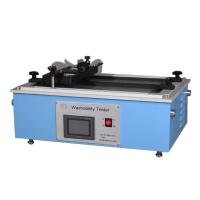
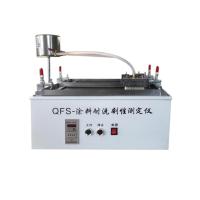
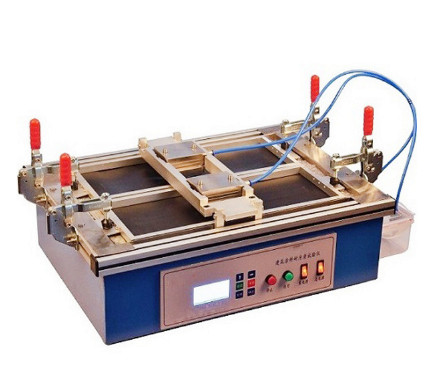
In the coatings industry, scrub resistance is measured as the ability to resist abrasion or degradation of the dried paint film. Wear or wear is assessed visually or by weight loss when using a scrubability instrument or abrasion Tester. According to the ASTM test method governing scrub resistance, when using non-abrasive or abrasive cleaners as outlined in the method, the paint should be formulated to withstand scrubbing with a nylon brush or cloth for a specified number of wash/cleaning cycles , or another cleaner specified by the end user; that is, a common household cleaner.

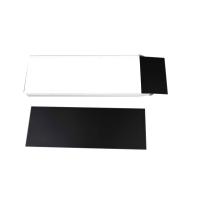
The paint to be evaluated is applied to a black plastic matte panel at the desired wet film thickness and allowed to dry under laboratory conditions for a predetermined period of time, typically 7 days. The thickness of the paint can be specified by the paint manufacturer or by the end user requiring testing. The test results document all test parameters including film thickness, cure time conditions and cure time.
The panel containing the dried paint film is placed in the scrubbing apparatus and tested for a predetermined number of cycles. Choose the number of cycles according to the type of coating or end use of the material, or according to the number of cycles set to determine whether the maximum weight loss standard is met. During the test, the films were periodically observed for visual signs of wear/failure. Failure of the coating film is considered to be thinning or abrasion along the test path, usually manifested as a color change. If there are no early signs of wear, the test will continue until the agreed number of cycles has been completed. If a film is to be evaluated for its resistance to weight loss, it is tested with a calibration (control) panel while performing a scrubbing action so that each material produces the same amount of wear. The initial and final weights are used to calculate wear values for the control and test materials, thus providing the end user with a ratio of the wear properties of the two materials.
Expected and rated results may vary depending on the class of coating and intended use of the material. For example, after high gloss, the exterior gloss should not show visual evidence of gloss reduction, thinning of the dry film, or abrasion (abrasion of the coating along the test path showing 100% black panels passing through the dry film). cycle. In contrast, an interior flat primer may only require a lower number of cycles with no visible wear.
The importance of evaluating the scrub resistance of a coating is to confirm that after washing away dirt and other marks with a brush or cloth, it will retain its intended visual appearance and retain its physical properties i.e. not soften, foam or when in contact with cleaning products Thinned. A paint has poor scrub resistance if it shows any visual change in appearance compared to non-scrubbed areas.
The advantage of evaluating the scrub resistance of paint in the laboratory is that there is adjustment for the type of brush or cloth, the cleaning medium, and the weight (amount of pressure) used to perform the test. These standardizations are intended to remove some of the subjectivity of the assessment and produce results that are comparable across products, even when different entities test in different locations. Finally, the purpose of scrub resistance evaluation is to provide unbiased information about products so that end users, consumers, can have confidence in the products they are purchasing; in particular, that they can be cleaned during their expected service life without significant wear and tear.