Hard water is water with a high mineral content (as opposed to "soft water"). Calcium is a common mineral related to water hardness. While hardness is generally not a health hazard, it can cause serious problems in industrial settings, where water hardness should be monitored to avoid costly failure of boilers, cooling towers, and other equipment. In a domestic setting, when soap is stirred in water, there is often a lack of hard water to form suds, and scale also forms in kettles and water heaters. Where water hardness is a concern, water softening is often used to reduce the adverse effects of hard water.
Calcium hardness in pools and spas is often a problem for pool owners. Low calcium hardness can lead to corrosion of metal equipment or corrosion of plaster surfaces and tile grouts. This may result in the need for resurfacing. High calcium hardness can cause scale to form on pool surfaces, as well as scale in pipes, pipes, and filters. In extreme cases, calcium can precipitate into the water rather than onto the surface, making the water cloudy and cloudy. High calcium levels can also affect swimmers, especially causing eye discomfort.
Although water hardness usually only measures the total concentration of calcium and magnesium, iron levels can also be elevated. The presence of iron typically makes calcifications a brown (rust-like) color rather than white (the color of most other compounds).
Type of water hardness
temporary hardness
Temporary hardness is a type of water hardness caused by the presence of dissolved bicarbonate minerals (calcium bicarbonate and magnesium bicarbonate). However, unlike the permanent hardness caused by sulfates and chlorides, this "temporary" hardness can be reduced by adding lime (calcium hydroxide) through the softening process of lime softening.
Long-term hardness
Permanent hardness is hardness (mineral content) that cannot be removed. Water softeners or ion exchange resins can be used to remove ions that cause permanent water hardness.
Total permanent hardness = calcium hardness + magnesium hardness
Calcium and Magnesium Hardness is the concentration of calcium and magnesium ions expressed as calcium carbonate equivalents.
Hardness can be quantified by instrumental analysis, a separate test kit, or using test strips specially formulated to make these measurements.
How to Measure Water Hardness
instrument
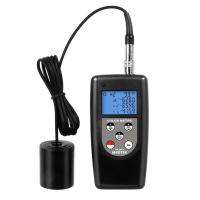
A Colorimeter passes a white beam of light through an optical filter that transmits only one specific color or wavelength band of light to a photoDetector, where it is measured. The difference between the amount of shade transmitted by a colorless sample (blank) and the amount of shade transmitted by a colored sample is a measure of the amount of shade absorbed by the sample. In most colorimetric tests, including hardness, the amount of colored light absorbed is proportional to the concentration and is reported by the meter.

test strip
Test strips are usually made of plastic with a chemically impregnated pad on the end. These pads are designed to react with specific ions and produce specific color changes. Once the test strip has reacted and developed color, compare the test strip to the printed color chart. The color chart is specially designed to represent the color response at various concentrations. Matching the bands to a closer color match yields a concentration reading.