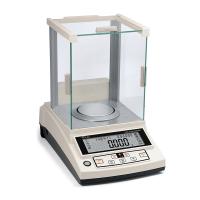
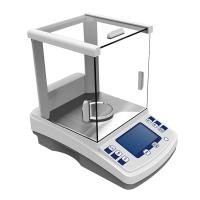
Analytical balance accuracy can only be achieved if the balance operator remains vigilant and cautious at all times. Even with prudent operators, other factors can affect the calibration of an analytical balance. Where accuracy is of paramount importance, errors of 0.001 gram or less can be significant.
Analytical balance errors can occur when the instrument records inaccurate sample weights due to unknown internal and external influences or poor weighing habits of the operator.
While externally induced errors can be the result of a number of factors, they can be easily eliminated or reduced. In most cases, the cause can be traced to errors in precision balance operating procedures related to the laboratory environment or samples. To obtain analytical precision, it is important to maintain a constant load on the balance beam while subtracting the mass on the side of the beam where the sample is added.
So, as opposed to subtracting a fixed weight, the overall balance is achieved using a small spring force. Therefore, only add weight if you are fully tuned. Ultimately, to achieve analytical balance, you need to follow the manufacturer's instructions, maintain calibration frequency, and maintain recommendations.
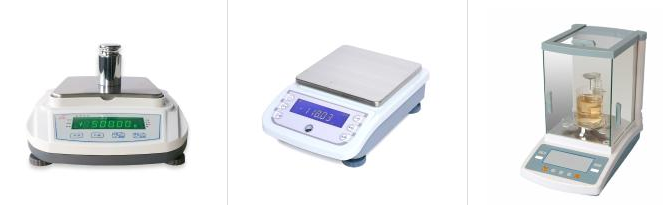
When to Use an Analytical Balance
An analytical balance is often used when it is necessary to know the exact mass of any substance. This can be used to obtain accurate measurements to ensure product safety or to minimize by-products. It also gives you control over resource budgeting. For example, analytical balances can be used to measure the exact amount of reagents as well as the amount of product produced. Analytical balances can be used to measure weights from 0.1 mg to 200 g.
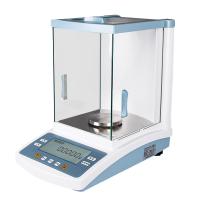
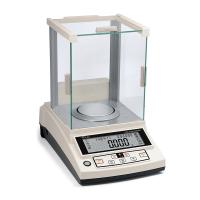
The ability to measure such small intervals means that specific steps need to be taken before taking measurements. A balance is different from other scales because the weighing area is enclosed to protect it from external elements. The purpose of this is to better reduce the influence of temperature and pressure when taking measurements. Therefore, the importance cannot be overemphasized to ensure that the door is closed before starting to take final measurements. Inaccurate measurements can be prevented by keeping the balance away from burners, vents, and other drafts.
Accuracy Tips
Accuracy is an important aspect of analytical balances, especially in industries such as pharmaceuticals and research. Analytical balance weighing accuracy is a measure of how close the actual weight is to the displayed weight. Here are some tips to help you achieve weighing accuracy with your analytical balance:
Consider placement
You need to place your balance on a solid, level surface. The location should be as free as possible from vibration, humidity and temperature as these conditions often lead to inaccurate readings due to affecting the sample or balance.
Consider Electrostatic Charge
This method is especially recommended when weighing dry and non-conductive samples that may cause weighing errors. Electromagnetic fields between the balance and the item can distort the weight result.
Calibrate scales in place
This is important because the effect of gravity on a sample varies with geographic location. Calibration can be performed on site with the help of calibration weights or by activating a calibration procedure.
Pay attention to maintenance
Practice Make sure to avoid introducing liquids into the weighing mechanism as this can damage the balance. Use a barely damp or dry cloth to clean the balancing area. Avoid solvents and use only a soft brush to remove any spilled solids.
magnetic effect
The magnetic field in the sample creates a force field that affects the weighing pan and weighing chamber. To correct this, it is recommended that you perform a degauss before weighing. You can also use a non-magnetic object to improve the distance between the weighing pan and the sample.
All in all, the importance of the accuracy of an analytical balance cannot be overemphasized - especially when you want to know the exact weight of a particular substance. Therefore, you need to consider a variety of factors to ensure that no internal or external influences affect the results of the weight you are measuring.