The balance is an essential piece of equipment for any laboratory. When purchasing a laboratory balance, the first consideration is clarity of use and application. The purpose of the balance, the type of material, and the amount of material are all factors that affect the choice of instrument. For solid inert materials over a kilogram, industrial balances are the right choice. In order to measure pharmaceutical compounds at the microgram level, accurate analytical balances are required.
Likewise, consider the lab and overall environment. For dusty environments, such as factory floors, look for balances that can be sealed from outside materials. Sensitive analytical balances may not function properly if drafts, vibrations or temperature fluctuations are present. Some balances come with their own enclosure to keep contaminants out.
If the work being performed requires certification, or involves toxic or radioactive materials, regulatory and personnel training requirements may need to be met. Also, the frequency of use will influence the choice. Balances that are used every day need to be extremely durable and reliable.
According to Mettler Toledo, manufacturer of analytical balances, customers often underestimate the level of accuracy their processes require. Once the application has been clarified, expectations in terms of accuracy can be established against relevant international norms and guidelines.
High readability does not necessarily equate to high precision. For example, a customer can choose a balance with a readability of 0.1 mg (4 decimal places). The accuracy of a balance is related to the measurement uncertainty of each reading, which is the ± tolerance of the result. Fast, stable weighing results do not necessarily indicate accuracy. An incorrect balance cannot reliably produce reproducible results.
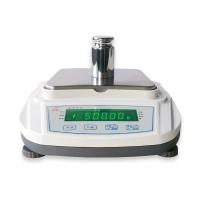
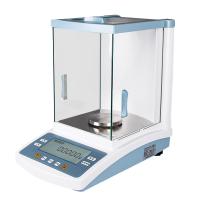
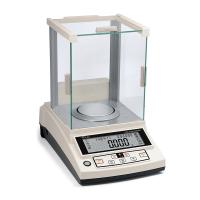
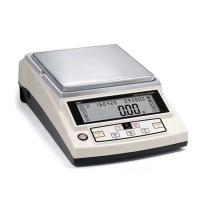
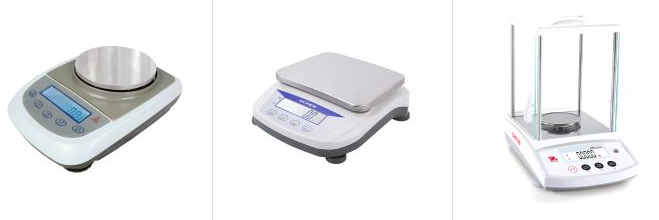
There are different types of balances to choose from depending on the function the balance needs to perform. Laboratory balance types include top duty balances, portable balances, analytical balances, semi-micro balances and micro balances. There is some overlap in terms of readability and accuracy. In these cases, the user's application and weighing environment will generally determine the type of balance required.
A balance can also be defined in terms of its load cells. Some balances use a strain gauge, which is essentially a metal object that deforms as strain is applied, resulting in a change in resistance that can be related to the amount of strain caused by weight. Strain gauges are often found in shop scales and other large instruments.
In the range of higher accuracy, sensors based on electromagnetic force compensation can be used. In this type of sensor, the weight applied to the scale is compensated by electromagnetic force. A change in the vertical position in the coil triggers a current that returns the position to zero. Since the current is directly proportional to the weight, the weight value can be calculated from the current.
A Mettler-Toledo spokesperson said: "Although invisible, [the load cell] is the heart of every balance and is a major factor affecting its accuracy and price." Provides fast, repeatable weighing capabilities, is stable to thermal fluctuations and should be reasonably serviced.
Maximum weighing value
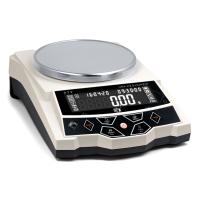
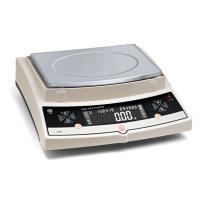
Top-loading balances are suitable when weights have a maximum error margin of 0.05 g or greater, while analytical balances have a margin of error of 0.5 mg. The highest load balances are not immune to air disturbances and can often reach the low kg range.
portable balance
You can choose a portable balance for field work or simply for convenience. Durability becomes a very important feature of a portable balance as it is likely to be used a lot and subject to abuse. Many people appreciate the quick response and user-friendly design found in portable scales, especially if a large number of samples are to be weighed.
Although portable balances are not as cumbersome as their analytical balance appearances, they do offer many of the same functions, such as piece counting, dynamic weighing, and unit conversion. The sealed keypad and stainless steel platform are ready for cleaning.
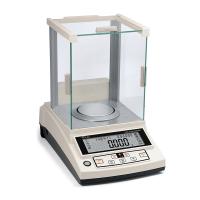
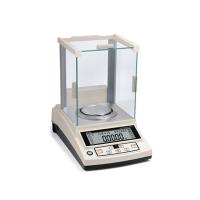
Analytical Balances
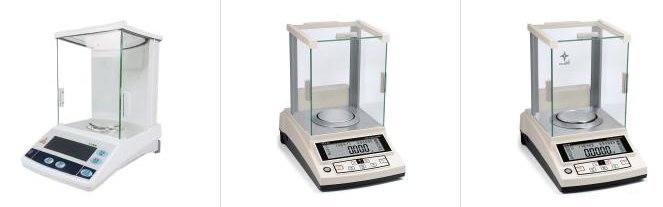
Analytical balances are required for accurate weighing in most life science laboratories. Analytical balances should only be used by trained personnel and require regular calibration and maintenance. As such, they are often set up in a separate interior room in a laboratory, free from the usual walking, chemical spills, flying objects, vibrations and other disturbances. Additionally, locking rooms prevents well-intentioned but untrained visitors from using them.
For very sensitive balances, an antistatic mat will help improve accuracy. ISO 9000 and GLP regulations require documentation of the accuracy and calibration of analytical balances. Some analytical scales have features that allow automatic recalibration at specific time intervals or under certain circumstances, such as temperature fluctuations. Other balances require manual calibration. Calibration can be internally driven or external.
While it is not necessary to keep your balance in a clean room, it should not be placed in a dusty and dirty environment. When dust cannot be avoided, users should look for scales with an Ingress Protection (IP). Scales with high IP values are resistant to particulate and liquid contamination. The two-digit ratings give the scale's resistance to solid and liquid substances, respectively.
Analytical balances can weigh from tens or hundreds of grams to as low as 0.1 or 0.01 mg. Practical functions include clock, mass unit conversion, piece counting and data record keeping.
Semi-micro and micro balances
Semi-micro balances can weigh up to one hundred milligrams. They are often used in very specialized applications such as differential weighing of samples before and after incineration, coating measurements or weighing chemically sensitive samples in glove boxes.
Greater precision can be achieved using a quartz microbalance, an instrument that falls between an analytical balance and a mass spectrometer
in conclusion
The key requirement to meet when purchasing a balance is to meet the precision requirements of the laboratory. After that, it is up to the user to decide on other important factors such as built-in application, protection from external influences, corrosion protection, user safety, risk of cross-contamination, long service life, spare parts warranty and service. Scientists on a budget may choose to make compromises in some areas, but price/performance ratio and return on investment should also be considered.