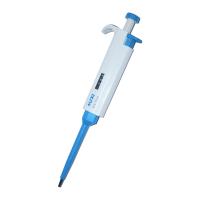
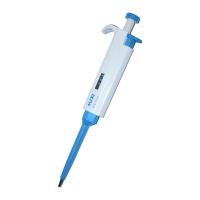
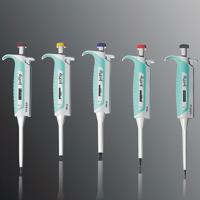
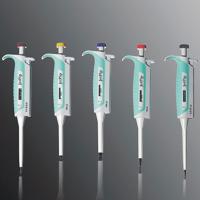
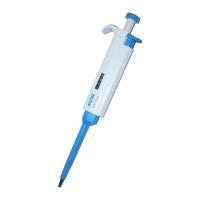
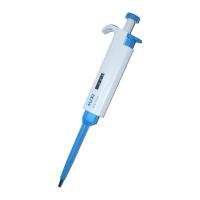
Micropipettes are laboratory tools designed to handle very small volumes of liquid with great precision and accuracy, resulting in reliable, reproducible results. Typically, a micropipette can transfer liquids down to a volume of 0.1 microliter (µL).
A micropipette uses a tip created by an internal piston to fill with liquid, then dispenses the liquid when the operator depresses the plunger to its exhaust volume, according to Pathways Over Time, a microbiology resource hosted by Boston College. Micropipettes are commonly used in chemistry, biology, forensics, pharmaceuticals, biopharmaceuticals, and drug discovery.
As delicate precision instruments, micropipettes should be stored with care and according to the manufacturer's recommendations and good practice.
What is a Micropipette?
A micropipette is a type of pipette that many manufacturers refer to simply as "pipette". There are also simpler, non-mechanical pipettes used in laboratories for different purposes, such as serological pipettes and liquid pipettes. The term "pipette" is sometimes used for mechanical tools to resolve this ambiguity.
The following storage tips apply to pipettes, micropipettes, or pipettes that use air displacement driven by an internal piston.
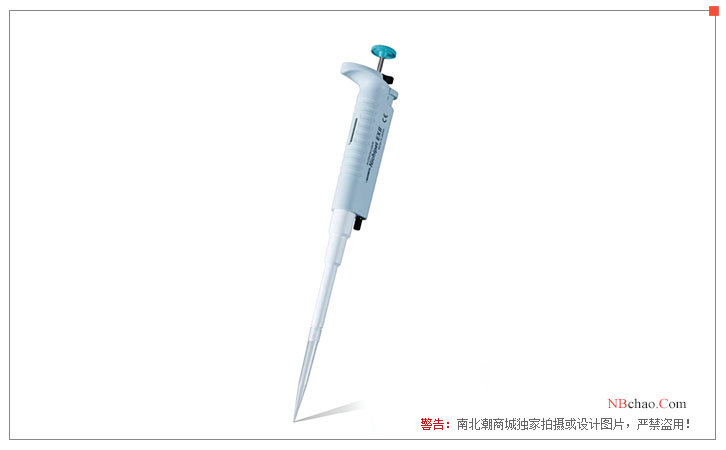
Consequences of Improper Pipette Storage
Here are some of the ways poor storage practices can affect pipettes, as described by manufacturers and industry professionals:
According to the manufacturer CAPP, placing the pipette horizontally makes it more difficult for the piston to move because piston lubricant may accumulate on one side, or the piston itself may fall off.
According to CAPP, storing pipettes with filled pipettes inside the pipette tips can lead to corrosion or contamination, which can have a significant impact on pipetting results. Even placing the liquid on the side of the pipette with the tip increases the likelihood that the liquid will enter the piston and cause contamination and corrosion, according to manufacturer Hamilton.
Storing pipettes in drawers or on benches can easily lead to instrument contamination, according to manufacturer Gilson.
Storing pipettes without first removing tips can lead to cross-contamination, accidental tip reuse, and evaporation of trapped liquid into the instrument's internal components, according to Lab Guy. A blog maintained by a testing equipment company based in the UK.
According to manufacturer Mettler Toledo, storing pipettes carelessly (not in a proper hanger) can cause the instrument to fall, and is one of the two leading causes of damage to these tools.
Good Practices for Pipette Storage
Store pipettes vertically (upright).
According to Promega Connections, a blog maintained by life sciences manufacturer Promega, set the pipette to its highest volume. According to lab sources, this will relieve the pressure on the device's springs.
According to TTE Laboratories, a provider of pipette calibration services, to allow pipette operators to take a break from fatigue without placing the instrument horizontally, use a stand, carousel, or rack mount.
Remove pipette tips to avoid corrosion and contamination, and to prevent cross-contamination and internal evaporation, according to CAPP.
Pipette racks and other storage options
There are several types of pipette storage, including pipette racks and stands, that can help you follow the storage recommendations above:
The carousel-style stand can accommodate multiple pipettes vertically in a small space.
The pipette storage rack can also hold multiple pipettes in a non-horizontal orientation.
Electronic pipettes may require a dedicated charging stand.
The wall mount allows the pipette to hang vertically. Some wall mounts have brackets for permanent installations, while others have strong magnets that allow them to be placed on iron walls wherever there is room.