1 Introduction
Powder coating, which is a fine powder state, is completely different from other general coatings. Powder coating is widely used in modern industry because of its energy-saving, environment-friendly, pollution-free and recyclable characteristics, and it is a very important part of the industry. The reminder of powder coating technology is closely related to people's daily life and high-tech discovery. Adhesion is a basic performance in the mechanical properties of powder coatings, but there is no reasonable scientific basis. This paper will conduct experimental research on the factors affecting the adhesion of powder coatings.
2 Film formation and adhesion mechanism of powder coatings
Powder coatings are generally electrostatically applied to workpieces in a powder state, and then cured to form a film after three processes of aggregation, leveling, and curing. The adhesion mechanism of powder coating film is divided into mechanical adhesion and chemical adhesion. Mechanical adhesion depends on the properties of the substrate (such as roughness, porosity) and the strength of the formed coating film; chemical adhesion refers to the force at the interface between the coating film and the substrate, including electrostatic force, van der Waals attraction , hydrogen bond and chemical binding force, which determine the adhesion of the coating film to the surface of the coated object.
3 Adhesion
3.1 Meaning of Adhesion
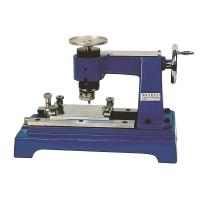
At present, chemists at home and abroad have not yet given an exact definition of adhesion. Generally, in most cases, it is believed that the work required to separate the two adhesive interfaces of the coating film and the substrate is temporarily called the coating. Adhesion (detection instrument: adhesion Tester).
The interface between the coating and the substrate, in a satisfactory state, the substrate is smooth and flat, then the force connecting the substrate and the coating is the interfacial suction per unit geometric area, and the actual substrates are all of tiny size Rough surface. Therefore, the actual contact area between the coating and the surface of the substrate is much larger than its geometric area. Since the surface roughness exists in the microscopic or even submicroscopic scale, this situation is similar to the liquid penetrating into the capillary, so the following equation can be introduced:

It should be noted that the higher the surface tension of the coating, the higher the penetration rate Lt-1, and the radius of the capillary is a variable of the substrate, not a variable of the coating. A variable of particular concern is viscosity, from the micro and submicro scales, cracks and voids, some of the pigments and polymer particles in the film coating are larger than at least some of the surface irregularities, so the critical viscosity is the coating The viscosity of the continuous (external) phase, not the overall viscosity of the paint. The lower the viscosity of the external phase, the faster the penetration. The powder coating film forming process is a process of viscosity from high to low and then to high, as shown in Figure 1.

The powder coating is applied to the object to be coated, and after heating and baking, the powder starts to melt, and the air between the powder particles is discharged, and the molten powder coating gradually levels off, gradually loses fluidity and solidifies to form a film.
When the reverse side starts to melt, the viscosity is very high, and as the baking time prolongs, the viscosity drops rapidly, this area is called the melting area; then the viscosity of the molten powder coating begins to increase slowly, when the surface of the coating film is basically invisible When it is flowing, this area is called the flow leveling area. At this time, the coating film can be drawn into filaments when it is drawn with a steel needle; then the coating film loses its fluidity, begins to gel obviously, and completely loses fluidity. At this time, the coating is drawn Curing, this area is called cross-linking curing area.
Assuming that the main force causing powder coating flow is surface tension, gravity becomes an important factor when the coating film thickness is larger than the usual thickness (25-75) µm. The melt viscosity of the coating plays a role in hindering the flow during baking. If the surface tension causes the flow of the molten coating, then the radius of curvature of the powder particles will play a decisive role. Because the pressure caused between two spherical particles is proportional to the surface tension of the paint separated by the particle radius, its flow time t can be expressed by the following formula:

Therefore, maintaining a low viscosity for a sufficiently long time is important for effective penetration.
3.2 Several factors affecting adhesion
3.2.1 Viscosity
Generally, the melt viscosity of the resin increases with the increase of the molecular weight. Under the same conditions, it is expected to use a lower molecular weight resin to impart excellent adhesion to the coating after crosslinking, and it has been proved that this is the case. Another possible advantage of low molecular weight resins is that their molecules can penetrate into smaller crevices than those of high molecular weight resins.
3.2.2 Wetting effect and surface tension
The adhesion of the coating film is generated from the mutual attraction between the coating and the polar group on the surface of the metal to be coated, and the mutual force of this polar group depends on the wetting ability of the coating to the metal surface to be coated, which in turn depends on the surface tension.
If the surface tension of the liquid is lower than the surface free energy of the solid, then the liquid can spread spontaneously on the substrate. If the surface tension of the liquid is too high, a drop of liquid will remain in the form of a drop on the solid surface with a contact angle of 180°. If The liquid has sufficiently low surface tension that it can spread spontaneously on the substrate with a contact angle of zero. For general conditions, medium surface tension, medium contact angle. Figure 2 is a schematic diagram of the contact angle.

Equation (3) shows the relationship between substrate surface free energy γsv, liquid surface tension γlv, and interfacial tension γsl between liquid and solid with contact angle θ on a plane.
Therefore, reducing the surface tension can improve the wetting efficiency and increase the adhesion of the coating film to the metal surface.
3.2.3 Substrate surface
一般,要求符合粉末涂料施工的底材表面的表面张力比任何潜在涂层的表面张力高。例如:如果金属表面被油腻沾污,其表面张力非常低,此时,具有极性分子的涂料也不会得到附着力好的涂膜。
涂膜与被涂表面的粘附程度将随成膜物质极性增大而增强,因此在成膜物中加入各种极性物质时,将会使附着力增大。一般,附着力可用下列基团来提高:羧酸基(强氢给予基团)、氨基(强氢接受基团)、羟基、氨酯基、酰氨基、磷酸盐。
另外,涂膜聚合物分子内的极性基自行结合,也会造成极性点的减少,附着力会降低。例如:环氧树脂对底材的附着力好,主要是由于环氧树脂与金属间形成的氢键连接,-OH 以适当的距离分散着,相互之间吸引困难,极性基没有减少,所以涂层对底材产生良好的附着力。
当然,附着力除了与聚合物的极性有关外,也取决于分子的移动性,对于高分子化合物的大分子,移动困难,当其被涂在底材表面上熔融流动于底材表面时,由于大分子的定向作用较差,极性基就不容易起吸附作用,这就是聚酯粉末涂料附着力低的主要原因。相反,在金属表面上涂以较低分子状态的成膜物质,则低分子的极性基就容易吸附在底材表面上,得到较好的附着力,如采用小分子量固化剂固化环氧的纯环氧粉末涂料的附着力就很好。
3.2.4 内应力
同类物质分子间的内聚所引起的力,称之为内应力。涂层中的内应力能抵消附着力,使得只需较小的外力就能破坏粘合键。内应力是由于在刚性底材上成膜,涂层无法收缩产生的。可以降低涂层的厚度,来缩小内应力;另外可以加入适当的颜料,降低内应力,所以一般色漆比清漆附着力要好。
3.2.5 其它
底材的表面处理也很重要,经过打磨过的底材能增加涂膜的附着力,是由于底材表面形成粗糙不平的凹凸面,使有效的附着面积增大。
底材的材质对附着力的影响也很重要。
4 附着力的检测
由于附着力现象非常复杂,国内外涂料界还没有给出满意的测试方法,尤其在将测试结果数值化,特别表现在没法提供因组成变化而带来的微小附着力变化的基准。
At present, the measurement methods of the coating film are roughly divided into two types: one is the direct measurement method of the force required to separate the coating film from the surface of the substrate; the other is the indirect measurement method of the coating film when measuring other properties. Usually, the ISO standard using the cross-hatch method uses 30 for inspection. For the single knife of the corner, keep the cutting tool on the plane of the test surface on the sample plate coated with powder coating, and use uniform pressure and a distance of 1 mm per grid and a cutting speed of (20 ~ 30) mm/s in the vertical, horizontal and vertical directions. The 6 streaks should cut through the entire depth of the coating film, and then use a soft brush to lightly brush 5 times along the two diagonal lines of the grid pattern, and then adjust according to the degree of peeling off of the coating film from the board surface. Assess the pros and cons. The general method of domestic testing is to refer to GB/T9286-88. The adhesive tape test method is adopted. After dividing into squares with an interval of 1mm according to the cross grid method, stick it on the surface of the coating film with an adhesive tape, and then tear off the tape at a constant speed. The degree of shedding was assessed. The evaluation of the ISO standard is divided into 5 grades (ISO2409): grade 0: complete, no square off; grade 1: coating peeling off at the cutting intersection <5%; grade 2: 5% < coating peeling off at the cutting intersection <15 %; Grade 3: 15% < coating peeling off at cutting intersection < 35%; Grade 4: 35% < coating peeling off at cutting intersection < 65%; Grade 5: 65% < coating peeling off at cutting intersection.
Of course, you can compare the corresponding pictures more intuitively, and directly judge what level it is.
Although the cross-hatch method is the most widely used test method, there are problems, such as:
① The speed of the scratch, if the scratch is slow, the scratch is relatively uniform; but if the scratch is fast, because the coating is relatively brittle under the stress of a higher rate, it is possible that the crack will spread outward from the cutting place;
②The choice of pressure-sensitive tape, and the pressure acting on the coating film;
③The angle and speed when the pressure-sensitive tape is peeled off the surface of the coating film; ④Test the surface of the coating, as well as the surface state and so on.
5 Conclusion
The above is the author's combined experimental research and analysis, and some analysis on the relationship between powder coatings and adhesion. In the application performance of powder coatings, adhesion is one of its very important indicators. Familiarity with the related technologies of adhesion will be of great significance to its application. The powder coating film needs to have adhesion, so that it can be better attached to the object to be coated, and the high decorative and protective properties of the powder coating can be exerted, so as to achieve the real purpose of the powder coating.
"Powder Coating and Adhesion" by Zhang Huadong