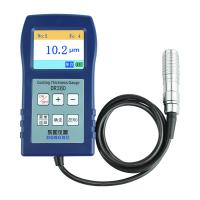
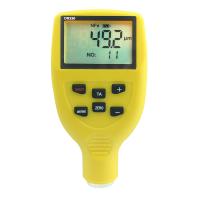
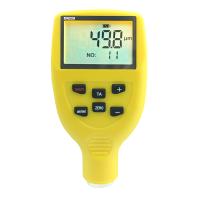
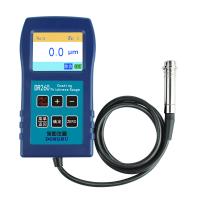
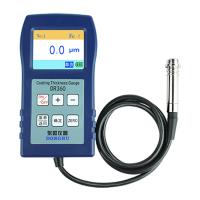
When working on a project with a high performance coating, you need to consider how you will measure the coating thickness to ensure it is applied to specification. Coating thickness is often the key to ensuring your coating behaves the way it should when applied and in use. Usually, the thicker it is, the more protection it will give your substrate, but not always, sometimes overcoating is just as bad as undercoating. Coat thickness can be important for water resistance, corrosion resistance, adhesion on thorny surfaces, aesthetics, etc., but in most cases it is used with steel paint. By monitoring and recording the coating thickness readings you take, you can be sure that you are getting a high quality coating that will perform as expected and, as an added bonus, you will not be wasting material and money unnecessarily.
You can try two methods to test coating thickness:
Coating Thickness Gauge
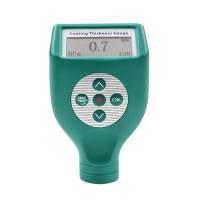
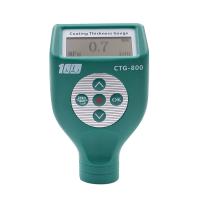
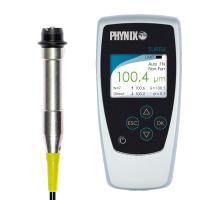
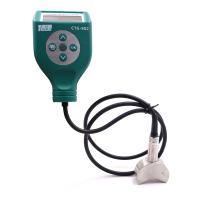
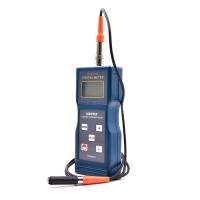
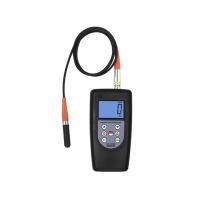
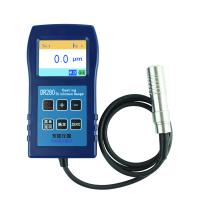
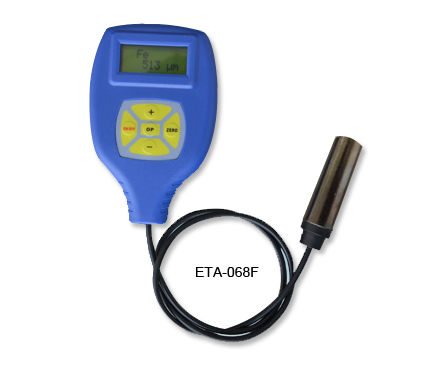
Coating Thickness Gauges are used on coatings that have already been applied and cured, and they use a probe that will give you a reading when the probe is pressed against the surface. Coating Thickness Gauges are commonly used throughout various stages of a project to check existing coatings on a surface to ensure they are suitable for use as a finish, to check progress throughout a project to ensure that each coat applied is up to standard, Finally project at the end of construction to check that all areas have received DFT (Dry Film Thickness) to specification. If you want a simple tool, a coating Thickness Gauge is recommended. This coating Thickness Gauge is ideal for measuring all coatings on any metal substrate. A magnetic induction probe using the eddy current principle means you can check that the correct coating thickness has been applied to your surface. This tool is one of the most professional on the market, which means you can rest assured that you are making the right decisions about your paint.
Wet film measurement
Another way to measure coatings is to use wet film measurements. This method measures the thickness of a coating that is still wet - WFT (Wet Film Thickness). The advantage of wet film gauges over dry Film Thickness Gauges is that they allow the applicator of the coating to instantly adjust the application as needed to increase the applied thickness or decrease the applied thickness to the substrate to ensure proper application.
Once you decide which method to use to monitor your application, or indeed to use both methods effectively, you need to make sure you understand the difference between wet film thickness and dry film thickness. Although the description makes them fairly self-explanatory, it's easy to go by the wrong numbers in a spec or datasheet when done in the field or under pressure to meet deadlines, especially when they're abbreviated WFT and DFT.
The "Wet Film Thickness" figures given in the specification relate to the thickness of the coating when it is freshly applied and still wet, once the coating starts the drying process solvents and volatiles leave the coating and the thickness will decrease and after curing The dry film thickness can be read. How much the thickness is reduced depends on the volume solids of the coating, the higher the volume solids of the product, the less stuff escapes from the coating, so the less the thickness is reduced. For example, if a paint is specified to be applied at a WFT (wet film thickness) of 500 microns, and the product has a solids content of 50%, then once dry, the DFT (dry film thickness) reading will be 250 microns. Some paints are 100% solids, which means there is no loss of thickness between WFT and DFT.