The performance importance of sealants cannot be overstated. Perhaps the most critical of these are bond strength and compatibility. It is important to understand their significance, how they are related, and how to verify them with appropriate testing.
Adhesive strength
Bond strength (also known as adhesion) is the ability of a sealant to maintain a bond to the substrate material. Conditions that affect sealant adhesion include exposure to water, extreme temperatures, joint movement and surface cleanliness.
Adhesion is typically verified by the Peel Test of ASTM C794-10, Standard Test Method for Skin Adhesion of Elastomeric Joint Sealants. This is a laboratory procedure in which a cured-in-place one- or multi-component elastomeric joint sealant is applied to a substrate sample and then pulled at a 90° angle. The force required to peel off the sealant is recorded as the peel strength. It provides a valuable measure of how well a cured sealant maintains adhesion to a substrate under severe peel conditions.
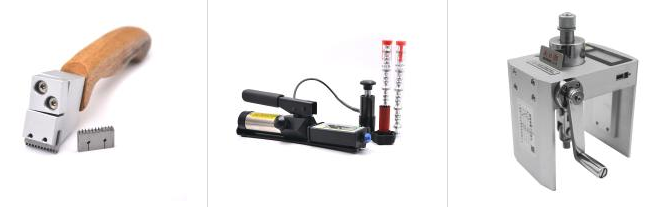
ASTM explains that many sealant manufacturers utilize peel adhesion testing (testing instrument: Adhesion Tester/Paint Cross-Crosser) to determine the adhesion characteristics of a sealant/primer to a special or proprietary substrate. It is especially useful for comparing batches of the same sealant with respect to quality measurements of adhesion, or for studying the adhesion of a given sealant to the various durable substrates that make up the joint. Examples include but are not limited to aluminum, glass, brick, concrete, mortar, EIFS, etc.
Note that adhesion testing is not usually performed on ancillary materials (eg, support rods, gaskets, fixing blocks, etc.).
compatibility
Compatibility refers to the interaction of the sealant with other sealants and adjacent accessory materials that may come into contact with the sealant but are not bonded to the primary substrate. Examples include dry glass spacers, glass tape, shims, shims, waterproofing membranes and fixing blocks. Sealant incompatibility often results in discoloration of the sealant and is usually only an aesthetic concern. In more severe cases, incompatibility may result in loss of adhesion or other sealant changes such as brittleness, softening, tackiness, bleeding, or lack of cure.
Sealant compatibility is usually not a major concern in manufacturing, as all design and assembly aspects are usually responsible. However, installation requires more attention due to possible lack of communication and coordination between different areas of responsibility.
This compatibility is verified by testing according to ASTM C-1087 (Standard Method for Determining the Compatibility of Liquid-Applied Sealants with Accessories Used in Structural Glazing Systems), a laboratory screening procedure in which Glass sealants are exposed to heat and UV light. The test method includes observing the adhesion and color change of the sealant. As an example of the latter, yellowing or discoloration of the sealant is an indicator of incompatibility, such as that caused by contact with the gasket material.
