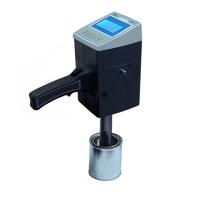
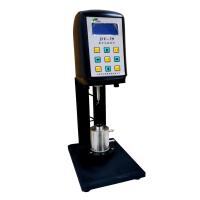
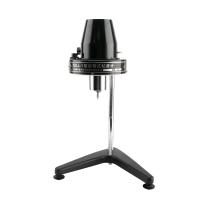
To understand viscosity, one needs to understand laminar flow, which is because a gas or fluid flowing over a surface causes the molecules close to the surface to have zero velocity. The velocity increases as people get further and further from the ground.
The velocity difference is due to internal friction within the gas or fluid. This is molecular friction due to molecules pushing against each other. One can imagine that the strength with which molecules stick together is proportional to friction. This strength is called viscosity. Viscosity determines friction, and friction determines the energy absorbed by a fluid.
fluid viscosity
Fundamentally, fluid viscosity is a measure of stickiness. Water has a low viscosity whereas things like syrup or shampoo have a high viscosity. Viscosity also depends on temperature, for example, engine oil is less viscous at high temperatures than in intercooled engines in winter. Viscosity creates resistance to fluid flow through pipes. This resistance can be thought of as friction between fluid parts traveling at different velocities.
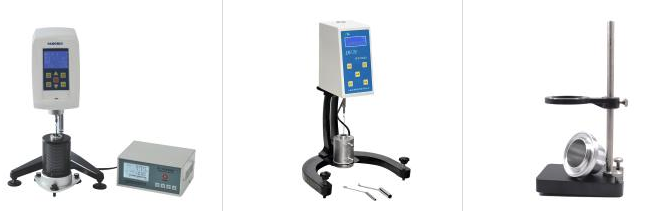
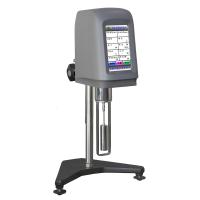
To learn more about viscosity testing instruments, click: https://www.nbchao.com/cp/335710442B9BAE88.html
Factors Affecting Viscosity
For example, a fluid very close to the pipe wall will flow more slowly than a fluid in the center of the pipe. Fluid viscosity changes with temperature. Pressure has only a small effect on the viscosity of gases, while pressure has only a small effect on the viscosity of liquids.
When studying multiphase liquids (mixtures of gases, liquids, and solids), there are other factors at play.
An example of a multiphase liquid is crude oil flowing up through an oil well, some of which is usually converted to gas as the pressure is reduced, and the mixture may also contain water, rocks, waxes and tars. The fractions of the phases will affect the viscosity of the mixture.
Foams (such as mixtures of liquids, gases, and emulsions) exhibit higher apparent viscosities than either phase alone.
Viscosities are generally higher for polymers with higher molecular weights for large organic molecules formed by combining many smaller molecules, such as plastics, where larger molecules lead to higher viscosity.
For example, a dilute polymer solution in a solvent may have a high viscosity at low shear and a low viscosity at high shear, thus exhibiting power-law behavior.
Water itself is Newtonian, but introduction into polymers at concentrations as low as 0.2% by weight can have a large effect on their rheological behavior. Viscosity changes based on speed or force used, may increase or decrease. In addition to temperature, the viscosity of homogeneous bodies may vary with shear stress and pressure.