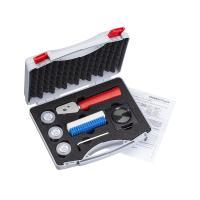
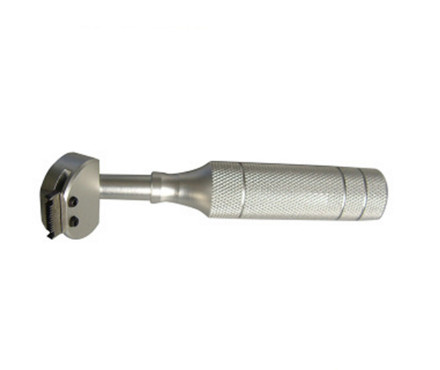
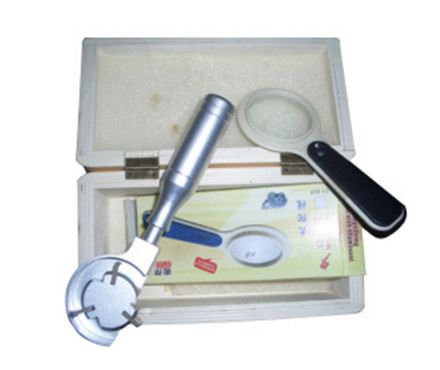
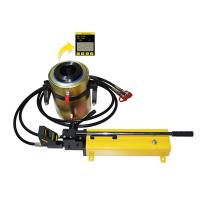
In order for coatings to function satisfactorily, they need to adhere to the substrate on which they are applied. A number of well-established methods can be used to determine the degree of adhesion of a coating to a substrate. Common measurement techniques are performed with a knife or pull-off adhesion Tester. After performing any test, it is important to document whether the adhesion failure was adhesive (failure at the coating/substrate interface) or cohesive (failure within the coating film or substrate).
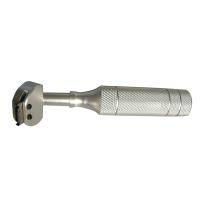
knife test
This simple test requires a utility knife to pick up the coating. It determines that the adhesion of a coating to a substrate or another coating (in multi-coat systems) is generally at a sufficient level. Performance depends on the difficulty of removing the coating from the substrate and the size of the removed coating.
Using a knife and cut guide, make two cuts through the coating, at an angle of 30 – 45 degrees between the legs, until they meet the substrate to form an "X". At the apex, use the tip of the knife to try to lift the coating from the substrate or underlying coating.
This is a very subjective test and its value depends on the experience of the inspector. Coatings with high cohesive strength appear to have poorer adhesion than coatings with brittleness and thus tend to break when probed. No known association with other adhesion testing methods (peel, tape, etc.).
A standard method for applying and performing this test is provided in ASTM D6677.
tape test
On metal substrates, a more formal version of the knife test is the tape test. Apply pressure sensitive tape to the cut in the coating and peel it off. There are two variants of this test: the X-cut tape test and the cross-hatch tape test.
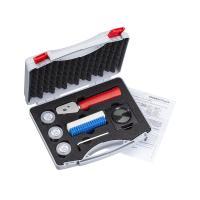
X-cut tape testing is mainly used on job sites. Using a sharp razor, scalpel, knife or other cutting device, make two cuts through the coating with legs at an angle of 30 – 45 degrees between the legs until they meet the substrate to form an "X". Use a steel or other hard metal ruler to ensure straight cuts. Center the tape at the intersection of the cuts, then quickly remove it. The X-cut area is then inspected and rated for removal of coating from the substrate or previous coating.
The cross-hatch tape test is primarily used in the laboratory for coatings less than 5 mils (125 microns) thick. It uses crosshatch mode instead of X mode. A cutting guide with multiple preset blades or a special cross-cut knife is required to ensure that the cuts are properly spaced and parallel. After applying and pulling off the tape, then inspect the cut area and determine the grade.
Standard methods for the application and performance of these tests are available in ASTM D3359.

Pull test
A more quantitative test for adhesion is the pull-off test, in which a loading fixture (often called a trolley or short tube) is secured to the coating, usually by an adhesive. Using a portable peel adhesion Tester, an increasing load is applied to the surface until the dolly is pulled out. The force required to pull the dolly or the force experienced by the dolly produces a tensile strength in pounds per square inch (psi) or megapascal (MPa). Failure will occur along the weakest plane in the system consisting of the cart, adhesive, coating system and substrate and will be exposed by the fractured surface.
This test method maximizes tensile stress when compared to shear stress applied by other methods, such as scratching or squeegee adhesion, and results may not be comparable. Also, the measurement of peel strength depends on the instrument used in the test. Results obtained with different equipment or with the same coating on substrates with different stiffnesses may not be comparable.
Testers operate using mechanical (hand twist), hydraulic (oil) or pneumatic (air) pressure. Depending on their ability to ensure vertical pull, they can be classified as fixed-aligned or self-aligning. Good repeatability is obtained when the pulling force is perpendicular to the surface being measured.
Complete pull-off adhesion Tester models are available to measure coating adhesion on virtually any rigid substrate. For example, for typical coating bond strengths on metal, plastic and wood, a 20 mm cart may be a satisfactory choice, while a 50 mm cart is more suitable for coatings on masonry substrates such as concrete. Many manufacturers also offer custom cart sizes to meet special measurement needs. For example, reducing the trolley size from 20 mm to 10 mm increased the pull-out range of the gauge by a factor of 4, allowing some manufacturers to accurately measure bond strengths in excess of 12,000 psi. Keeping the carts cheap eliminates the need to reuse the carts, greatly simplifying the preparation process,
Standard methods for applying and performing this test are provided in ASTM D4541 and ISO 4624.

scratch test
This test is usually performed in a laboratory and is limited to testing on smooth flat surfaces. Adhesion is determined by pushing the coated panel under a circular stylus or ring with increasing load until the coating is removed from the substrate surface. Use a device called a Balanced Beam Scratch Adhesion Tester.
A standard method for applying and performing this test is provided in ASTM D2197.
other tests
There are many other adhesion tests. Some of these methods involve using a Tensile Testing Machine, applying a test paint to a substrate with a textile tape embedded in it (the tensile machine pulls the substrate and cloth), or applying the paint between two sheets of substrate (tensile The machine will pull both sides) of the substrate sheet). ASTM D2370 describes the testing of such organic films for elongation, tensile strength and stiffness when tested as a free film. ASTM D5179 covers the adhesion of organic coatings to plastic substrates by installing aluminum studs and removing them with a tensile Tester.
ASTM D4145 describes a bend test used to determine the flexibility and adhesion of coatings on prepainted metal substrates. These organic coatings are subjected to stress as they are made into products through roll forming, brake bending, or other deformation processes. These stresses can exceed the flexibility or bond strength of the coating, resulting in cracking of the coating, exposure of the substrate, or loss of adhesion to the substrate. This test is a method of evaluating the ability of a coating system to withstand manufacturing stresses.
Formability and adhesion tests of factory-applied zinc-rich primer/chromate composite coatings on steel are described in ASTM 4146. In this test, a coated sample is stretched biaxially for a given distance in a suitable machine, then a tape (dome) is applied over the deformed area, which is then pulled off, and the amount of paint removed is compared with a photographic standard Products are compared to determine the adhesion level of the coating.
Adhesion is also a measurable result of some hardness tests by pencil hardness, gravel meter, impact (dropping dart, etc.) or mandrel bending. Detachment of the coating shall be noted during these tests. Finally, during some chemical resistance tests, the coating can blister, blister or even peel off, which can lead to poor adhesion.