Discussion and analysis on the determination of organic carbon content in different organs of rubber tree by oven heating method, using boiling Water Bath method, Oil Bath method, and oven heating method to detect the organic carbon content of different organs of rubber tree. The test results of the oven heating method and the Oil Bath method showed little difference, the relative deviation was 0.05% to 1.98%, the average was 0.78%, and the correlation coefficient r was 0.904 3, which had a strong linear correlation; the oven heating method and the boiling Water Bath The test results of the method are similar, the relative deviation is 0.12% to 1.31%, the average is 0.88%, and the correlation coefficient r is 0.842 5, reaching a very significant level. From the experimental research results, it is understood that the conventional Oil Bath method or boiling Water Bath method is replaced by the oven heating method, and the measurement results are stable and fast, with high accuracy and good reproducibility. This method is simple and fast, and is suitable for the analysis of batch samples.
Forests and grasslands are the largest organic carbon pools in the global terrestrial ecosystem, and their plant organs, branches, leaves, roots, etc., store 90% of the global plant carbon in the form of organic carbon, and their ecosystem carbon pools are stored together. There are 114 PgC ([1 Pg=1 Gt=1015 g]), accounting for 56% of the entire terrestrial carbon pool [1]. Rubber forest is a typical type of forest in Hainan. There are 631,200 hm2 of rubber forest in my country [3], which is one of the largest artificial forest ecosystems in tropical CHINA. The CO2 consumption of rubber forest through photosynthesis is almost the same as that of a virgin forest, and also produces O2 necessary for life[2]. It is of great significance to understand the C flux and change rules of tropical plantation ecosystems in order to fully understand the role of various ecosystems in the global C balance.
There have been many introductions on the determination methods of plant organic carbon, and different methods can be selected according to the purpose requirements and laboratory conditions. The classic digestion methods include dry burning method (high temperature electric furnace burning) and wet burning method (potassium dichromate oxidation). Both methods can completely decompose plant organic carbon, and can be used as a standard method for calibration [4]. However, because the determination requires some special equipment and is time-consuming, it is not used in general laboratories. At present, the capacity analysis method is widely used in the field of plant organic carbon research in various countries. As a quick measurement method of plant organic carbon, the colorimetric method can also be used to directly measure Cr3+ in solution to determine the content of plant organic carbon [5]. Although the basic principles of various volumetric methods are the same, the oxidants used and their concentrations or specific conditions are slightly different. In this paper, starting from the different selection of digestion methods for the determination of organic carbon, looking for a rapid digestion method suitable for the determination of batch samples, and discussing the method for the determination of organic carbon in different organs of rubber trees.
Law. The test results show that the oven heating method instead of the conventional Oil Bath method or boiling Water Bath method has the advantages of high accuracy, good reproducibility, rapidity and stable results. This method is simple and fast, and is suitable for the analysis of batch samples.
1 Materials and methods
1. 1 Materials
1. 1. 1 Reagents
1.0 mol/L potassium dichromate (1/6 K2Cr2O7) working solution; 0.500 0 mol/L potassium dichromate standard solution; o-phenanthroline indicator; 0.4 mol/L ferrous sulfate (Fe2SO4) solution, which is accurate The concentration is to be calibrated.
1. 1. 2 Instruments
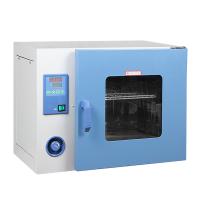
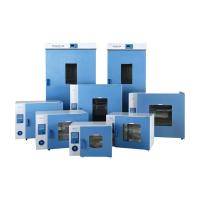
Analytical balance, forced Air Oven.
1. 2 Methods
1. 2. 1 Principle
Under the condition of a certain amount of sulfuric acid, the organic carbon in the plant sample is oxidized with potassium dichromate to generate carbon dioxide, and the potassium dichromate itself is reduced, and the remaining potassium dichromate is titrated with ferrous sulfate. The amount of organic carbon is calculated from the amount of potassium acid potassium, and the reaction formula is as follows: 2K2Cr2O7+3C+8H2SO4→2Cr2(SO4)3+2K2SO4+8H2O+3CO2 K2Cr2O7+6Fe2SO4+7H2SO4→Cr2(SO4)3+K2SO4+7H2O+3Fe2(SO4)3
From the above reaction formula, it can be seen that the remaining potassium dichromate is titrated with ferrous sulfate of known concentration, and the content of organic carbon in the sample can be obtained according to the change of potassium dichromate before and after oxidation. During the experiment, o-phenanthroline indicator was added to judge the titration end point, and the color of the solution changed as follows: brown yellow→grass green→dark green→light green→coffee red (end point).
1. 2. 2 Determination method
Oil bath method, boiling Water Bath method and oven heating method were used to measure the fresh leaves, branches, bark, trunk (peeled) and litter (mixture of litter, leaves and fruit) of rubber trees, each with 3 replicates.
1. 2. 2. 1 Oil bath method
Refer to "Determination of Forest Soil Organic Matter and Calculation of Carbon-Nitrogen Ratio" [6].
1. 2. 2. 2 Boiling Water Bath method
Refer to "Determination of Organic Carbon in Organic and Inorganic Fertilizers by Potassium Dichromate Method in Boiling Water Bath" [7].
1. 2. 2. 3 Oven heating method
(1) Mix the samples to be tested that have been dried and passed through a 60-mesh sieve (0.25 mm), and randomly weigh 0.02 to 0.03 g (accurate to 0.000 1 g) samples from the sample pile according to the incremental method, and place them in 150 Add 10.0 mL of 1.0 mol/L potassium dichromate solution to the Erlenmeyer flask, then add 10.0 mL of concentrated sulfuric acid along the wall of the bottle, and shake well. Put the sample on the porcelain tray, cover the small funnel, repeat 3 times. At the same time, make a control blank.
(2) Put it into an oven whose temperature has been kept at 180-190°C, start
timing. At 20 minutes, open the oven and shake the tray appropriately. After 25 min, shake again, this time more vigorously to complete the reaction. After 30 min, the samples were taken out, and each Erlenmeyer flask was fully shaken one by one while hot, and cooled.
(3) Rinse the small funnel and the bottle wall with distilled water, add 7 drops of o-phenanthroline indicator, and titrate with 0.4 mol/L ferrous sulfate solution. The color change of the solution is: brown yellow → grass green → dark green → light green → coffee red (mutation) is the end point.
(4) Calibration method for the concentration of 0.4 mol/L ferrous sulfate solution: draw 5.0 mL of 0.500 0 mol/L potassium dichromate standard solution into a 100 mL Erlenmeyer flask, add 5.0 mL of distilled water, and add o-phenanthroline indicator 4 Titrate with 0.4 mol/L undetermined ferrous sulfate solution to the end point (coffee red), record the amount V (ml), and calculate the concentration of Fe2SO4 solution CFe: CFe (mol/L) = 0.500 0 × 5.0/V
(5) Result calculation C% = [(V0-V)×CFe×0.003÷G]×10
In the formula: C%——organic carbon content in the sample
V0——the volume of ferrous sulfate used for blank titration (mL)
V——the volume of ferrous sulfate used for titration of the sample solution (mL)
CFe——concentration of ferrous sulfate solution (mol/L)
0.003——millimole of carbon atom (1/4C) mass (g/mmol)
G——mass of dried plant sample (g)
2 Results and analysis
2.1 Comparison of the determination results between the oven heating method and the Oil Bath method
There was little difference in the results of the two determination methods, and the deviation of litter results was larger than that of other tissues, which may be caused by uneven mixing of samples. The absolute deviations of other samples were all less than 0.5%, and the relative deviations were 0.05%-1.98%, with an average of 0.78%. The correlation coefficient r of the results of the two methods is 0.904 3, which has a strong linear correlation. See Table 1.

2.2 Comparison of determination results between oven heating method and boiling Water Bath method
The results of the oven heating method and the boiling Water Bath method are similar. Except for the bark, the absolute deviation of the other samples is less than 0.5%, the relative deviation is 0.12%-1.31%, and the average is 0.88%. The correlation coefficient r of the results of the two methods is 0.842 5, and the 1% significant r value of r is 0.606, reaching a very significant level. See Table 2.

2.3 Comparison of the measurement results of the three methods

2.4 Recovery experiment of oven heating method
Take different organ samples of the rubber tree, add potassium hydrogen phthalate (reference substance) quantitatively, and measure the organic carbon value with the oven heating method, and use the theoretical organic carbon value of potassium hydrogen phthalate as a reference for calculation. The recovery of organic carbon The recovery rate was 92.66%-102.54%, and the average recovery rate was 98.69%. See Table 3.

2.5 Reproducibility analysis of oven heating method
The samples of different organs of the rubber tree were divided into 3 individuals with 3 determination methods, and each sample was measured once, and each sample was repeated 3 times. The results are shown in Table 4. The standard deviations of the three determination methods are: Oven heating method 0.10%~0.69%; Oil bath method 0.16%~0.80%; Boiling Water Bath method 0.40%~0.90%. The standard deviation of the oven heating method is generally smaller than that of the Oil Bath method and the Water Bath method. The reproducibility of the boiling Water Bath method is the worst. It may be caused by the uneven heating of the Water Bath during the boiling Water Bath method, which makes the degree of oxidation different. Therefore, the measurement results of the boiling Water Bath method fluctuate greatly.

3 Discussion and conclusion
From the above test results, it can be seen that the relative differences of the three measurement methods are not large. The Soil Society of CHINA suggested that the Oil Bath method should not be multiplied by a correction value for the determination of plant organic carbon, but some studies have found that this method has a loss of about 0.5% to 1.5% in K2Cr2O7, which will make the measured value of high-content samples appear larger. error. Although K2Cr2O7 will also lose 0.1% to 0.2% when measured by the oven method, this is much smaller than the loss rate of the Oil Bath method, so the oven method has higher accuracy in theory [8]. If vegetable oil is used in the Oil Bath method, it may be oxidized by potassium dichromate, which will bring errors to the experiment; using mineral oil or paraffin has no effect on the determination, but using mineral oil will cause serious pollution to the air; The solution in the test tube is transferred to the dropping point in the Erlenmeyer flask, which brings inconvenience to the experiment. The boiling Water Bath method has the disadvantage of multiplying the oxidation correction coefficient of 1.5 in the final calculation. This correction coefficient causes the value of incomplete oxidation to be too large, and contains too many uncertain factors, so it is easy to cause some subjective errors, thus Affect the accuracy of the results [9,10]. Due to the volume of the Erlenmeyer flask and the specific design of the Water Bath, the boiling Water Bath method is not suitable for simultaneous digestion of a large number of samples. The temperature control accuracy of the oven heating method is ±2°C, and it can be easily adjusted to 200°C. It is easy to operate and is suitable for the determination of large batches of samples.
Based on the above experimental studies, it is shown that the determination of organic carbon content in different organs of rubber trees by the oven heating method has higher accuracy, good reproducibility, safe and simple operation, and can be widely used in different laboratories. It is a method worthy of widespread promotion. A method for the determination of organic carbon in rubber trees.
"Determination of Organic Carbon Content in Different Organs of Rubber Trees by Oven Heating Method" by Peng Yi