Which lighting angle is suitable for evaluating the color of a sample?
Depending on the angle from which the object is viewed, the object may appear lighter, darker, brighter, or darker. This is because the viewing angle directly affects the way light reflects from objects to our eyes. In order to evaluate and control the color of an object using standardized methods, light rays need to reflect off the object at the same angle during each evaluation.

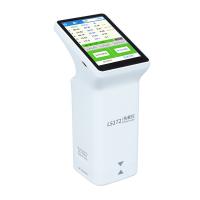
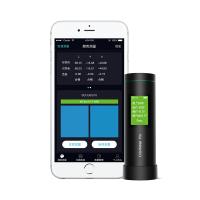
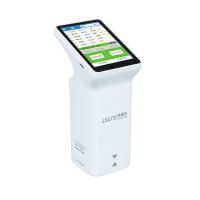
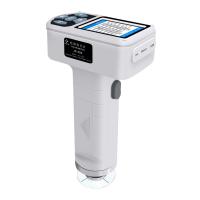
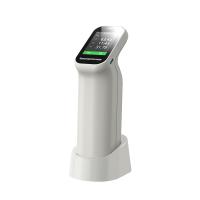
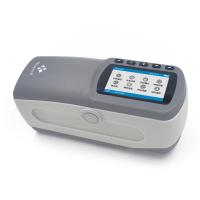
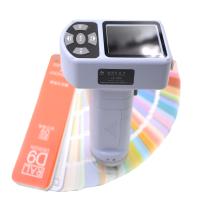
Color Measurement Instruments, including Spectrophotometer s and Colorimeters, illuminate objects at specific angles to detect their color. The angle at which the object is illuminated and the angle at which the light reflected by the object is detected is the optics geometry of the instrument. The geometry of the instrument affects the position of the object's color within the defined color space and may produce different measurements from instruments with other geometries.
To determine which geometry is a good choice for evaluating and controlling sample color, it is important to understand how each geometry illuminates the subject and detects its color. Below we describe common geometries built into color Measurement Instruments.

One-way lighting system: 45/0, 0/45
Unidirectional lighting systems illuminate the subject from one direction or angle and exclude any specular light. Instruments with this geometry are sensitive to surface conditions and are therefore ideal for users interested in measuring the color of a sample rather than the appearance of the "true" color. For example, a glossy object dyed a navy blue would fall into a darker, more saturated region of the defined color space, while a rough-surfaced object dyed the exact same blue would fall into a lighter, more saturated region of the defined color lower area space.
Unidirectional lighting systems are ideal for:
Quality control assessment to ensure each batch of material is consistent in its color appearance and meets standard specifications
Measure the appearance of samples with glossy or glossy surfaces
Compare samples with the same texture, gloss or surface condition, thus ensuring consistency in their color appearance
There are two common types of unidirectional lighting systems, including 45/0 and 0/45. Instruments with 45/0 geometry illuminate the subject at a 45-degree angle and detect reflected light at 0 degrees. Instruments with a geometry of 0/45 illuminate the subject at an angle of 0 degrees and detect reflected light at an angle of 45 degrees.
Diffuse illumination integrating sphere system: d/8, 8/d
Diffuse lighting integrating sphere systems illuminate objects evenly from all directions or angles. Instruments with this geometry can perform measurements in "specular component included" (SCI) mode or "specular component included" (SCE) mode and are therefore ideal for measuring the "true" color of a sample and its color appearance (e.g. effects) . luster).
Spherical lighting systems are ideal for:
Formulate formulations to match colors and comply with color quality standards (SCI mode)
Measure the color of samples with textured, rough or irregular surfaces
Compare samples with different textures and surface conditions to ensure color consistency
There are two general types of spherical lighting systems, including d/8 and 8/d, the "d" meaning diffuse. Instruments with d/8 geometry illuminate objects from scattered directions and detect reflected light at an angle of 8 degrees. Instruments with 8/d geometry illuminate objects at an 8-degree angle and detect reflected light from scattered directions.
When deciding which geometry is right for your application needs, it is important to keep the following in mind:
In order to evaluate only the appearance of the sample color, the geometry of the unidirectional illumination system is usually chosen.
In order to evaluate the "true" color of the sample, a spherical illumination system with "specular component included" (SCI) mode can be selected. To assess the "true" color of the sample and the appearance of the sample color, a spherical illumination system with a Specular Inclusion (SCI) mode and a Specular Exclusion (SCE) mode is required.