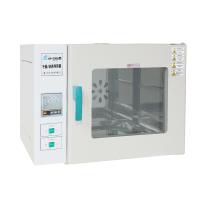
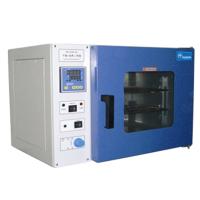
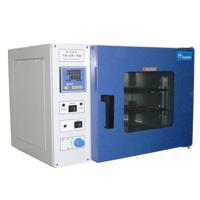
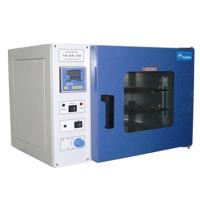
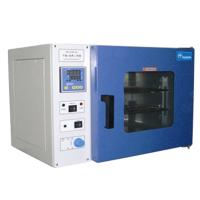
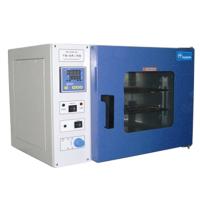
Laboratory Incubators are warm, isolated boxes used to grow and maintain microbial or cell cultures. The Incubator has a well controlled chamber temperature, humidity and gas content. Some Incubators consist of a programmable timer that can be fixed for a period of various temperature and humidity set points. Devices vary in size from desktop devices to large systems.
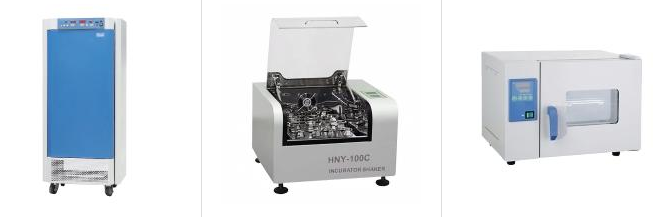
Laboratory Incubators are the required instruments for any laboratory to control the performance of cell culture and tissue culture. The Incubator protects cells from changes in temperature, humidity, CO2 and O2. Temperature can be controlled by water or air jacket. Constant humidity is controlled by a humidity sink and fan controlled oxygen circulation. Interchangeable standard CO2 Incubators with thermal conductivity or infrared sensors.
Incubation can be combined with hybridization in a hybridization chamber or mixing in a shaker or Water Bath. Necessary factors to consider when purchasing an Incubator are avoidance of small sample volumes and medium evaporation, protection from infection and ease of decontamination, energy efficiency, variable oxygen control, and temperature, humidity, and carbon dioxide control.
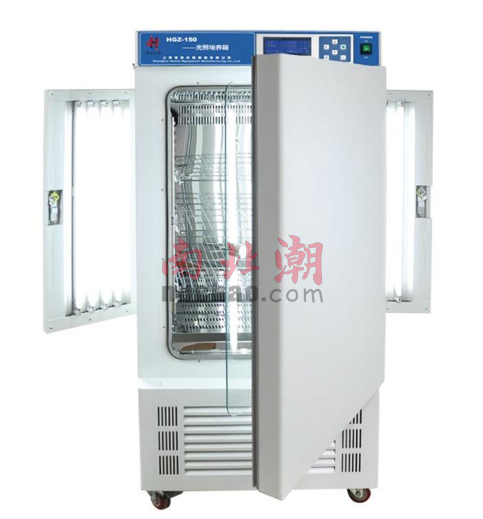
A standard Incubator is an insulated box with an adjustable heater, usually up to 60 to 65°C (140 to 150°F), although some may go slightly higher (usually no more than 100°C). Taller Incubators may also have the ability to lower the temperature (through refrigeration), or to control humidity or CO2 levels. This is important for culturing mammalian cells, where relative humidity is typically >80% to prevent evaporation and slightly acidic can be achieved by maintaining a CO2 concentration of 5%.
Types of Laboratory Incubators
standard Incubator
cooling Incubator
Humidity Incubator
Carbon dioxide Incubator
shake the Incubator
hybrid Incubator
Application of laboratory Incubator
The laboratory Incubator can provide a complete and stable working environment for cell and tissue culture in a controlled pollution-free environment by adjusting conditions such as temperature, humidity and CO2. Microbial Incubators are used for the growth and storage of bacterial cultures.
Variety and capacity flourish, including single or dual block dry bath Incubators, desirable biological oxygen demand (BOD) units for insect or plant research, shaking Incubators, hybridization ovens, bioreactors, and various laboratory Test Chambers. Finding the exact size for your operation is a simple task, with sizes ranging from small desktops to room sizes. Laboratory Incubators are required for cell and tissue culture, biochemical and hematological research, pharmaceutical work, and food analysis.
Application examples in the Incubator
Controlled Sample Storage
cell culture
Growth of crystals/protein crystals
Propagate colonies and subsequently count in colonies