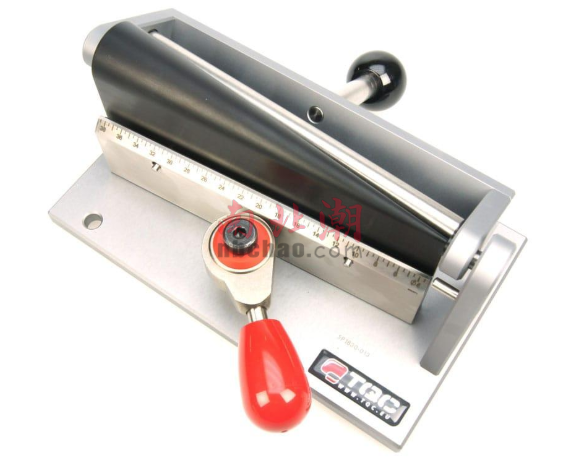
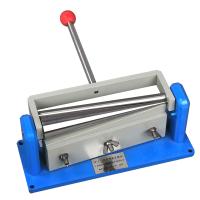
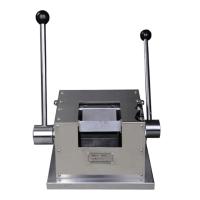
TQC Bend Test Conical Mandrel is a laboratory device used to bend coated test panels on a conical mandrel to evaluate cracking, elongation and/or detachment of coatings, paints or varnishes to metal test panels elasticity or resistance. Conforms to ISO 6860 and ASTM D522. The conical shape of the bending area allows deformation of the test panel and enables the examination of the elastic range of coatings of any diameter between 3.1 and 38 mm in one test.
Safety Precautions
When performing the test, keep fingers and other body parts away from the bending area.
Make sure that all actions such as clamping and bending are performed without applying any force
Do not exceed the maximum value. panel thickness.
Visually inspect the mandrel for mechanical damage or marks.
Preparation before operation
1) Paint film 100 x 180 mm on the largest test panel with a maximum thickness of 0,8 mm. Carefully apply and dry film.
2) Install the device on the table and tighten the wing nut on the front side.
Specific test steps
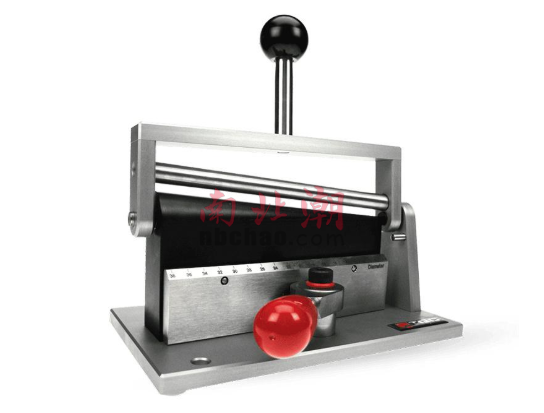
1. Position unit so wing nut (1) faces forward.
2. Loosen the nut and move the bend handle (2) in the direction of the arrow so that it is on the same side as the wing nut.
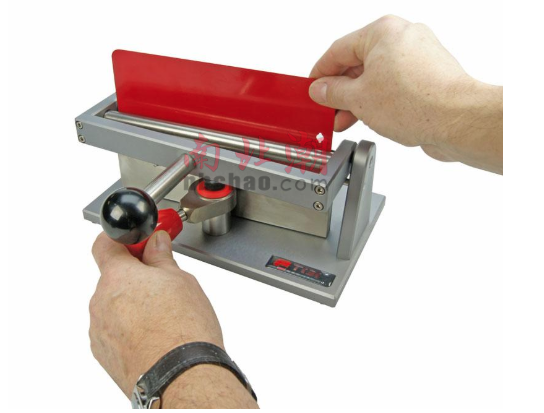
3. Place the test panel between the tapered mandrel and steel bent rod with the coating facing forward (operator's direction) so that the test panel can be held in place with the nuts (1).
4. Now slowly move the bending handle (2) to the other side of the device so that the test panel bends over the tapered mandrel
5. Visually observe the test panel and check for cracks. If any cracks occur, note the diameter (3) where the crack starts and ends.
6. Loosen the nuts (1) again and remove the test panel.
maintenance
Despite its robust design, this bend Tester is precision machined. Never drop or fall
Be sure to clean the SP1830 Cone Shaft Bend Tester after use.
Clean the instrument with a soft dry cloth. Never use any mechanical means such as wire brushes or sandpaper to clean the instrument. Like using aggressive cleaners, this can cause permanent damage.
Do not use compressed air to clean the instrument.