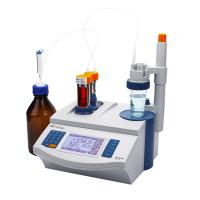
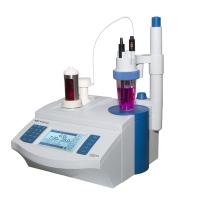
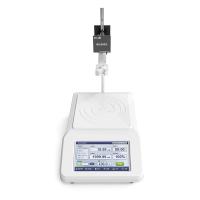
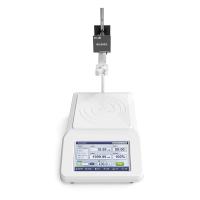
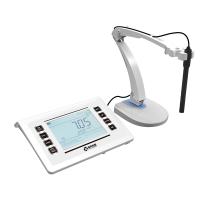
Most scientists know volumetric analysis through manual titration methods, so when titration is required, it is the natural solution. However, manual titration is often problematic. They can be time-consuming and, more critically, prone to human error, which can create a lot of waste in the lab. Automating acid-base, redox and ion titrations can help increase laboratory productivity and optimize the accuracy and reproducibility of results.
The automatic titrator is designed to make titration easier, more reliable and more reproducible than manual titration. They work by expanding the number of ions and compounds that can be measured beyond direct electrode analysis and by providing dynamic process controls that adjust titers to optimize analytical results.
When looking for an automated titrator, it is important to assess your needs in terms of the type of volumetric analysis required, whether you plan to repeat titrations, and how you plan to manage the collected data.
by applying
Choosing a Titrator The importance of choosing a good titrator for process optimization goes without saying. It is important to first realize whether you will be analyzing a large number of similar samples with frequent titrations using a dedicated titrator, or titrating a small number of different samples.
Titrators come in a variety of forms, such as pH, redox or ion selective electrodes (ISE). If you plan to measure acidity or alkalinity, a pH titrator may be right for you. If you wish to measure dissolved oxygen in wastewater by Winkler titration or organic matter in soil, a redox titrator may be more suitable. Using the ISE may yield better results when measuring the total hardness of drinking water and wastewater or other chemicals such as chloride, ammonia or calcium. A combination of pH, redox and ISE may be better if a flexible model is required for various measurements. For more information on determining the best titrator for your application, see the eBook Best Practices for Using Automated Titrators.
Documenting Methods and Results
The importance of titration accuracy cannot be overemphasized and is one of the main advantages of choosing an automatic titrator over manual setup. When choosing a titrator, look for one that clearly displays test data and provides a way to store and recall data.
Features to consider when comparing automated titrators include: number of cycles per sample run by the instrument, analysis of mean concentrations and relative standard deviation (RSD) values, and important system flexibility to rule out any outlier cycles. You can also benefit from a titrator that offers the flexibility of long-term data retention into shareable file formats such as PDF or comma-separated value (CSV) files.
Programmable Titration
Using a programmable instrument is convenient when performing similar titrations over a period of time. Preset procedures are a key way to avoid human error in measurements. Some automated potentiometric titrators allow you to set up protocols for repeat experiments, helping to ensure you get consistent results and reduce waste from incorrect titrations. Just program it once and the titrator will take care of the rest - including titrant addition, endpoint determination, result calculation and data logging.
Using the "Titration Setup Wizard", the user can set the parameters of the equivalence point or preset end point titration. These settings are saved and password protected should a layer of security be required. Replicating the method and modifying it for similar samples requiring minor parameter changes can be easily done. You can even share your methods between multiple titrators using a USB flash drive.
When considering your long-term titration needs, automated titrators can help simplify your experiments. Manual titrations are time-consuming, difficult to reproduce and less reliable, and require manual data capture - all of which can cause a lot of stress in the lab. If you're doing manual titration, it's time to change gears.