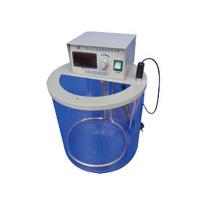
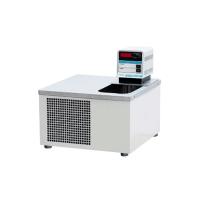
A Water Bath is a laboratory piece of equipment made from a container filled with hot water. It is used to incubate samples in water for a long time under constant temperature conditions. Most baths have a digital or analog interface to allow the user to set the desired temperature, but some baths have their temperature controlled by an electrical current flowing through the reader. Utilization includes heating of reagents, melting of substrates or incubation of cell cultures. It is also used to cause certain chemical reactions to take place at high temperatures. A Water Bath is an optional heat source for heating flammable chemicals, rather than an open flame to prevent burning. Different types of Water Baths are used depending on the application. For all Water Baths, use up to 99.9°C. When the temperature is above 100°C, other methods can be used, such as an Oil Bath.

What is the function of a laboratory Water Bath?
Applications for laboratory equipment Water Baths include heating of reagents, melting of substrates or incubation of cell cultures, and uses to enable certain chemical reactions to occur at elevated temperatures. Since nearly all laboratory Water Baths have a digital interface that allows the user to set the desired temperature, usually, an indicator light will come on to indicate that the Water Bath is working. Once the correct temperature is reached, the laboratory Water Bath is turned on and off to maintain a constant temperature.
Some Water Baths, called vibrating Water Baths, offer additional controls that allow the user to control the speed and frequency of the movements. Primarily used to mix two substances together, a vibrating Water Bath can be used instead of a standard Water Bath by turning off the vibration mechanism.
Water baths for laboratory equipment do not necessarily contain water. The fluid used depends on a variety of factors, including the desired temperature range and desired viscosity. Oil is sometimes used instead of water in a Water Bath. Sinks can be dangerous when working with flammable substances, such as oil, so safety precautions need to be taken, including using the sink on a stable, level surface.

Precautions for laboratory Water Baths
Please use with caution.
Moisture sensitive or pyrogenic baths are not recommended and do not heat the bath above its flash point.
The water level should be monitored regularly and only filled with distilled water. This is done to prevent salt from depositing on the heater.
Disinfectants may be added to prevent biological growth.
To purify, raise the temperature to 90°C or higher for half an hour every week.
Markers tend to come off in a Water Bath. Use waterproof.
If the application involves liquids that emit fumes, a Water Bath in a fume hood or well-ventilated area is recommended.
The lid is closed to prevent evaporation and to help achieve high temperatures.
Place on a stable surface away from flammable materials.